
Carbon market insights: the month in review
Carbon Eyes In the Loop - here’s what you missed
A round-up of our best posts about the carbon market, filtered and in one place. Reach out to the team for more detailed market analysis and further insights.

July was a busy month for developments across the Australian carbon market, from fresh controversy about INFM - the new method for managing public native forests - to a proposed cap on credited abatement at soil carbon projects. The cap was one of a several recommendations from a periodic method review by the Emissions Reduction Assurance Committee. In this edition, we also look at the ACCU methods currently under development, some completely new, others remakes of expired methods, or extensions to existing ones. July’s monthly update from the Clean Energy Regulator saw 25 new projects registered, while 94 projects earned credits, taking total issuance to a record 23 million for the latest financial year. And we ask whether location plays a part in environmental planting projects being awarded ACCUs. As always, our focus remains on the project data and market signals shaping Australia's carbon market. For more comprehensive market insights and analysis, please get in touch at info@carboneyes.io.
ACCU methods: what's on the horizon? [13/07/2026]
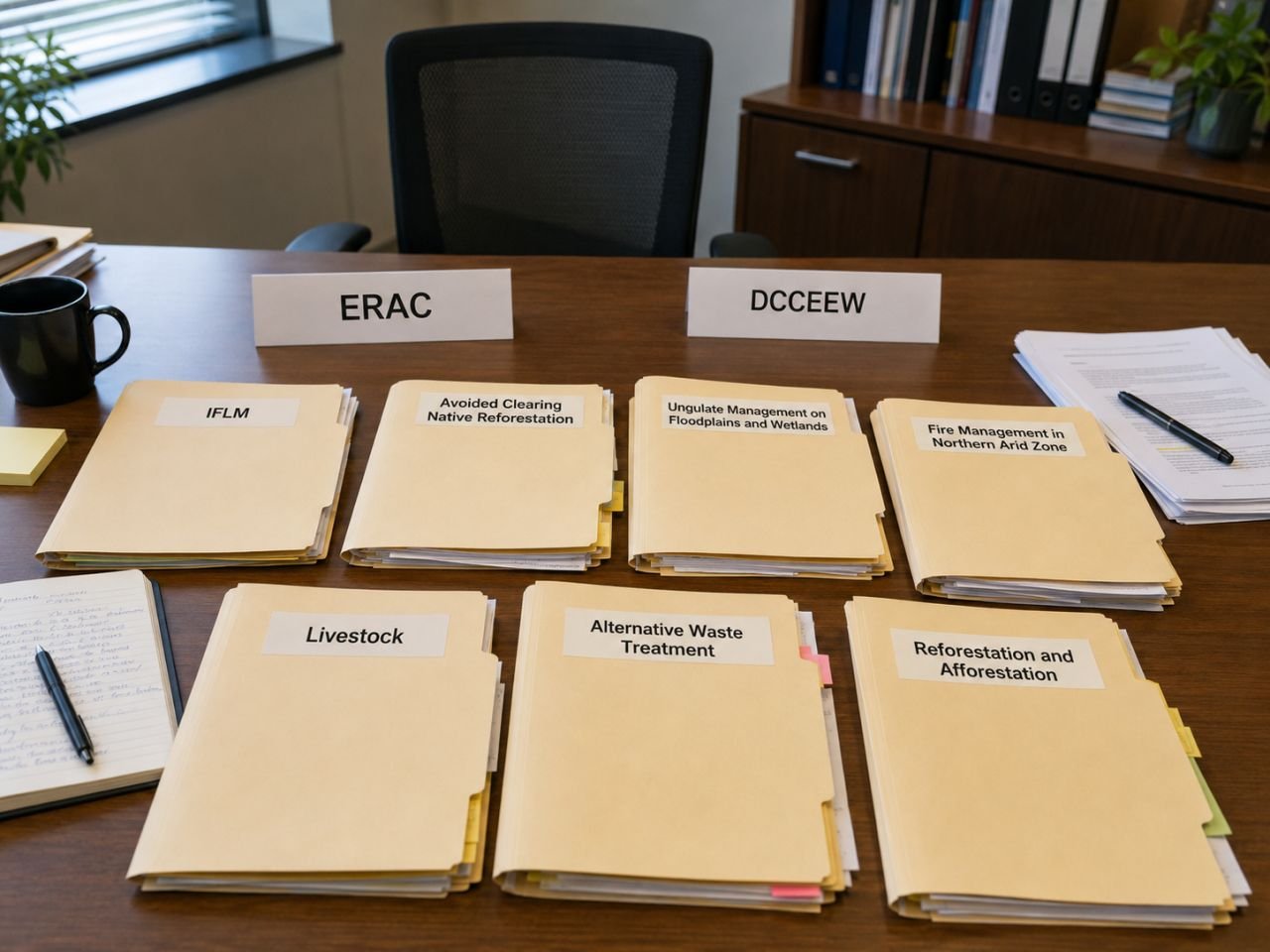
Several new Australian Carbon Credit Unit methods are in development. Some are completely new, while others are remakes of retired methods, or extensions/changes to existing methods. They cover a wide range of carbon farming strategies, from fire reduction to livestock management.
Integrated farm and land management (IFLM)
This much-anticipated method will allow multiple activities that store carbon in the land to occur on a single property. It is the furthest along of the methods under development, with public submissions made during early 2026 now being considered.
Originally it was thought that soil carbon (under the Estimation of soil organic carbon sequestration using measurement and models method, 2021) would form part of IFLM. But in late July 2026, this was ruled out, following a periodic review of the methodology by the Emissions Reduction Assurance Committee (ERAC).
The review (see below), found the method meets five of the six Offsets Integrity Standards (OIS), but that a new measure is required to ensure its overall integrity. In response, the Department of Climate Change, Energy, the Environment and Water (DCCEEW) announced that:
“We will not include a soil carbon activity module in the first version of the method. This would delay the first version of the IFLM method beyond the end of 2026. We will prioritise the soil carbon module after delivery of the first version of the IFLM method.”
The DCCEEW intends to provide a final draft of the IFLM method to the ERAC by the end of 2026.
Improved avoided clearing of native regrowth
This method aims to credit the carbon storage and reduced emissions which result from avoided clearance of native forest regrowth. It applies to native shrubs and trees which are at high risk of being cleared for agriculture.
It is designed to improve on the expired Avoided clearing of native regrowth method 2015. The new method will increase eligibility for landholders by taking a more practical approach to clearance risks, while allowing complimentary reforestation activities within a single project.
The development is being led by the Queensland Department of Environment, Science and Innovation.
Reducing disturbance of coastal and floodplain wetlands by managing ungulates
This methods aims to address damage being done by feral hoofed animals, such as water buffalo and pigs in northern wetlands. It hopes to reduce greenhouse gas emissions by restoring degraded coastal and floodplain wetlands.
The method development is being led by the University of Queensland and the Northern Australian Indigenous Land and Sea Management Alliance (NAILSMA). NAILSMA is a not-for-profit which works to find practical solutions to help Indigenous people manage their land and sea resources.
Extending savanna fire management to the northern arid zone
This new method aims to build on the Savanna fire management methods (2026). It would extend eligibility to the northern arid zone, which includes approximately 850,000 square kilometres of fire-prone shrubby grasslands.
Under SFM methods, early dry season controlled burns are used to reduce the risk of much larger wildfires later on. The northern arid zone is influenced by the same monsoonal weather patterns as the northern savanna ecosystems, but receives lower rainfall.
The development lead is the Indigenous Desert Alliance, an Indigenous-controlled organisation that works to keep the desert connected, while supporting ranger programmes.
Livestock
Under this proposed method, greenhouse gas emissions from livestock would be cut, through a combination of changed management practices and methane-reducing feed additives. It follows the expiry of the Beef cattle herd management method 2015, which expired on September 30, 2025.
Following a review by ERAC of the expired method, the Assistant Minister for Climate Change and Energy prioritised the development of a new livestock method. This development is being led by Meat and Livestock Australia.
Alternative waste treatment remake
This method aims to reduce methane emissions from landfill waste, by separating organic from mixed waste. The organic waste can then be composted or processed by another low emissions treatment.
It is a remake of the Alternative waste treatment method 2015, which expired on March 31, 2025. A periodic review by ERAC, found the method met Offsets Integrity Standards, and recommended development of a replacement.
When work began on the AWT remake, it was the first ACCU method to do so under the proponent-led development process. In this case, the lead is the Australian Resources Recovery Council (ARRC).
Reforestation and afforestation remake
The Reforestation and afforestation method 2.0 (2015), expired on September 30, 2025. A sunsetting review by ERAC, made a number of recommendations for a potential replacement method, covering abatement potential, co-benefits, adverse impacts, and potential improvements.
Following the review findings, the Assistant Minister for Climate Change and Energy, prioritised a remake of the method. It’s believed the new method will potentially have broader commercial applicability than the original.
Three methods have dominated the ACCU registration landscape during the last twelve months: soil organic carbon (SOC), environmental planting (EP) and plantation forestry.
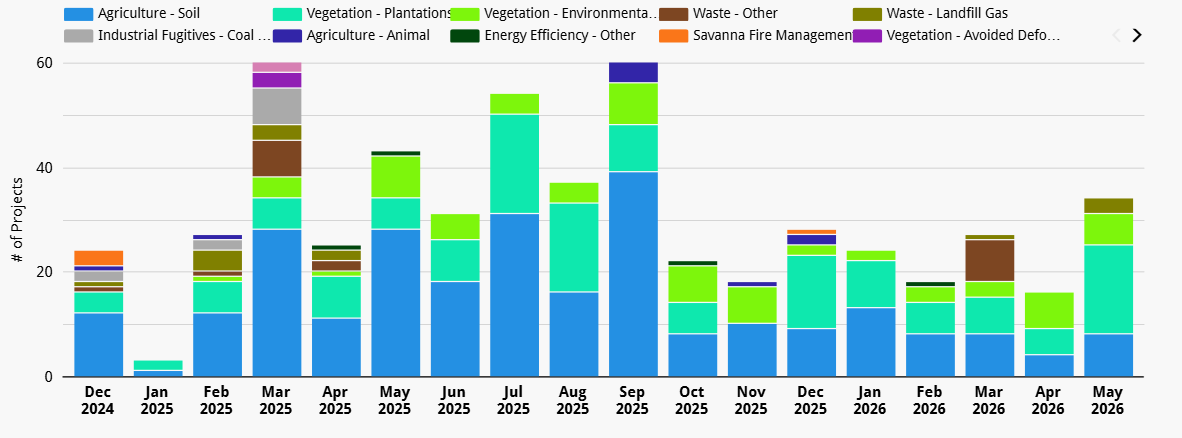
Time will tell whether the proposed new methods will challenge this domination in the future. To view ACCU stats and trends head to Analytics Dashboard and create a free account to access additional pages.
Carbon leakage and how it applies to the INFM 'Koala' method [16/07/2026]
One of the main criticisms of the new INFM (Improved forest management in multiple-use public native forests) method 2026 - which is closely linked to the creation of the Great Koala National Park - is that the reduced timber harvesting used to justify the issuing of ACCUs will be substituted by increased timber harvesting elsewhere.
The Act that underpins the ACCU scheme does not define leakage but, broadly speaking, it's considered to be the increase in greenhouse gas emissions outside a project boundary that occurs because of the project itself.
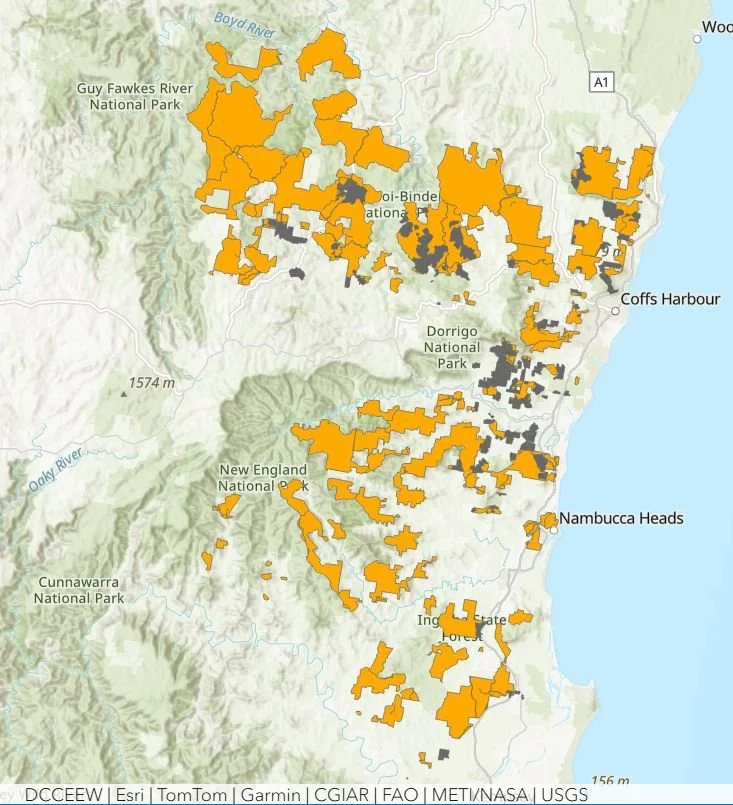
The new method allows for a leakage reduction in ACCU issuance to the state (proponent) of up to 40%. But some concern has been voiced suggesting that the NSW state government now has a financial incentive to block timber harvesting elsewhere in the state, for example private landholders doing selective harvesting via private native forestry (PNF) agreements.
An independent assessor is required to calculate leakage by considering the following sources: out of state timber; imported timber; non-wood alternatives; plantation timber; out of state PNF timber.
Increases in PNF production within the same state as the project are handled by a completely separate penalty, called the Private Native Forests Leakage Deduction and are not included in the 40%.
This puts the state in a unique position: it is simultaneously the recipient of the ACCU revenue, and the regulatory authority that oversees and approves PNF within its jurisdiction.
This creates an incentive for PNF agreements in NSW to be managed conservatively over the 100 year permanence period of the Koala park project, to avoid benchmark rates being exceeded.
The INFM method comes at a challenging time for the Australian carbon industry. There is a targeted campaign against the Safeguard Mechanism, the system which drives the bulk of demand for ACCUs. Criticism often includes allegations about so called “dodgy” carbon credits. But two factors are often ignored in this criticism:
Limited ACCU supply: The Safeguard Mechanism is still young and continued reliance on ACCUs to meet targets will not be a financially viable path for most emitters.
Tackling climate change is a long game: The ACCU scheme methods have a maximum lifespan of 10 years, and the less-robust methods get removed over time.
INFM was fast-tracked to facilitate the creation of the Great Koala National Park. Some are comparing the method to the former Avoided deforestation (AD) method 2015, which was revoked in February 2023. There are key differences between the two methods:
INFM applies exclusively to public native forests (Crown land) that have been designated for commercial forestry
The baselines are very different: INFM assumes harvesting and forest regeneration would have happened, whereas AD assumed cleared forest would be permanently cleared.
INFM has far broader leakage considerations than AD.
The heightened criticism comes ahead of a Senate hearing on August 18, when a motion to disallow the INFM method will be considered. Barring a late reversal, the method will come into effect on October 1.
Time, independent analysis, and price differentiation will tell how the efficacy of the new method is perceived. To date, the ACCU scheme has issued more than 180 million ACCUs, representing more than 180 million tonnes of abatement.
Australia can have both a robust high-integrity carbon project industry and real emissions reductions. Incremental and considered improvements to policy are key to achieving this and maintaining investability and stability.
Twenty five new ACCU projects registered in June [16/07/2026]

Plantation forestry and environmental planting accounted for all but six of the new registrations with the Clean Energy Regulator. During the same register update period - May 31 until June 30 - 94 projects earned a total of 1.86 million carbon credits, pushing issuance to just over 23 million for financial year 2025/26, a new record. Meanwhile, two projects voluntarily revoked their registrations. For more information about June’s register update, see the latest edition of Carbon Eyes Curiosity.
New registrations
Plantation forestry accounted for 11 of the 25 projects registered in June, with environmental planting (8) the second most popular method, followed by soil carbon (5), and landfill gas (1). Victoria was the state with the most new registrations (6), closely followed by Tasmania and Western Australia, with five each.
In terms of permanence, 18 projects opted for 25-year periods, while six chose 100-year commitments. AgriProve (including its solutions arm) registered the most individual projects, locking in four soil carbon registrations across New South Wales and South Australia.
When looking at project area added, EP and forestry were both approximately 2,000 hectares, while new soil projects totalled 17,660 hectares. The latter was largely down to the Dalkeith Soil Carbon Project, in the Maranoa region of Queensland, which covers an impressive 14,624 hectares.
Credits issued
The Clean Energy Regulator awarded carbon credits to 94 projects in June, with a combined issuance of 1,862,918 ACCUs. This took the total for the first half of 2026 to 10,895,885, compared to 9,496,982 in the first six months of 2025.
Moomba Carbon Capture and Storage Project earned the largest single allocation, of 208,765 ACCUs, while at the other end of the scale, Winbar Human Induced Regeneration Project was awarded 154 credits.
In terms of methodology, 58 vegetation projects earned credits, followed by waste (24), savanna fire management (7), agriculture (3), carbon capture (1) and energy efficiency (1). The two most prolific proponents were:
TerraCarbon, which helped earn a total of 435,632 credits across 19 different vegetation projects.
LMS Energy, which successfully secured a total of 356,136 credits across 19 individual landfill waste gas projects.
Although the total issuance during the 2025/26 financial year was a new record, at just over 23 million carbon credits it was at the lower end of the CER’s forecast in February, where guidance of 22–26 million ACCUs was given.

More than three quarters of the projects that were issued ACCUs had received credits in previous years. Human-induced regeneration (HIR)projects delivered 40.5% of the ACCUs, as projects registered in the months before the method was retired in late 2023 starting to deliver. Landfill gas contributed 21%, savanna fire management (7%), and EP and carbon capture storage surprising at 5.8% and 6.1% respectively.
The ACCU + SMC combined holdings continued to climb to almost 80 million and look on track to be close to 90 million by the end of the 2026 calendar year.

To view ACCU stats and trends head to Analytics Dashboard and create a free account to access additional pages.
Location, location, location: de-risking ACCU planting projects [22/07/2026]
There are many risk elements to consider when choosing a location for an environmental planting project, such as weeds, frost, flood, fire, rainfall and climate change (rain and temperature).
Looking at the locations of successful ACCU projects can also provide clues.
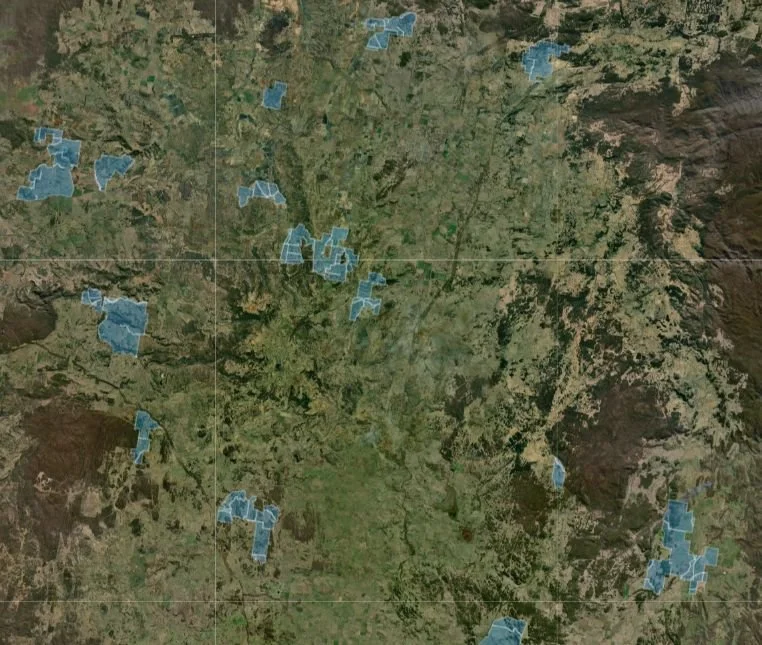
When we filter for pre-2024 EP projects, we can see clustering of successful projects: those on the left image have all delivered credits, whilst none of the projects in the location on the right have.
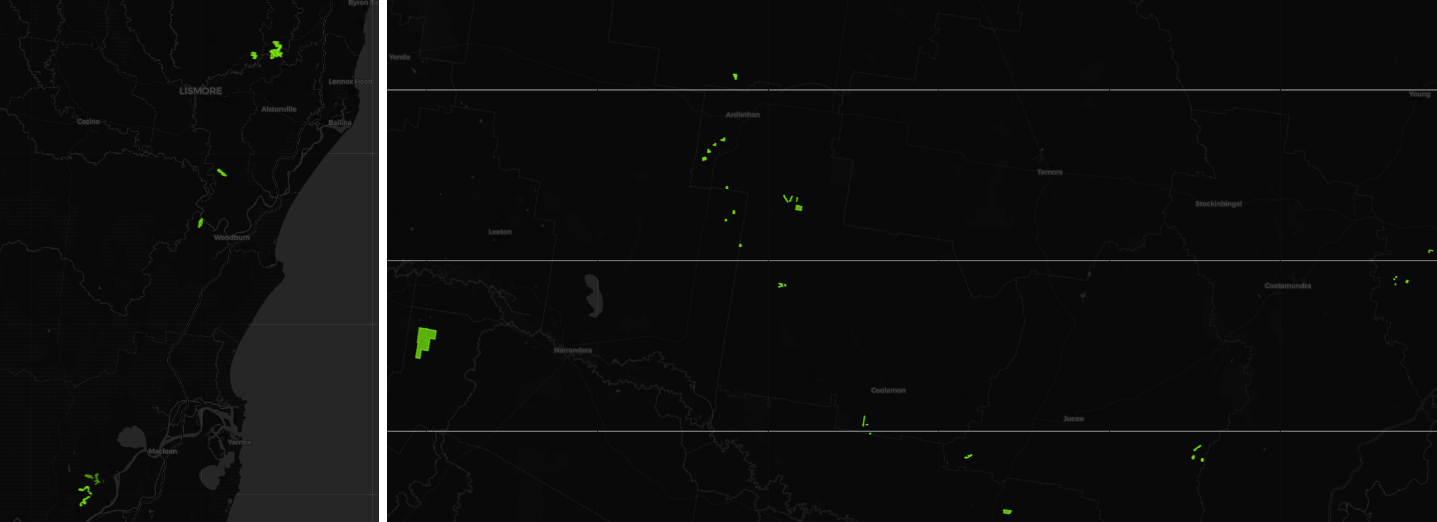
Northern NSW coastal zone with high project success vs Southern Central NSW with less evidence of success
Credit issuance is not a perfect indicator of project success, but it can provide a boost in confidence for a given location.
On average EP projects take 2.08 years between registration date and the issuance of first credits. The pre-2024 filter was used for this reason.
Climate Active: a 16-year retrospective [27/07/2026]
For more than a decade, Climate Active was Australia’s official badge for voluntary corporate climate action. But, an official announcement from the Department of Climate Change, Energy, the Environment and Water (DCCEEW), signalled the end of government certification of businesses’ voluntary climate action:
“With strong targets and new policies in place driving emissions reduction, the context for voluntary climate action has changed. The Australian Government plans to end Climate Active certification. We will no longer review or monitor businesses’ voluntary climate claims.”
The government is now seeking feedback from Australian businesses and stakeholders on whether to close Climate Active fully or retain some voluntary standards and select guidance.
The scheme started in 2010 as the National Carbon Offset Standard, before being rebranded as Climate Active in 2019. Its model was simple: measure emissions, reduce them where possible, offset the remainder, disclose the result and receive government-backed certification.

For several years Climate Active had momentum, with participants reporting more than 25 million tonnes of CO₂-e covered by certification and surrendering more than 55.1 million carbon offsets, including 2.6 million ACCUs (1.3% of total issuance).
Over time, Climate Active became tightly linked to one phrase: carbon neutral.
There was a perception that carbon neutral meant emissions had been erased, when in practice it often meant emissions had been measured, partly reduced and then balanced with credits. Over time, regulators, consumers and critics became much less willing to let this distinction slide.
From 2023, companies started leaving. Not all gave the same reasons, but the shift occurred as the term carbon neutral became less palatable.
Some shifted their emphasis from offsets to direct decarbonisation. Telstra said it would redirect spending from carbon credits towards direct emissions reduction projects. PwC said it would no longer seek Climate Active certification and would remove references to carbon neutral from its publicity material.
Some were responding to legal and reputational risk. EnergyAustralia's Go Neutral litigation became a defining moment. The company acknowledged that offsets do not prevent or undo the harms caused by fossil fuel emissions, recognised public concern about offsets and shifted its focus to direct emissions reduction.
More than 100 organisations, including major brands and super funds, left Climate Active over roughly two years. The market moved away from offset-backed carbon neutral claims as the centrepiece of corporate climate strategy.
The direct impact on the ACCU scheme from the end of Climate Active certification is likely to be small, if noticeable at all. Voluntary purchasing volumes have stabilised, and most of the credits surrendered through Climate Active were international offsets rather than ACCUs.
The indirect impact remains to be seen, especially considering the Safeguard Mechanism review.
Soil carbon credits getting capped? [29/07/2026]
What? A recommendation for an immediate cap on soil organic carbon (SOC) credits (under the Estimation of soil organic carbon sequestration using measurement and models method, 2021).
Who? Australia's Emissions Reduction Assurance Committee (ERAC), which is the independent statutory body that reviews ACCU scheme methods for compliance with the Offsets Integrity Standards (OIS).
Why? Some sampled projects had reported carbon accrual rates that the review found to be "scientifically implausible”.
Context: ERAC does periodic reviews of all ACCU methods. The review found that the OIS were met for:
Additionality;
Measurable and Verifiable;
Eligible Carbon Abatement;
Evidence-based;
and Project Emissions.
However, the committee concluded that:
“The method is not compliant with the Conservative OIS, as documented SOC stock change (SOC accrual) in project offsets reports is inconsistent with peer-reviewed scientific literature and, in several cases, scientifically implausible.”
Proposed cap: To address the risk of over-crediting, the review recommended an immediate cap on net credited abatement of three tonnes of soil organic carbon per hectare, per year, after method-prescribed discounts. In practical terms, this is equivalent to an annual cap of approximately 11 ACCUs per hectare.
Other proposals include:
Restricting multiple projects on the same land title;
Annual reporting of collective project performance;
And strengthening sampling and stratification protocols.
Impact analysis of proposals: As of August 1 2026, there are 946 active soil ACCU projects, of which 53 have been issued credits. Only three would have surpassed the proposed cap had it been in force. If introduced, the cap will probably smooth out credit issuance, rather than restrict it.
Increased sampling requirements might lead to lower issuance for certain projects. And there will probably be a drop in project registrations due to the single title, single project policy. But it’s unlikely that overall SOC project area growth will be impacted.
Industry response: The review findings have been broadly welcomed. In a media release on July 29, the Soil Carbon Industry Group (SCIG), says the review confirms the “important role” for soil carbon under the ACCU scheme, and sets out a “practical path” for improving the method. The group’s Co-Chair, Louisa Kiely, described the proposed cap as pragmatic:
“Our members’ view is that the proposed cap on ACCU issuance is pragmatic, supports continuity of the method and importantly will not shortchange landholders over the long term.”
Australia’s largest SOC project developer, AgriProve, welcomed what it described as a “pragmatic integrity upgrade” in a response to the review on July 28. It notes that the proposed cap “accumulates over the lifetime of a project”, so carbon stored faster than the annual rate is not lost, so long as it is maintained. Matthew Warnken, AgriProve’s Founder and Chair, said:
"Independent scrutiny is how a market earns trust. Australia's soil carbon method has been stress-tested and backed. This is not a retreat from soil carbon; it is a pragmatic integrity upgrade that incentivises farmers and gives the sector a stronger platform to scale.”
What's next: The Department of Climate Change, Energy, the Environment and Water is seeking feedback on the proposed changes.
Overall, this is a positive sign for the ACCU scheme: ensuring integrity across all methods and reinforcing that ERAC is fulfilling its role. If one considers a soil ACCU project to be an asset (building up the soil carbon and earning ACCUs), and a liability (the obligation to maintain it for the full permanence period), then the proposed cap on crediting helps balance the asset with an obligation.
For the ERAC report, see this link.
As always, we will continue tracking the underlying project data, register movements and policy developments shaping the Australian carbon market.
For more comprehensive market insights and analysis, please get in touch at info@carboneyes.io.
Join our community to get the latest carbon market intelligence delivered monthly
Check out our blog article Who is paying for carbon projects in Australia, discussing fund–backed ACCU activity and what it means for investors.
References
Carbon Eyes ACCU project register and project level analytics
Carbon Eyes market commentary on ACCU project activity and issuance trends
CER (Clean Energy Regulator)
DCCEEW (Department of Climate Change, Energy, Environment and Water)
NSW National Parks and Wildlife Service
Want to know more?
Check out New environmental planting project to boost ACCU supply, discussing what large-scale plantings tell us about supply.
Carbon Eyes | ACCU Market Intelligence
Strategic data and integrity signals for the Australian carbon market.
1. Carbon Data Platform
The Foundation of Market Transparency | Access the Platform
A comprehensive view of the ACCU landscape. Access structured CER data, project status and issuance trends. Use our core mapping and analytics to establish your market baseline.
2. Integrity & Market Intelligence
Independent Ratings & Supply Forecasts | Upgrade Your Intelligence
Mitigate risk with our paid intelligence layer. Accessed directly within the Platform, these add-ons provide independent ACCU project ratings and forward looking supply forecasts to guide procurement and investment.
3. Land & Asset Decisioning
Identify the Best Opportunities for Carbon Projects
Carbon Potential Report | View Carbon Potential Report (by address)
Instant, address-based viability assessments for lenders and investors.
Carbon Land Search | Identify & Assess High-Potential Assets
Our premium search engine for institutional funds. Identify and de-risk high-potential carbon assets before acquisition.