
New environmental planting project to boost ACCU supply
What large-scale plantings tell us about supply
The Glenclair project shows how scale, land aggregation and integrity influence future ACCU supply.
The Glenclair Aggregation covers roughly 4,000 ha in the New England region of NSW. Purchased in early 2025, it has the potential to sequester over 60,000 tonnes of CO₂ annually if cleared areas are fully planted.
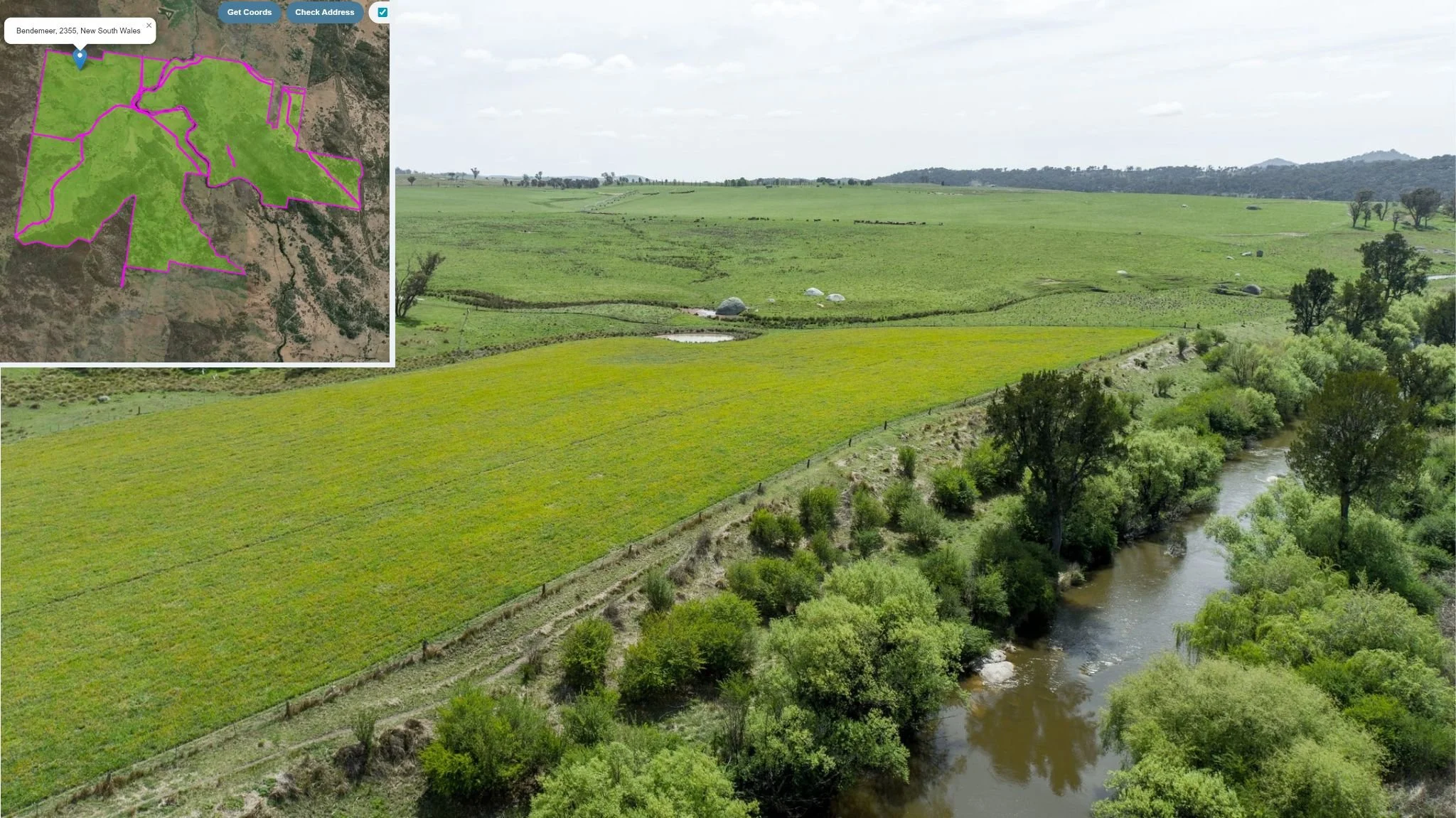
Registered Carbon Project Boundaries (inset) Project Explorer and a picture of the farm (main) from Realestate.com.au
Supply boost
A supply boost of 60,000 ACCUs from an Environmental Planting (EP) project represents a 20-30% increase when benchmarked against FY2025 Environmental Planting issuance versus longer-term averages.
The EP contribution to the entire ACCU scheme is under 3% but growing. The New England region offers pockets of value for carbon sequestration with high planting yields and relatively lower land prices.

Under 3% ACCUs issued for Environmental Plantings but growing, view on Analytics Dashboard
Project overview
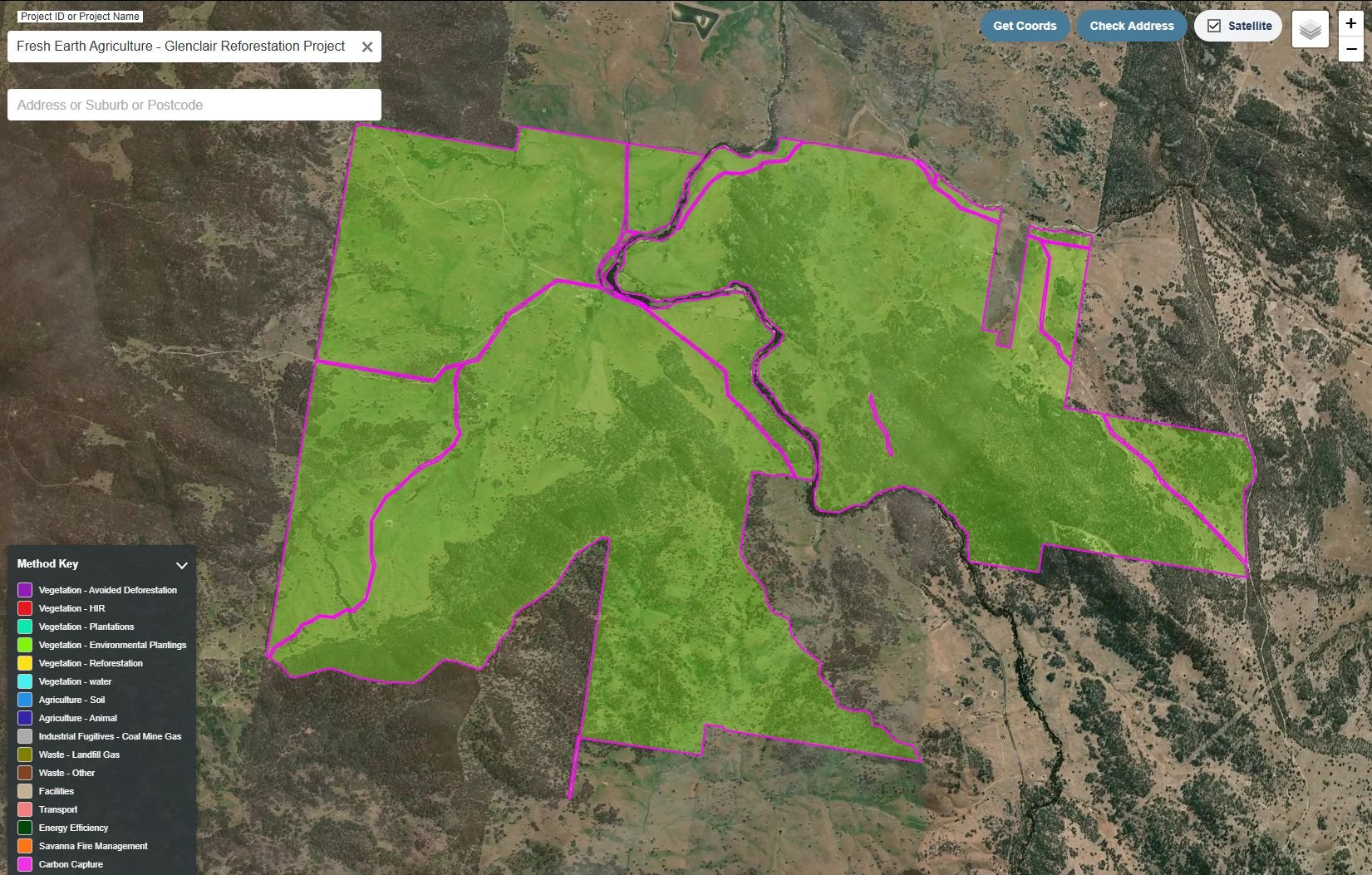
Fresh Earth Agriculture’s Glenclair Reforestation Project is a significant Environmental Planting located at Watsons Creek, approximately 13 km west of Bendemeer and 45 km north of Tamworth. The project covers 3,618.51 hectares on the historic "Glenclair Aggregation," which includes the properties of Glenclair, Airlie Station and Yaccamunda. The landscape varies from river flats to steep timbered hills.
The project operates under the 2024 Environmental Plantings methodology, establishing permanent forests of native tree and shrub species. The plantings mimic the local native vegetation community and are designed to sequester carbon while enhancing biodiversity. Plantings are permanent and exclude species intended for harvest, ensuring long-term ecological restoration.
Environmental context
The Watsons Creek and Bendemeer region features the Northern Tablelands' temperate climate, with average annual rainfall of 750–800 mm. Soils are predominantly granitic, with some basalt areas from surrounding ranges. Historically used for cattle and sheep breeding, the reforestation project represents a shift towards integrating carbon farming with sustainable land management, or converting steeper, less arable sections into permanent conservation forest.
The New England region offers pockets of value for carbon sequestration with high planting yields and relatively lower land prices.
Key Project Metrics: Glenclair Reforestation Project
Project Name Glenclair Reforestation Project
Proponent Glenclair Aggregation Pty Ltd as trustee for Glenclair Trust|
Location Watsons Creek, New England, NSW (13 km west of Bendemeer, 45 km north of Tamworth)
Project Area 3,618.51 ha
Methodology 2024 Environmental Plantings - permanent mixed-species native forest
Estimated Carbon Sequestration 60,000 t CO₂ per yr if cleared areas fully planted
Credit Issuance Lag ~3 years from registration to first credits
Crediting Period 20 October 2025 to 19 October 2050
Permanence Period 25 years
Historical Land Use Pastoral (cattle and sheep breeding)
Environmental Features Northern Tablelands temperate climate, 750-800 mm rainfall, granitic and some basalt soils, McDonald River frontage
Status Active
How environmental planting projects work
Credit issuance for EP projects is not linear. Yields are modelled to reflect sequestration as the trees grow. For simplicity, annual averages are used for this project. On average, across all EP projects, it takes around three years from project registration to the issuance of the first credits.
These projects highlight how careful planning, species selection, and permanent planting requirements can deliver both carbon credits and long-term ecological benefits.
Implications for investors and landowners
Projects like Glenclair demonstrate the potential for combining land management with carbon market participation. Investors and landowners can see value in regions where planting yields are high, land costs are relatively low, and projects are designed for permanence and environmental restoration.
Understanding the methodology, location, and expected carbon yields is key for assessing the viability of similar projects.
Check out our blog article Tasmania’s forests: ACCU method creates carbon-smart land investment opportunities discussing how a new ACCU method is keeping carbon in the ground and forests in production.
Conclusion
The Glenclair Aggregation project shows how Environmental Planting projects can contribute meaningfully to ACCU supply, while also restoring landscapes and enhancing biodiversity. It is an example of how carbon farming can be integrated with sustainable land management, and a signal that high-quality, well-planned projects are gaining traction in the Australian carbon market.
References
CER (Clean Energy Regulator)
Method Scheme to plants trees to store carbon and restore land: Carbon Credits (Carbon Farming Initiative) (Reforestation by Environmental or Mallee Plantings-FullCAM) Methodology Determination 2024
Picture source:
Project info source:
Want to know more?
Check out Beyond farm vs carbon trade-off: New chapter for Australian land use, talking about why carbon projects aren’t replacing farming but reshaping it.
Carbon Eyes | ACCU Market Intelligence
Strategic data and integrity signals for the Australian carbon market.
1. Carbon Data Platform
The Foundation of Market Transparency | Access the Platform
A comprehensive view of the ACCU landscape. Access structured CER data, project status and issuance trends. Use our core mapping and analytics to establish your market baseline.
2. Integrity & Market Intelligence
Independent Ratings & Supply Forecasts | Upgrade Your Intelligence
Mitigate risk with our paid intelligence layer. Accessed directly within the Platform, these add-ons provide independent ACCU project ratings and forward looking supply forecasts to guide procurement and investment.
3. Land & Asset Decisioning
Identify the Best Opportunities for Carbon Projects
Carbon Potential Report | View Carbon Potential Report (by address)
Instant, address-based viability assessments for lenders and investors.
Carbon Land Search | Identify & Assess High-Potential Assets
Our premium search engine for institutional funds. Identify and de-risk high-potential carbon assets before acquisition.