
Carbon credibility: ACCU supply versus reputation
When supply changes affect reputation
Proposed changes to savanna fire management methods raise questions about ACCU integrity and long-term trust.
A new proposal by the Clean Energy Regular (CER) would award additional credits to existing savanna fire management (SFM) projects by including living biomass and standing dead wood in the calculations.
This proposal is seen as a potential reputational risk for the CER because it may breach the principle of “additionality”, which means existing projects could receive more credits for no additional action.
The ACCU scheme explained
The CER manages the Safeguard Mechanism, Australia's flagship carbon offset programme. This is underpinned by Australian Carbon Credit Units (ACCUs), where one credit represents one tonne of Carbon Dioxide that has been captured (sequestered) or avoided. One of the primary roles of the CER is to approve methods whereby Australian land owners and companies can generate ACCUs.
The SFM method was introduced in 2018 to incentivise and reward landowners and custodians in the northern regions of Australia to stop the massive carbon dioxide releases associated with high-intensity dry season bush fires. This is achieved by doing fringe-season “cold” burns, which are less intense and release a fraction of the carbon dioxide. They ensure that dry season burns are reduced both in terms of frequency and intensity.
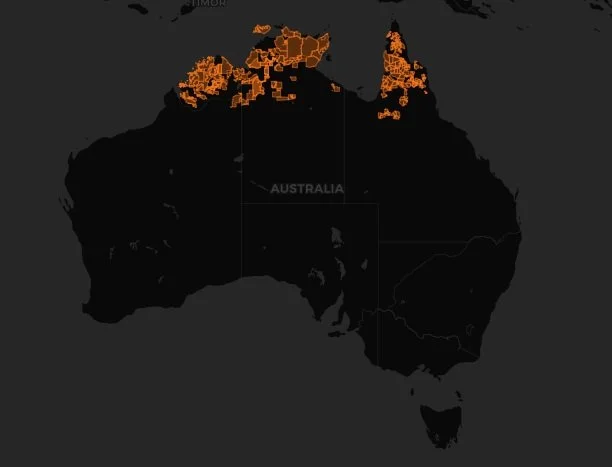
The SFM method was introduced in 2018 to incentivise and reward landowners and custodians in the northern regions of Australia to stop the massive carbon dioxide releases associated with high-intensity dry season bush fires. This is achieved by doing fringe-season “cold” burns, which are less intense and release a fraction of the carbon dioxide. They ensure that dry season burns are reduced both in terms of frequency and intensity.
The ACCUs awarded for this method typically represent 10 to 15% of all credits awarded annually, and in recent years have hovered around the 1.5 million mark. To put this in financial perspective, at current prices this would be around $50m worth of credits.
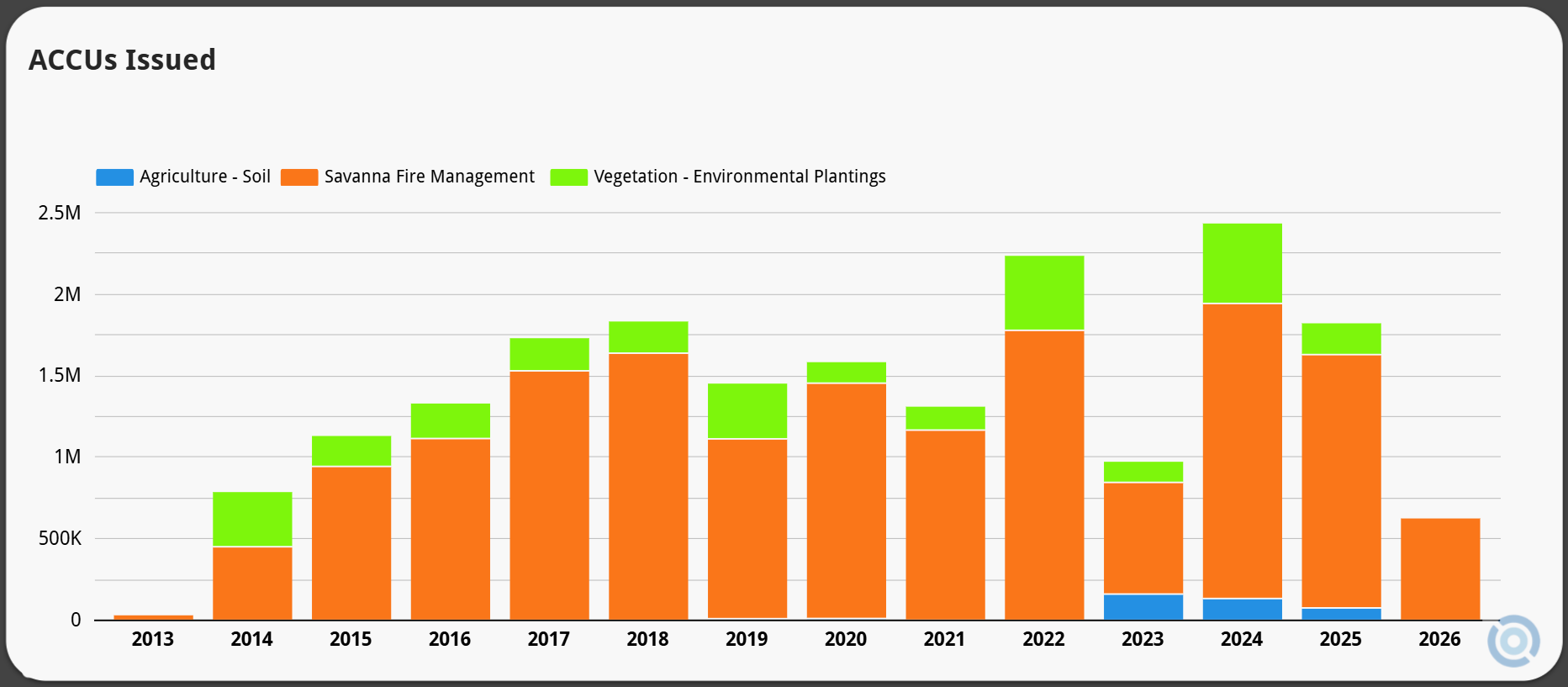
Annual ACCUs awarded to Savanna Fire Management projects
Expanding the method: A proposed change to the rules
The CER recently announced a proposal to award more credits for savanna fire management projects. The additional credits would be awarded because the updated method would now include the carbon captured by living biomass and standing dead wood.
The justification for the extra credits, is that reducing intense dry season fires leads to the following sequestration and avoidance:
Methane and Nitrous Oxide emissions have been avoided by reducing the intensity of fires.
Dead ground matter has not been burnt, and its associated carbon has therefore not been released.
Living biomass increases, allowing it to sequester more carbon.
Standing dead wood remains unburnt, therefore avoiding further carbon release.
The last two on this list are the proposed additions to the method, and were not originally considered in the original SFM method: Carbon Credits (Carbon Farming Initiative-Emissions Abatement through Savanna Fire Management) Methodology Determination 2015
Additionality is key, but can it be retrofitted to existing projects?
The CER is proposing that existing projects can move onto the new method:
Some savanna fire management projects who move on to the proposed new methods (if made) could gain more ACCUs due to the inclusion of sequestration within living biomass and standing dead wood in carbon abatement calculations.
The CER along with all internationally recognised organisations in the carbon space (IPCC, CDM, VCS, Gold Standard, ART TREES to name a few) emphasise that additionality is key for any carbon credit programme.
Additionality means a carbon project must cause carbon savings or storage that would not have happened anyway without the project. Projects that are already registered and have already been awarded credits would potentially be awarded additional credits for no additional action or storage. Just because the living biomass and standing deadwood isn’t being accounted for now doesn't mean it’s not sequestering carbon already.
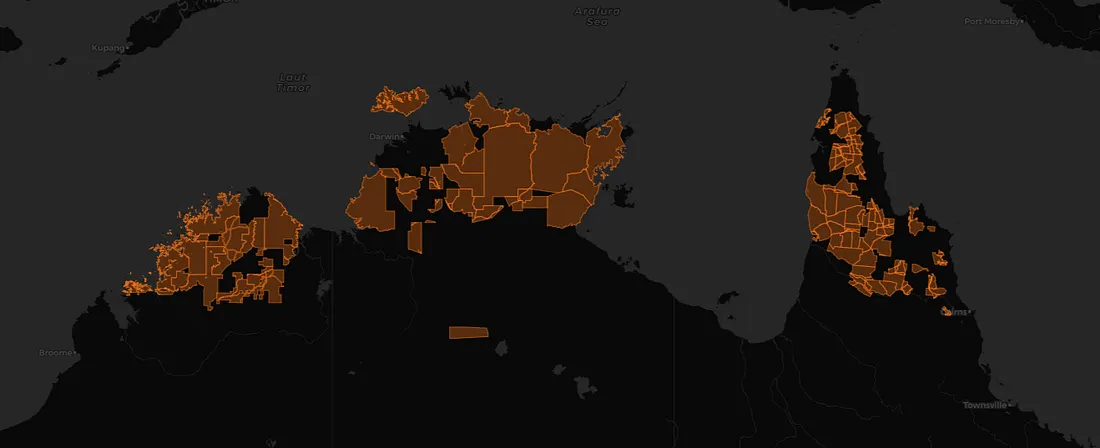
Registered Savanna Fire Method projects that have already been awarded credits
This is could pose a reputational risk for the regulator. Not only does is seem to go against its own rules on additionality, but it also casts doubt on the international standing of the method, as well as the ACCU as a whole. To reference the legislation which outlines the Offsets Integrity Standards:
“[projects] should result in carbon abatement that is unlikely to occur in the ordinary course of events”
Read how Qantas announced that a quarter of its voluntary carbon offsets would come from Aboriginal and Torres Strait Islander projects, check out our blog article Indigenous land, corporate offsets: What Qantas is buying into
The “ordinary course of events” for projects already earning credits is well-established, and performing cold burns to manage dry season fires is a key part of it.
It could be argued that the additionality test should be applied when a project is registered. Once a project is proven to be additional, the level of additionality (and associated credits) could evolve as scientific understanding improves. This is a valid argument, but the message needs to be carefully managed. A legal justification does not always prevent reputational damage, especially in a space already facing heavy scrutiny and criticism.
The smaller problem: How the extra credits will affect the market
There have been concerns that the additional credits flood the market and the increase in ACCU supply will drive down prices. This concern is misguided for two reasons. Firstly, from an environmental perspective, the more carbon we sequester the better. Increased supply in this context is a positive development. Secondly, since savanna fire management makes up only a small portion of the total ACCUs issued, an increase in these credits won’t significantly affect the overall market supply.
Filter by method or status to highlight all savanna burning projects, or just those that are active and issuing credits.
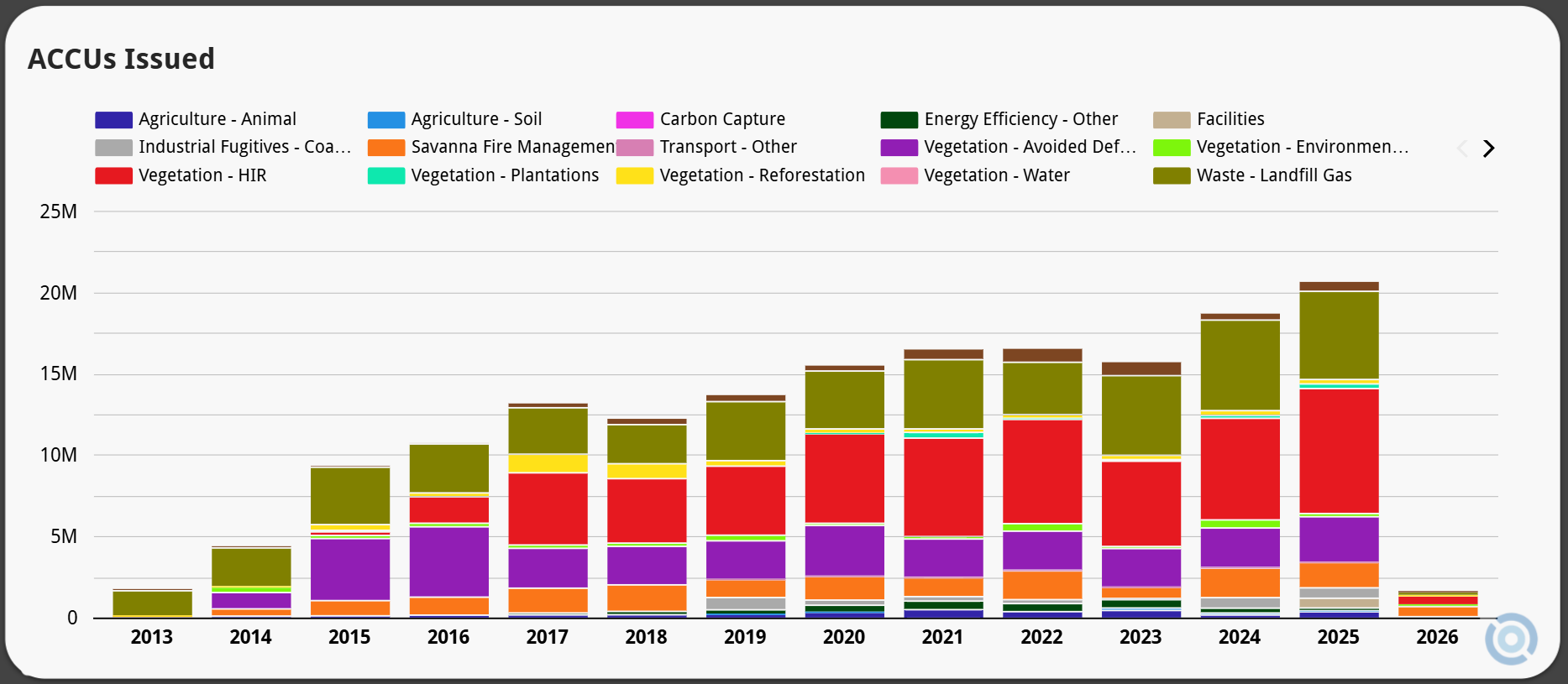
Number of ACCUs awarded per method annually. Savanna Fire Management credits represent 10-15% of all credits awarded.
The final verdict: navigating reputation and integrity
The Clean Energy Regulator needs to tread carefully. While a case can be made for updating the SFM method as scientific understanding develops, the proposal to grant additional credits to existing projects poses a significant reputational challenge.
The core issue lies in the principle of additionality, which states that carbon savings must be new and would not have happened otherwise. By awarding more credits for activities already underway, the CER risks breaking its own rules and undermining the credibility of the entire ACCU programme.
To safeguard its reputation and the integrity of Australian carbon credits on the international stage, the CER must carefully articulate its rationale, stating exactly how and when the concept of additionality applies to a project’s lifecycle. A solid legal basis won’t be enough to satisfy critics in this already sensitive and heavily scrutinised space.
References
Clean Energy Regulator (CER)
Current Savanna Fire Management method 2015: Carbon Credits (Carbon Farming Initiative-Emissions Abatement through Savanna Fire Management) Methodology Determination 2015
Proposal awarding more credits for Savannah Management Projects June 2025: CER Announcement
Commonwealth Consolidated Acts
CARBON CREDITS (CARBON FARMING INITIATIVE) ACT 2011 -SECT 133 Offsets integrity standards
Want to know more?
Want to know more? Check out ACCU methods unpacked: What’s driving real value? Exploring the performance, market dynamics, and future outlook for three key carbon credit methods.
Carbon Eyes | ACCU Market Intelligence
Strategic data and integrity signals for the Australian carbon market.
1. Carbon Data Platform
The Foundation of Market Transparency | Access the Platform
A comprehensive view of the ACCU landscape. Access structured CER data, project status and issuance trends. Use our core mapping and analytics to establish your market baseline.
2. Integrity & Market Intelligence
Independent Ratings & Supply Forecasts | Upgrade Your Intelligence
Mitigate risk with our paid intelligence layer. Accessed directly within the Platform, these add-ons provide independent ACCU project ratings and forward looking supply forecasts to guide procurement and investment.
3. Land & Asset Decisioning
Identify the Best Opportunities for Carbon Projects
Carbon Potential Report | View Carbon Potential Report (by address)
Instant, address-based viability assessments for lenders and investors.
Carbon Land Search | Identify & Assess High-Potential Assets
Our premium search engine for institutional funds. Identify and de-risk high-potential carbon assets before acquisition.