
The latest monthly register update by the Clean Energy Regulator saw approximately 3.15 million ACCUs shared across 98 projects. Approximately 62% of these credits were gained under the expired avoided deforestation method. During the same update period - September 2026 - only 14 new projects were registered. Meanwhile, four projects were voluntarily revoked, making for a net gain of 10 to the total of active projects. See the latest projects here.

New registrations
Of the 14 registrations in September, the most popular method was plantation forestry with six new projects, followed by soil carbon (three), environmental planting (two), and one apiece for energy efficiency, savanna fire management and blue carbon.
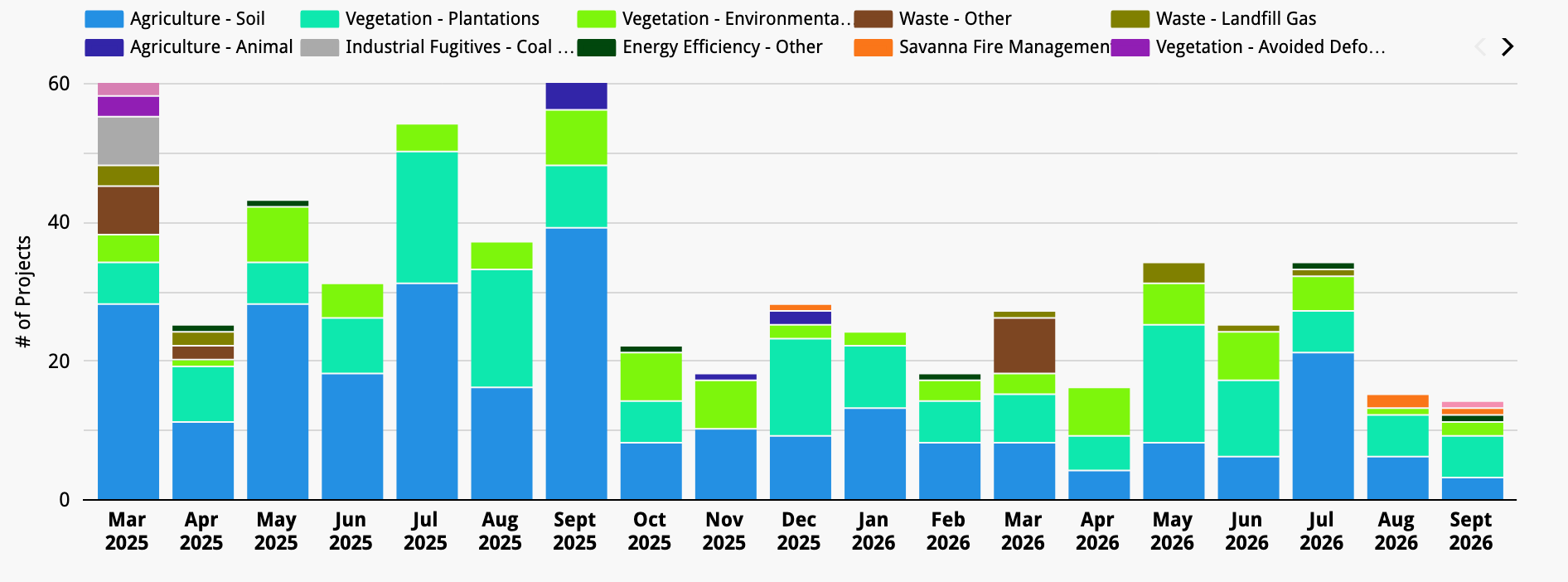
New projects by method and month
So far this year, 77 soil projects have been registered, while new plantation forestry projects total 73. Environmental planting projects round off the top three with 36 registrations. Soil has led registrations for five of the last six years, but if plantation forestry maintains its current momentum, it looks set to take the top spot for 2026.
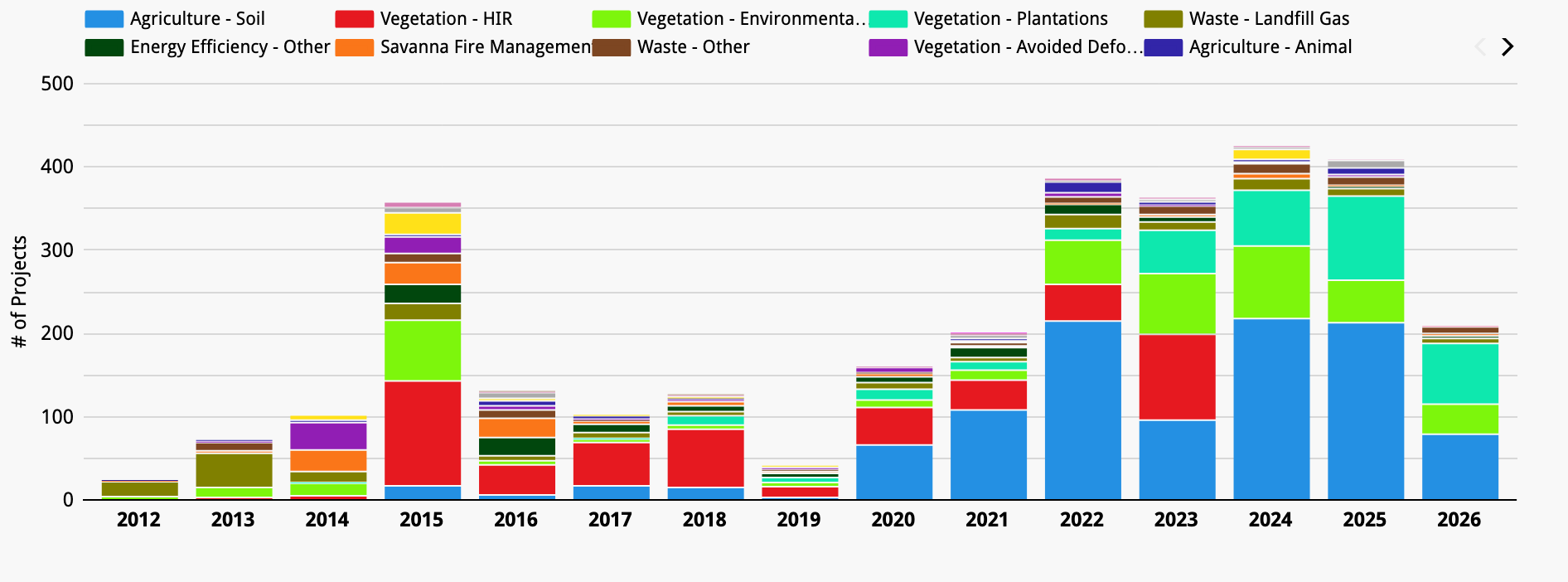
New projects by method and year
In terms of location, New South Wales and Victoria both had four new projects, while Victoria and Tasmania had three each.
Some of the new projects
First phase of massive savanna fire project
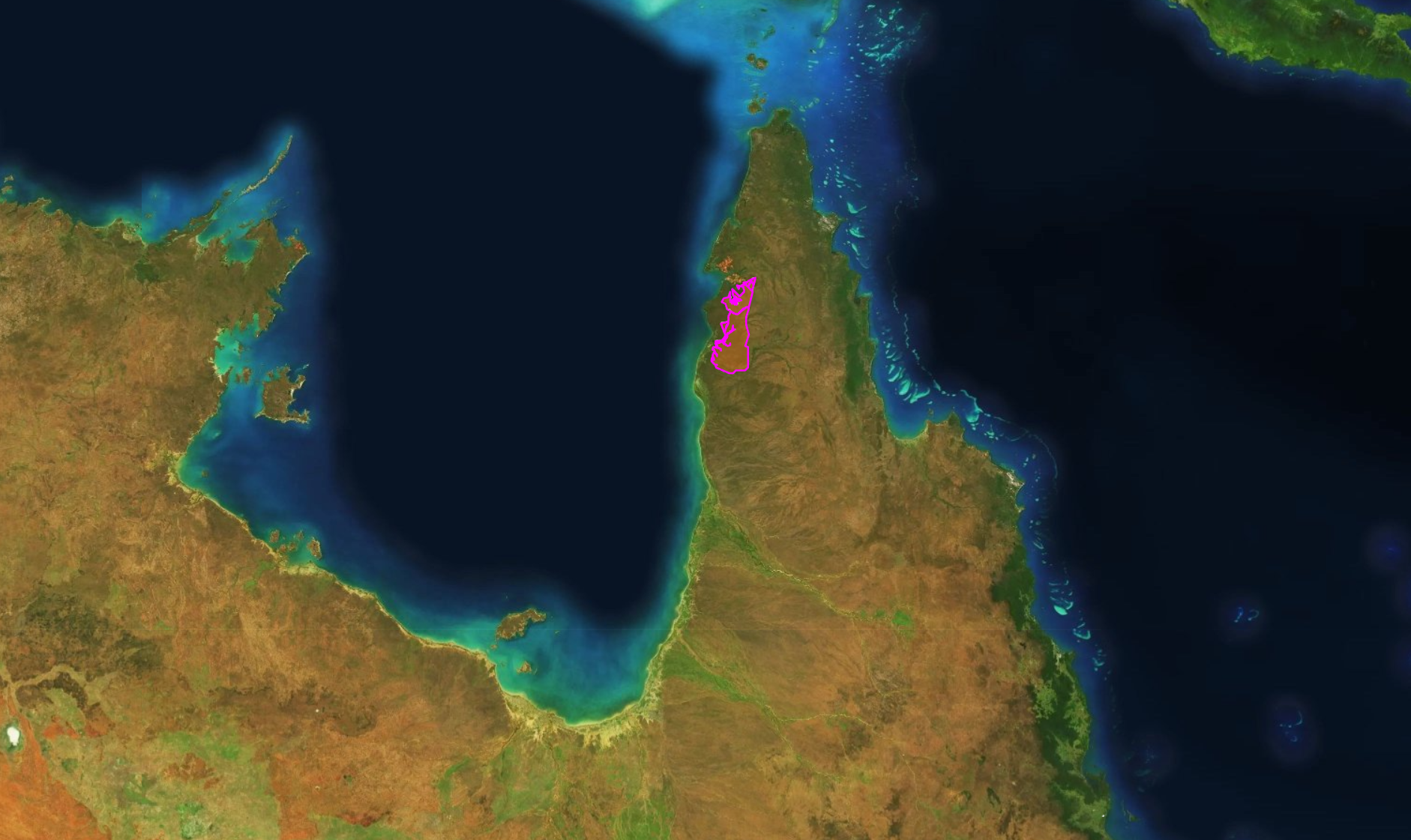
ERF211562 | View on Project Explorer
Ignite Together Savanna Fire Management Project #1.
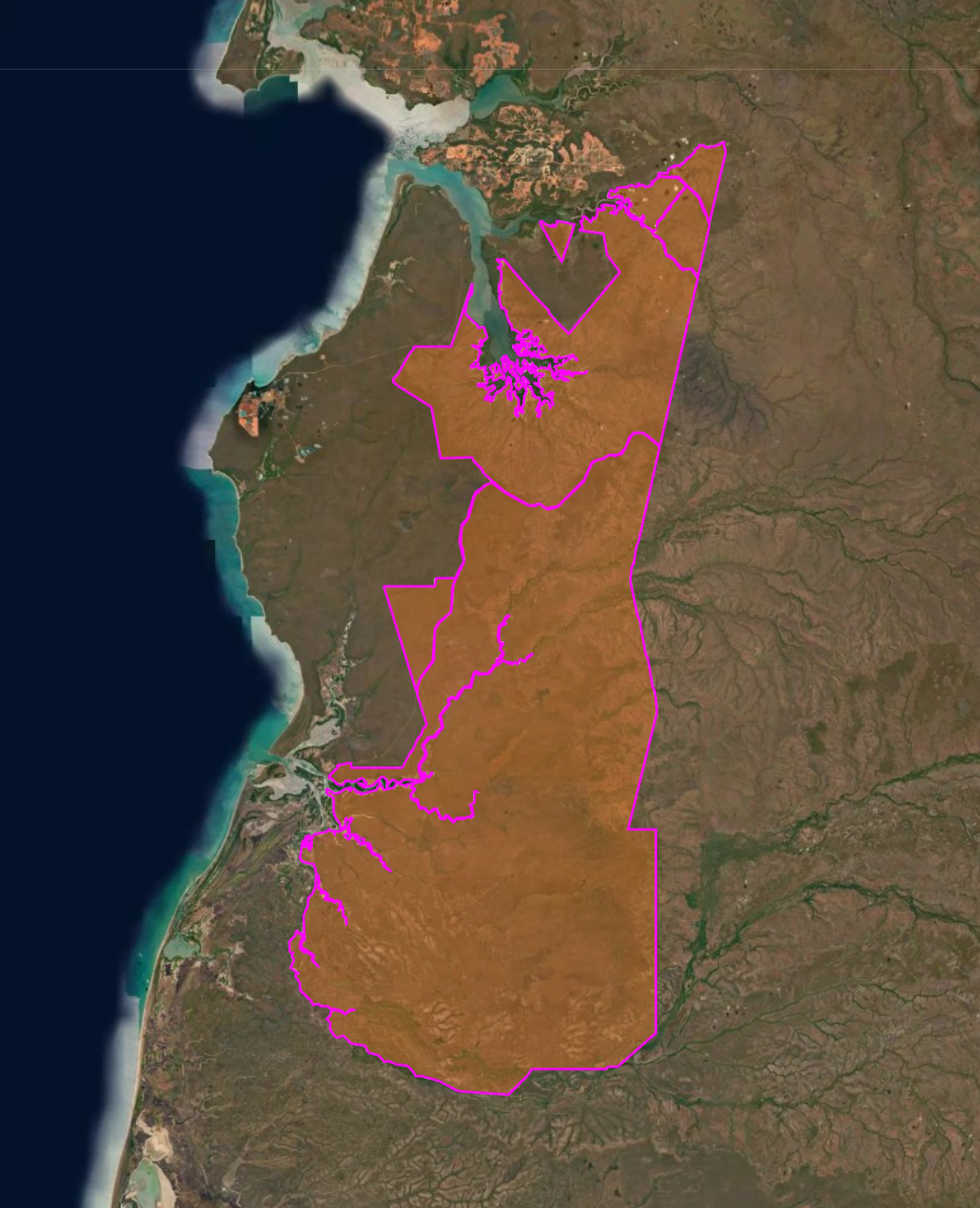
This project covers some 346,500 hectares in the Cape York Peninsula of Far North Queensland, a high rainfall area, with distinct wet and dry seasons. The project undertakes to carry out annual controlled burns early in the dry season, to help prevent much larger wildfires later on.
Ignite Together has been registered under the sequestration and avoidance component of the Savanna Fire Management Methods 2026, under which projects not only earn credits for avoided emissions, but also from increased carbon storage in trees and woody shrubs.
The project proponent is Ignite Together Pty Ltd. Its agent - Corporate Carbon - estimates that SFM crediting has helped turn “northern Australia’s savannas from an emitter of around 19 million tonnes of carbon dioxide equivalent a year, into a net sink of 3.5 million tonnes a year”.
Advanced plantation forestry fire detection
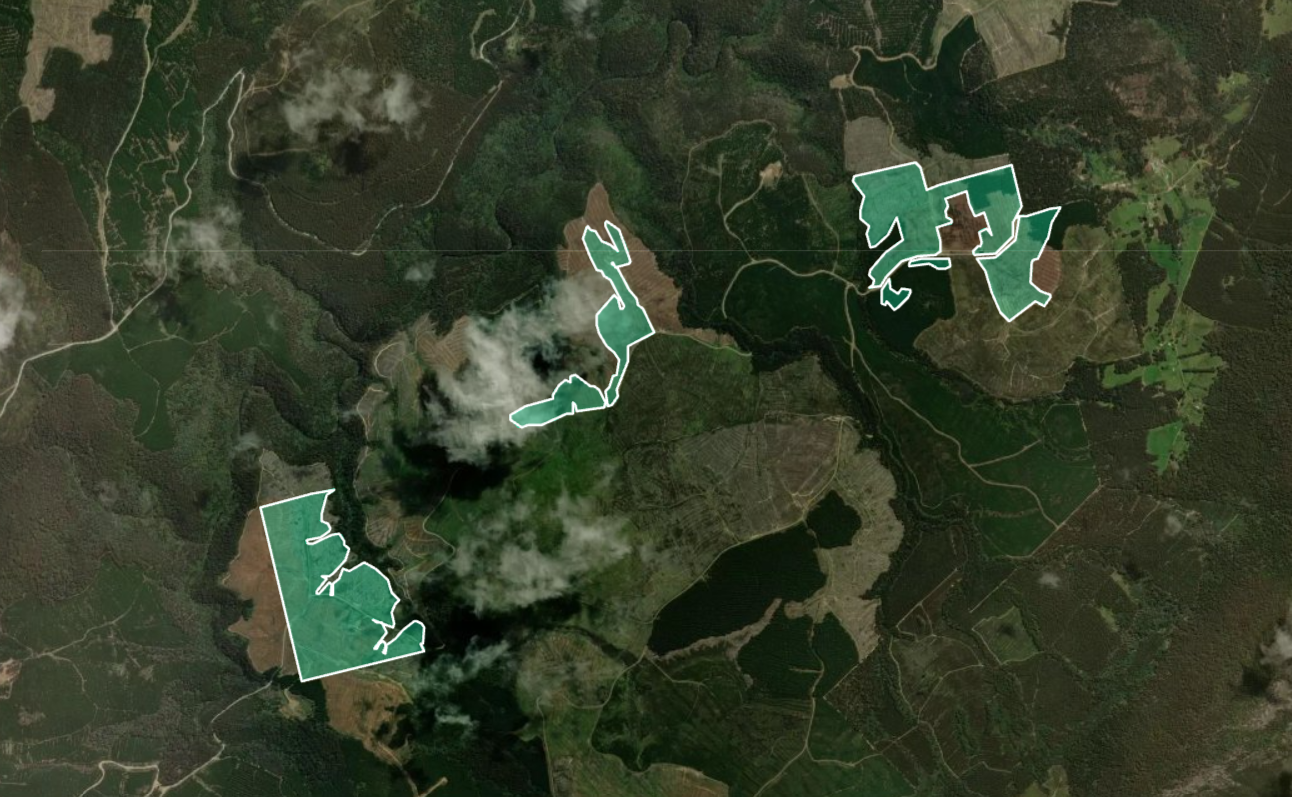
ERF210291 | View on Project Explorer
Lenah2026R_Plenty_S3 |
This 118-hectare plantation forestry project is situated within Lenah Estate, which is owned by global investment company New Forests, and encompasses roughly 18,500 hectares of production pine. The surrounding Derwent Valley region of Tasmania is known for its extensive commercial forestry operations, alongside sheep grazing, hop growing, and viticulture.
This project aims to earn carbon credits by avoiding the conversion of an existing or harvested plantation to non-forested land, by continuing the plantation and maintaining a new forest for the commercial harvesting of wood products.
The land and carbon project are managed by SFM, a company which uses sophisticated forest management technology, such as early fire detection camera systems, including FireHawk and ForestWatch. These systems were trialled across the Lenah Estate to decrease emergency response times and increase community safety.
Indigenous-owned blue carbon project
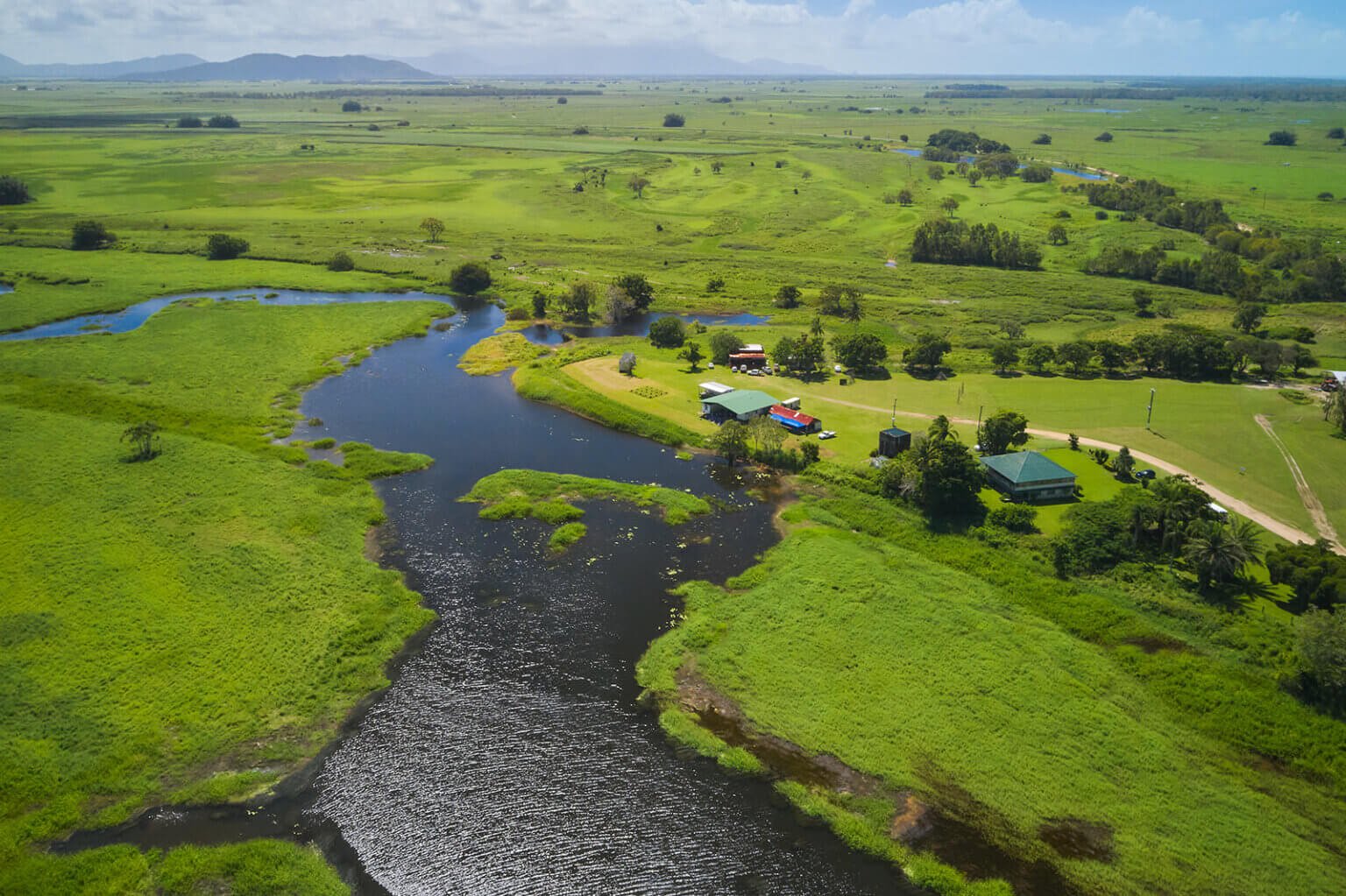
Aerial view of Mungalla Station. Image by Romy Photography for Mungalla Aboriginal Business Corporation.
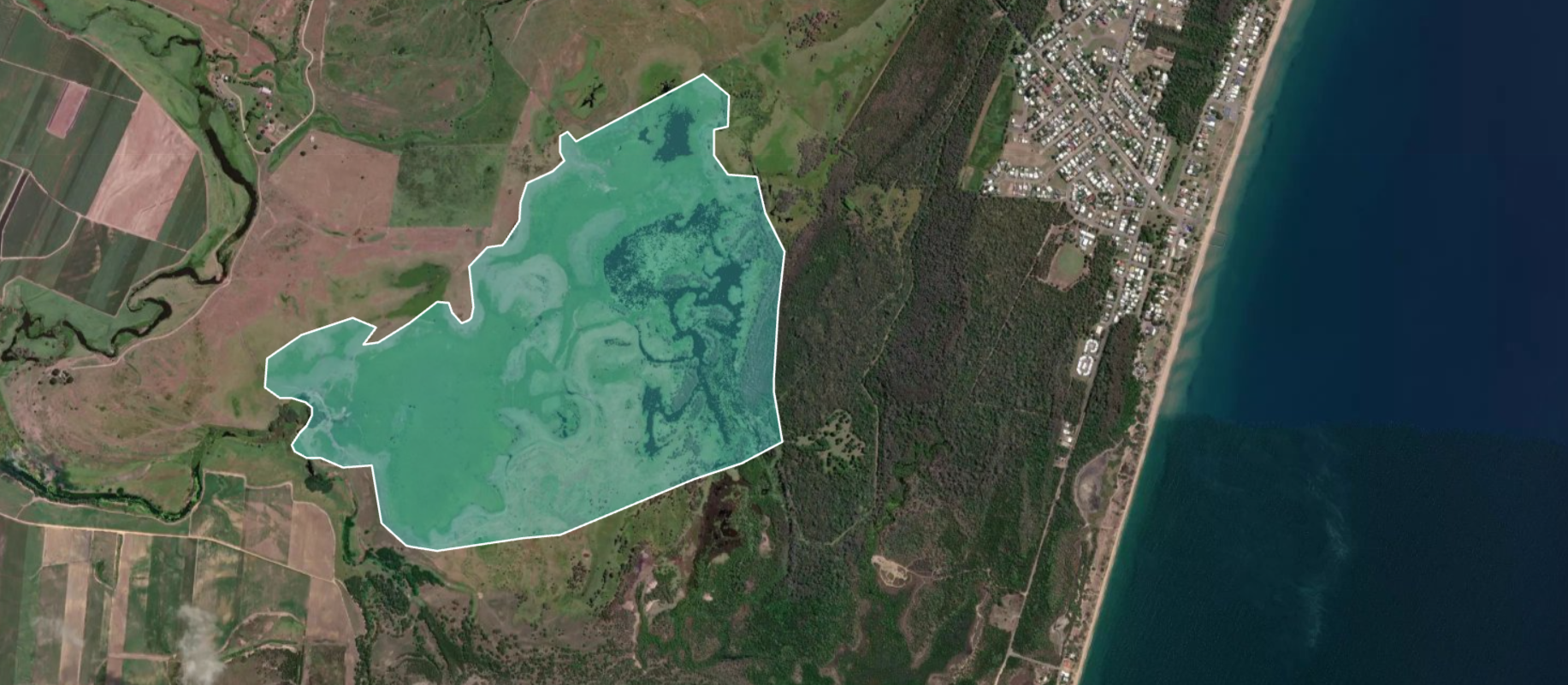
ERF203451 | View on Project Explorer
Mungalla Wetlands Blue Carbon Restoration Project
Only the third project to be registered under the Tidal restoration of blue carbon ecosystems method 2022, it seeks to re-introduce coastal tidal flows to Mungalla Station in Queensland. The method involves removing at least one tidal restriction mechanism, in this case a historic bund wall which has led to the surrounding saline wetlands becoming a freshwater system choked by invasive weeds.
Removing this wall should not only sequester carbon, but also rehabilitate a vital habitat for fish and aquatic birdlife, as well as improve water quality flowing into the Great Barrier Reef. Another co-benefit would be new eco-tourism business opportunities for the Nywaigi Traditional Owners.
The project forms an important part of ongoing cultural and ecological restoration of Mungalla Station, which is owned by Nywaigi Aboriginal Land Corporation, and managed by its subsidiary, Mungalla Aboriginal Corporation for Business.
Biodiversity-stacked environmental plantings
Cooplacurripa environmental planting projects
Phase 1: ERF201057: View on Project Explorer
Phase 2: ERF206427: View on Project Explore
Phase 3: ERF203451: View on Project Explorer (new project)
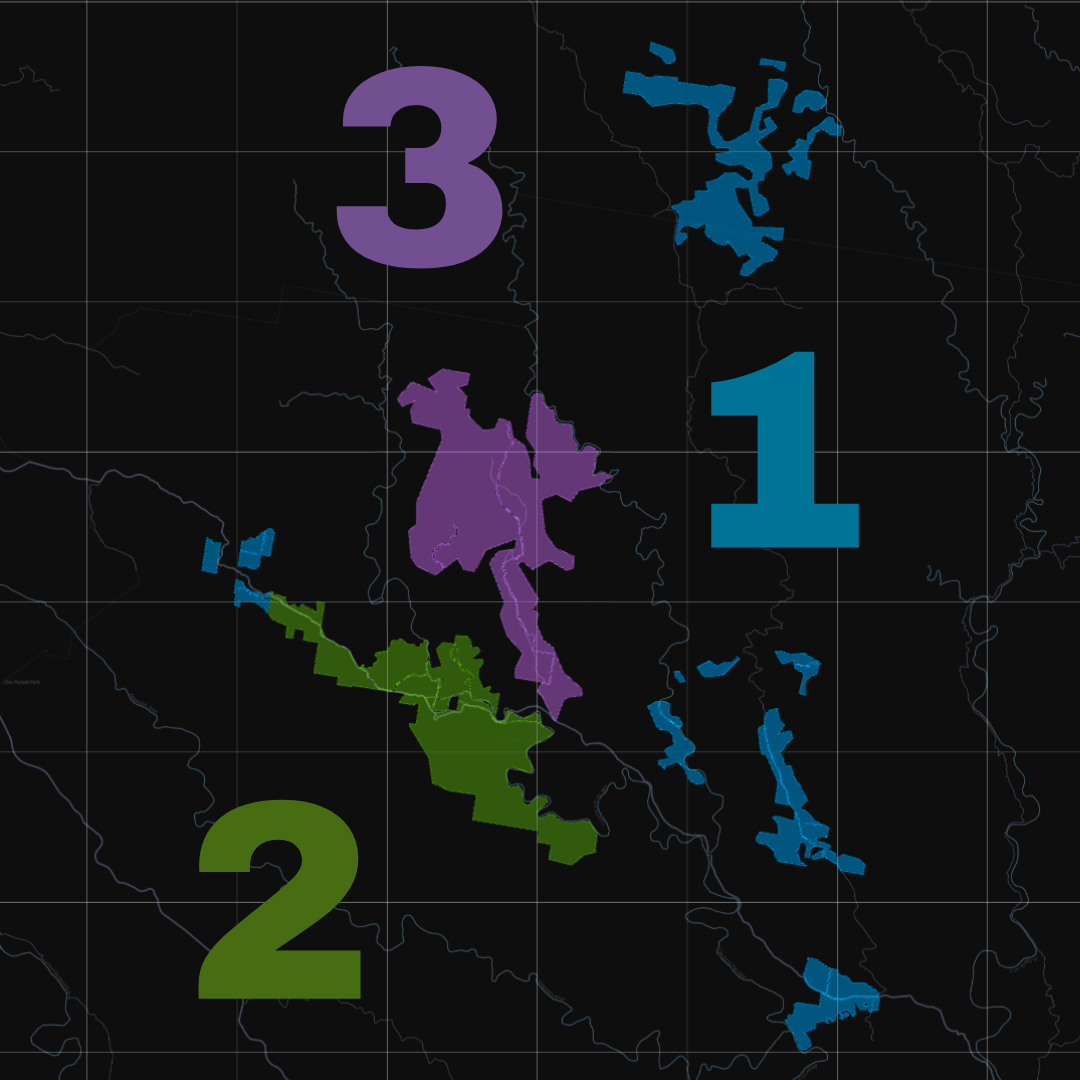
This is the third and largest so far of an ambitious series of environmental planting projects at the historic Cooplacurripa Station, near Gloucester in New South Wales. It covers 2,172 hectares, which will be planted with a mix of locally native trees and shrubs, to create a permanent forest.
Both previous phases have been linked with a Nature Repair Market project, in order to earn both carbon and biodiversity credits on the same parcel of land. The Cooplacurripa EP and NRM projects form part of a broader partnership between Silva Capital and Covalent Land Australia.
Beyond their environmental outcomes, the first two phases of the project have partnered with the local Traditional Owners, including the Purfleet-Taree Local Aboriginal Land Council.
Credits issued
A total of 98 projects earned ACCUs during September, gaining a combined issuance of just over 3.15 million credits. Of these projects, 87 had been credited at least once before, while for the remaining 11, it was their first ACCUs.
The highest individual award went to Fords Bridge Aggregation Native Forest Project (see below), which earned 597,337 credits, while the smallest issuance was to AA2024R_RhyndastonP_S3, a plantation forestry project in Tasmania, which gained 549 ACCUs.
Fords Bridge is an avoided deforestation project located in New South Wales, like the six next highest earning projects in September:
Glenwood Native Forest Protection Project (238,628 ACCUs);
Meadow Glen Native Forest Protection Project (236,292);
Ashwood Native Forest Protection Project (195,196);
Nullawarra Station #2 Native Forest Protection Project (128,767);
Killala Native Forest Protection Project (99,861).
All these seven projects received their ACCUs after the end of their crediting periods.
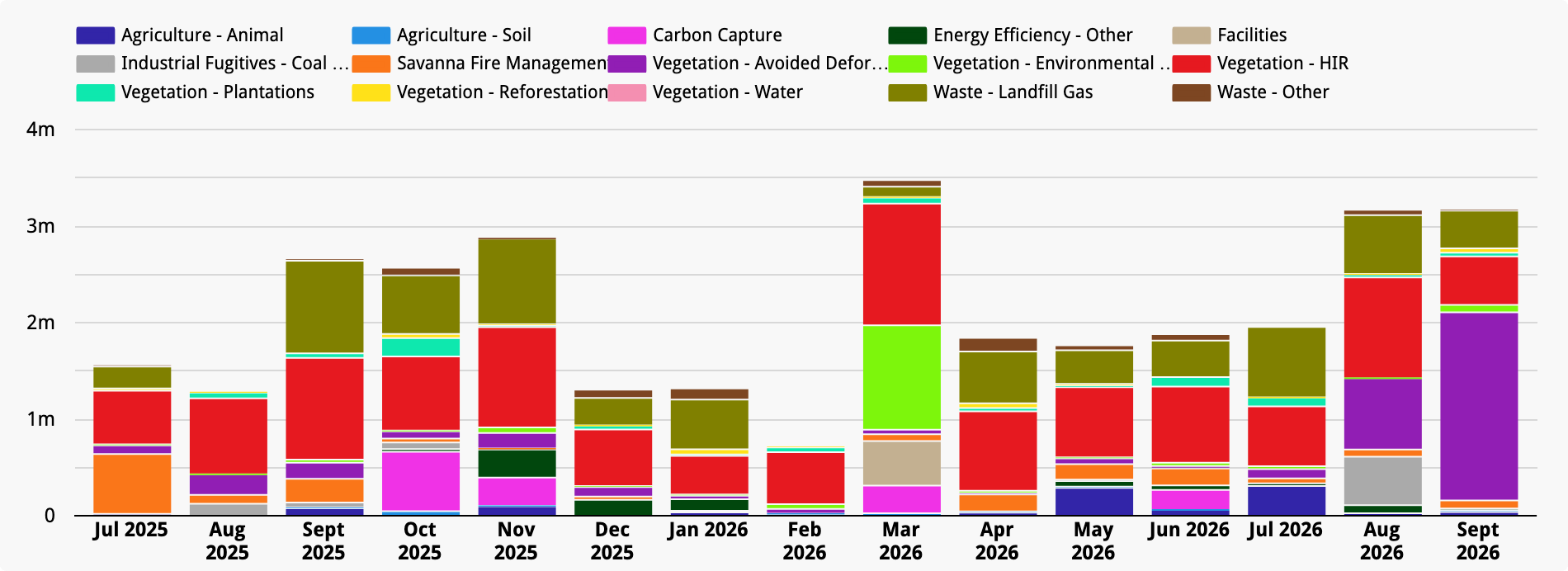
Credit issuance by method and month
In terms of lead momentum - as either proponents or agents - TerraCarbon was the clear winner, helping to secure 2,099,160 ACCUs. Second placed was LMS Energy, with 234,821 credits. While in third spot, was Climate Friendly, with 191,401 ACCUs. The chart below shows the top eight project leads over the past 12 months, excluding the most recent month.
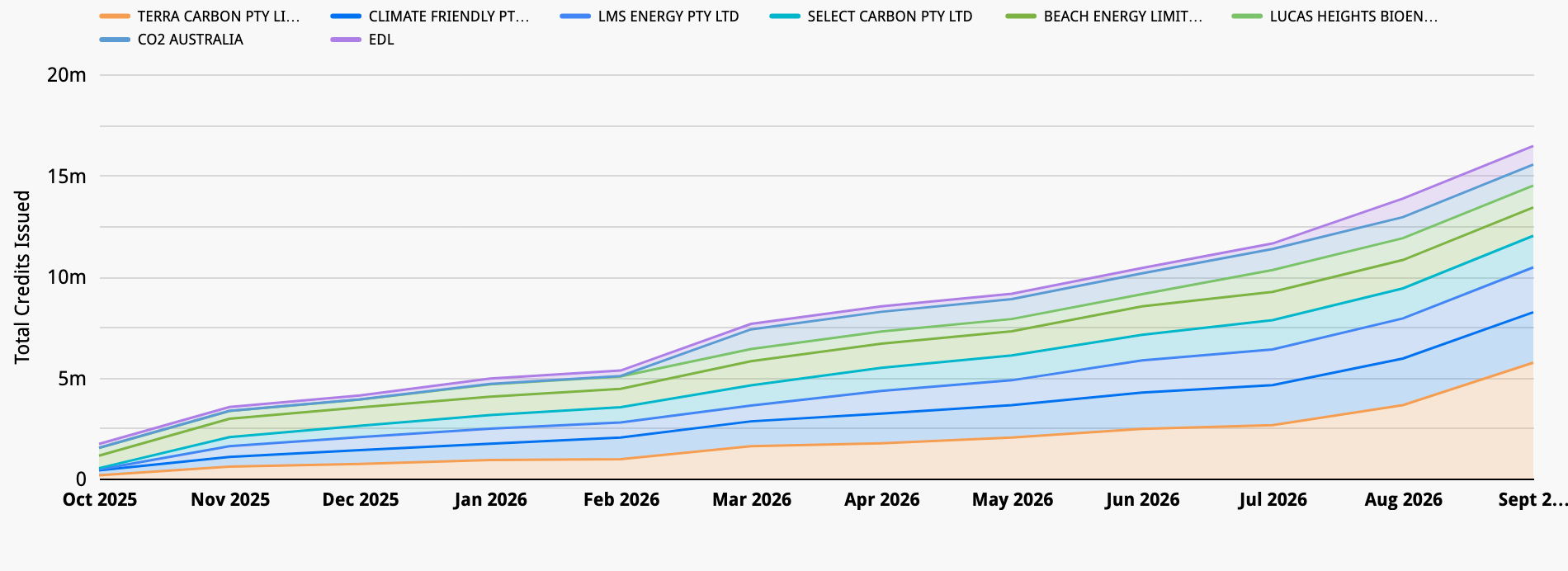
Top 8 project lead momentum over the last 12 months
New South Wales was the clear winner in terms of issuance, with 2,444,146 credits earned in September. Second was Queensland with 424,873 credits, followed by Tasmania (73,825), ACT (53,834), Western Australia (52,083), Victoria (50,059), South Australia (38,680), and Northern Territory (16,217).
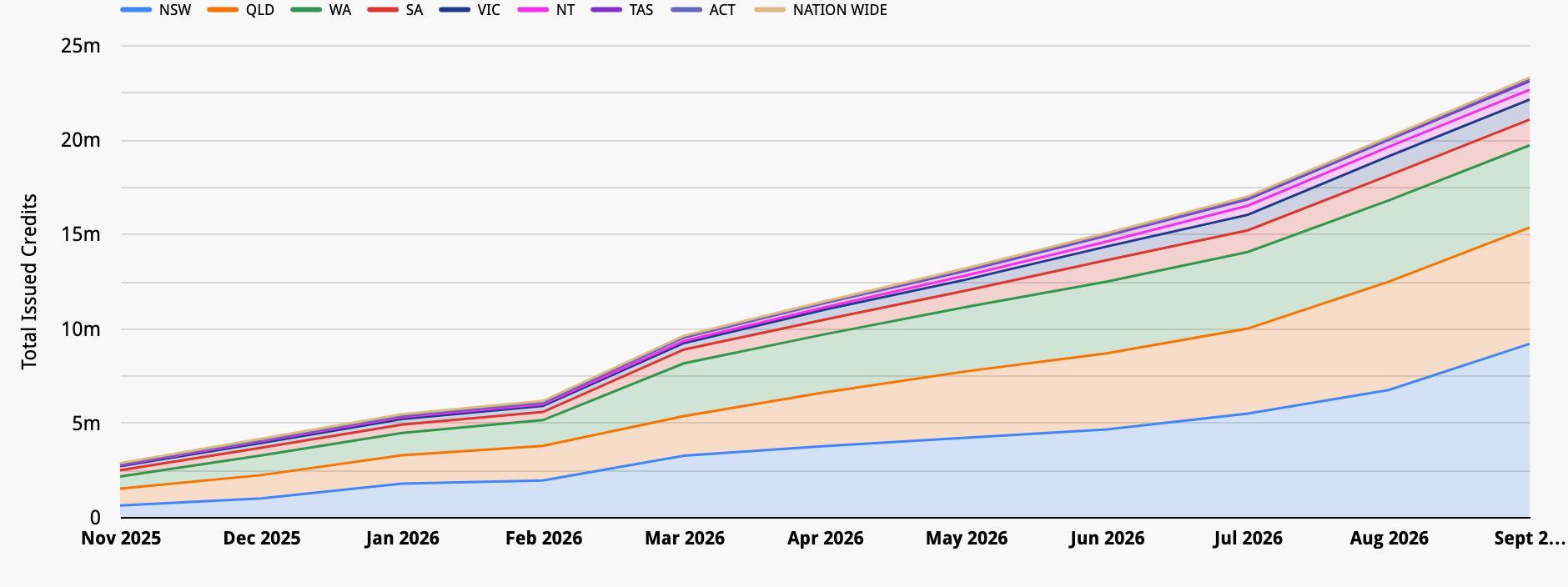
State ACCU issuance momentum over the last 12 months
Some of the credited projects
Fords Bridge Aggregation Native Forest Protection Project
EOP100883 | View on Project Explorer
Covering an expansive 32,827 hectares, in the Back O’ Bourke region of northwest New South Wales, Fords Bridge was registered in late 2024. Its latest award of 597,337 ACCUs took its total issuance to 1,890,414 credits, the second highest of any avoided deforestation project.
Under this method, projects earn credits for avoided emissions by protecting native forests which have a clearing permit granted before July 2010.
The project’s agent, TerraCarbon, secured an abatement contract with the Commonwealth in April 2015, for 996,544 credits, of which 880,637 has been fulfilled.
Chatsworth House Carbon Pty Ltd ATF Chatsworth House Carbon Trust
ERF159142 | View on Project Explorer
Registered in February 2021, this 2,339 hectare soil carbon project is located at the extensive pastoral estate associated with Chatsworth House in Victoria’s Western District. The heritage-listed mansion was built between 1859 and 1861 by architect James Henry Fox, in the Classical Revival style.
In September 2026, Chatsworth earned its first 18,864 ACCUs, making it the highest credited soil project in Victoria, and the fifth nationwide. The proponent is Chatsworth House Pastoral Co Pty Ltd as the Trustee for Chatsworth House Pastoral Trust, while the agent is CarbonLink.
Soil projects involve altering agricultural management practices to increase the amount of carbon stored in the soil, in this case by applying nutrients to the land. After a redesign in 2025, the project was able to show some 25,000 tonnes of carbon sequestration.
The estate - operated by Tom and Sarah Whinney - is a mixed grazing enterprise using regenerative principles and running around 35,000 of sheep and cattle. As well as farming, Chatsworth House offers accommodation, and provides a venue for events, including corporate retreats and weddings.
Revoked projects
There were four voluntarily revocations in September, two human-induced regeneration (HIR) projects, one soil carbon, and one landfill gas. Only one of the four - Milhouse Reforestation Project - has earned credits in the past, which were relinquished in July 2026, as part of the revocation process.
Registered in March 2017, the project was restructured in February 2018, with specific land areas along with 37,422 carbon credits transferred to the much larger Flanders Carbon Project. The last 5.4 hectares of land under the Milhouse project has now been transferred to Flanders.
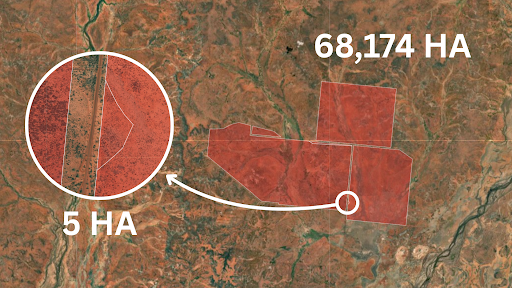
Consolidating the projects provides 2 main benefits for Project proponents Paniri Ventures:
Managing two separate carbon projects requires paying for duplicate third-party audits, offset reporting, and compliance mapping. Merging the land consolidates these expensive overheads into a single workflow.
Milhouse was registered with a 25-year permanence period, which triggers a mandatory 20% permanence deduction on all ACCUs. Flanders holds a 100-year permanence period, so gets full value credits.
The surrender of 56 ACCUs and the formal revocation of the Milhouse project completed the closure of the project.
To view ACCU statistics and trends head to Analytics Dashboard and create a free account to access additional pages.
Join our community to get the latest carbon market intelligence delivered monthly
See the latest projects for yourself in Project Explorer here.
Carbon Eyes (Infovest Pty Ltd) is a Corporate Authorised Representative (No. 001320924) of True Oak Investments Pty Ltd (AFSL No. 238184). Information is general only and does not consider your objectives, financial situation or needs.
Want to know more?
Check our time lapse video from 2012 to today showing the growth of Australia's ACCU scheme or if you missed last months register update: Carbon credit issuance for August was the second highest for 12 months
References
Clean Energy Regulator (CER):
Carbon Eyes ACCU project register and project level analytics
Carbon Eyes market commentary on ACCU project activity and issuance trends
Carbon Eyes | Carbon Market Intelligence
The independent view of Australia's carbon market.
1. Discover projects
Find and shortlist ACCU projects using structured CER data, market information and enriched project and land data. Get notified of project changes.
2. Understand the risks
Assess individual projects using detailed data, risk metrics and independent rating breakdowns, to understand project quality, characteristics and potential risks.
3. Go deeper
Get a detailed independent assessment of an individual project for high value procurement, investment, lending and offtake decisions.