
Carbon credit issuance for August was the second highest for 12 months
The latest monthly register update by the Clean Energy Regulator saw approximately 3.153 million ACCUs shared across 110 projects. During the same update period, only 15 new projects were registered, the lowest monthly figure since January 2025. Meanwhile, six projects were voluntarily revoked, making for a net gain of just nine to the total of active projects. See the latest projects here.

New registrations
The 15 new projects which were registered in August came across a mix of methods and locations. Plantation forestry and soil organic carbon both had six registrations, while there were two new savanna fire management projects, and one environmental planting project, the lowest since April 2025.
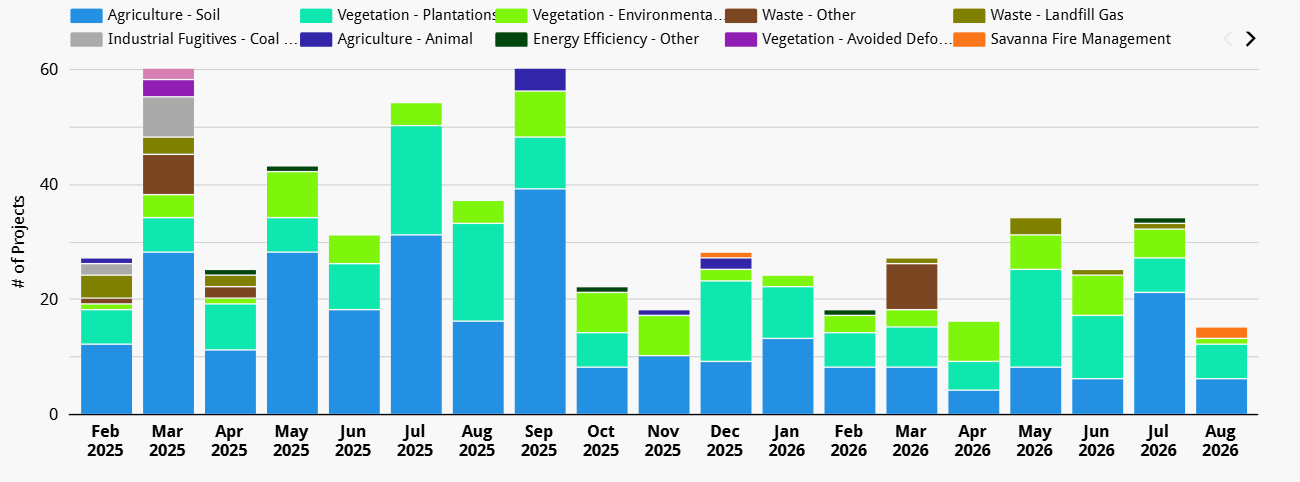
New projects by month and method
In terms of location, the projects were spread across all six states:
New South Wales (5);
Victoria (4);
Queensland (2);
Western Australia (2);
Tasmania (1);
South Australia (1).
All but two of the projects opted for a 25 year permanence period, with one choosing 100 years (Landari Port Lincoln 2026, ERF209708), and one does not require a permanence period (Wallar Bayan Carbon Project, ERF210035).
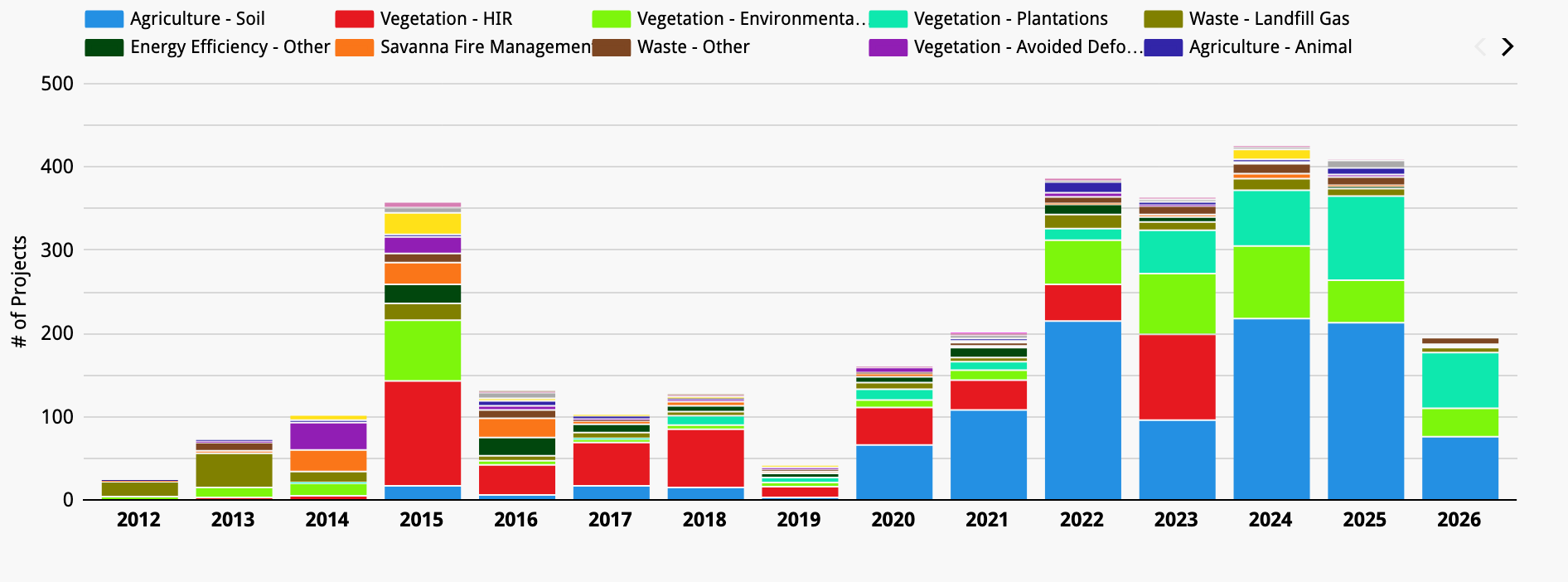
Project registrations by year and method
The net addition of nine projects took the total number of active projects to 2,640. If current trends continue, then 2026 could see the lowest number of ACCU scheme registrations since 2021. The most likely reason for this is the expiry of a number of methods in 2025, while several new ones under development have yet to start taking registrations.
Some of the new projects
Catombal Threatened Community Restoration Project
ERF210218 View on Project Explorer
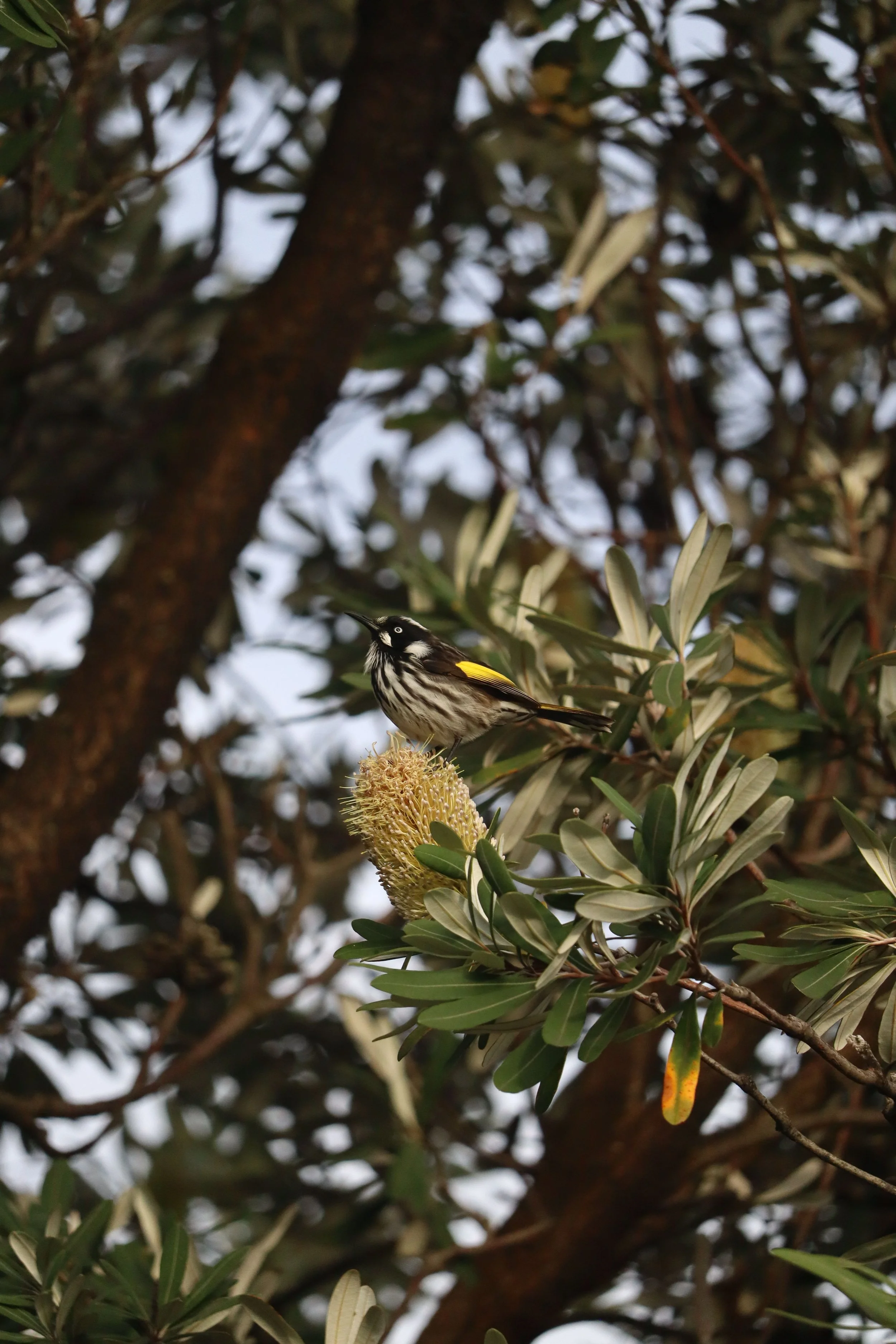
Photo credit Nakira Williams A New Holland Honeyeater perched on a Banksia flower in Apollo Bay, Victoria.
Located near Eurimbla, in the central west of New South Wales, this environmental planting project covers approximately 17.6 hectares. As the name suggests, Catombal aims to restore a threatened ecological community.
An ecological community is a naturally occurring group of native plants, animals and other organisms that interact in a unique habitat. In Australia, these include woodlands, grasslands, shrublands, forests, wetlands and ground springs.
The project, which is run by Catombal Pastoral Co, involves establishing a permanent mix of native tree and shrub species that are local to the area, as well as being key to restoring a threatened ecological community.
Any carbon credits it earns in the future would likely be highly sought after by corporate buyers looking for premium environmental, social and governance (ESG) credentials.
Woodaburrup Project
ERF208488 View on Project Explorer
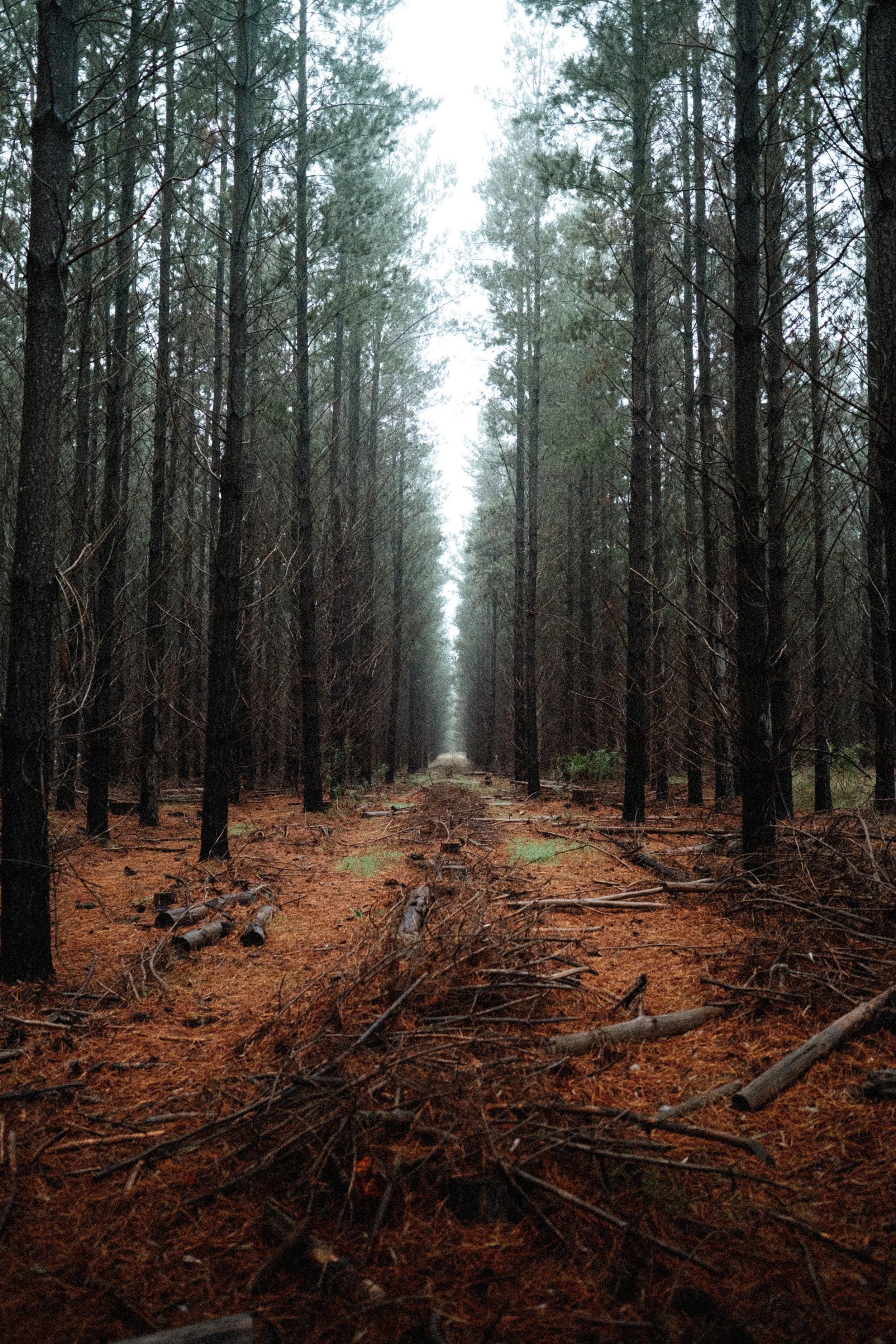
Photo credit Matt Webster, An established forest in the Barossa Valley, South Australia.
A growing trend in the Australian carbon market is corporate investment in plantation forestry ACCU projects, such as this one. They have the potential to earn two income streams, one from commercial forestry, the other from carbon credits.
This project covers some 246 hectares near Augusta, in the South West region of Western Australia. Commercial forestry operations sequestrate carbon in two ways, one through plant biomass and soil, and the other in the harvested wood products.
Woodaburrup is the fifth plantation forestry project registered in Western Australia by proponent Peppermint Estate, over the last four years. Peppermint Estate is owned by global forestry investment firm New Forests.
It is not just institutional investors which see the value in plantation forestry ACCU projects, as government agencies are also active participants in the market. The latest example of this is FPC 2026 CP6 (ERF209634) - a project managed by the Forest Products Commission, an agency of the Western Australia state government.
Also located in the South West region of Western Australia, this project covers just under 495 hectares. It seeks to generate commercial income, as well as help meet climate goals by sequestrating carbon. FPC 2026 CP6 is the 16th ACCU project registered by the commission since 2018.
Olive Vale Savannah Burning Project
ERF210036 View on Project Explorer
Wallar Bayan Carbon Project
ERF210035 View on Project Explorer
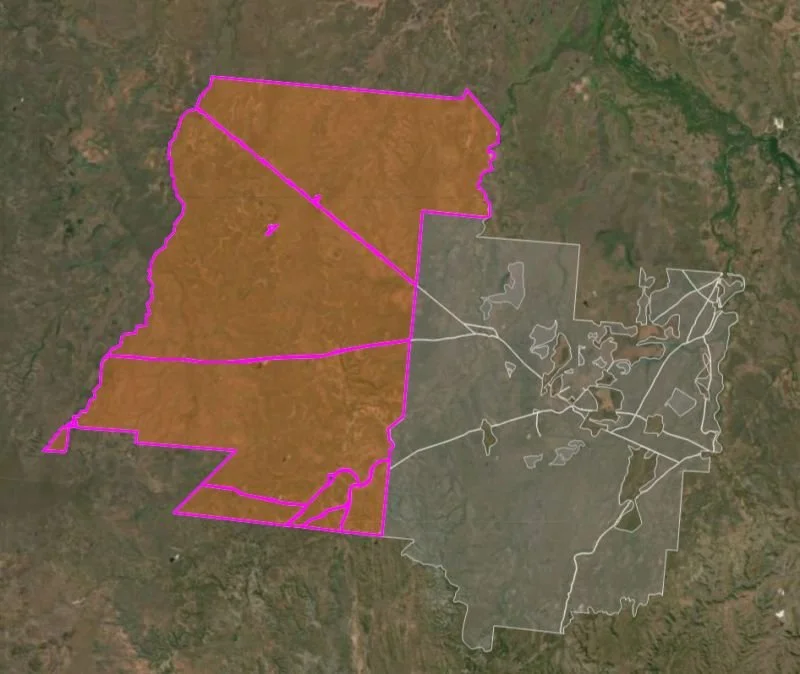
The two SFM projects registered in August shared the same proponent (Olive Vale Pastoral Pty Ltd), agent (Carbon Fix), and state (Queensland). But while they were both registered under the Savanna fire management methods 2026, they differed on which of the two permitted methodologies were chosen.
Olive Vale Savannah Burning Project is located at Olive Vale Station in the Cape York Peninsula in Queensland’s Far North, and covers some 126,900 hectares. It is the first project to be registered under the sequestration and emissions avoidance methodology.
Beyond carbon farming and cattle, the station has been involved in diverse agricultural research, including into the agronomy and potential commercialisation of Australian native rice. The property faced environmental scrutiny in the past from conservation groups over the clearing of native vegetation.
Olive Vale won a court battle in late 2024 to stop Queensland Parks and Wildlife Service from seizing and destroying cattle which had strayed into Lakefield National Park.
Wallar Bayan Carbon Project was registered under the emissions avoidance methodology, the other possible pathway under the 2026 Act. Covering some 158,311 hectares, it is also located in Cape York Peninsula. This means that no permanence period is required.
The peninsula has a tropical monsoonal climate, with a distinct wet season (November to April) and dry season (May to October). By carrying out controlled burns early in the dry season, more intense and destructive fires can be prevented later in the dry season, thus reducing greenhouse gas emissions.
Credits issued
A total of 110 projects earned ACCUs during August, gaining a combined issuance of some 3.153 million credits. Of these projects, 99 had been credited at least once before, while for the remaining 11, it was their first ACCUs.
The highest individual award went to Moranbah North Waste Coal Mine Gas Power Station (ERF169184), which earned 356,222 ACCUs in August. At the other end of the scale was Caddigat Restoration Project (ERF195010), which gained its first 267 credits.
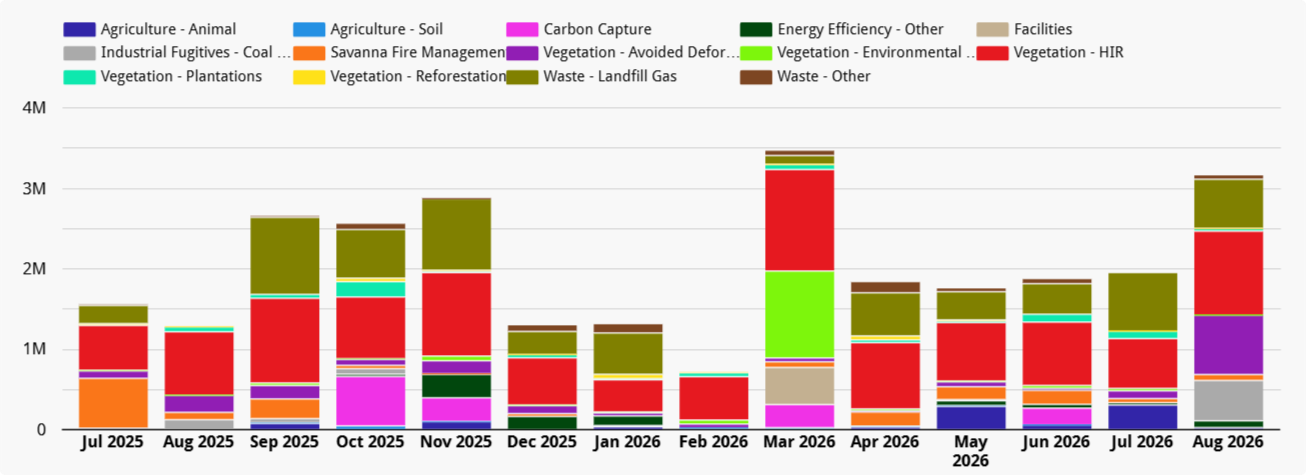
Issued credits by month and method
Vegetation projects (for the most part human-induced regeneration and avoided deforestation, but also plantation forestry and reforestation) dominated issuance, both in terms of the number of projects (63), and total issuance (1,818,495). This was followed by waste - principally landfill gas - with 35 projects, then industrial fugitives (5), energy efficiency (3), savannah fire management (3), and agiculture (1).
The top four methods in terms of issuance were:
Human-induced regeneration (1,042,869 ACCUs, 33% of total issuance);
Avoided deforestation (739,922, 23%);
Landfill gas (609,564, 19%);
Industrial fugitives (501,604, 16%).
Overall, these methods gained 2,893,959 credits, just under 92% of total credits issued in August.
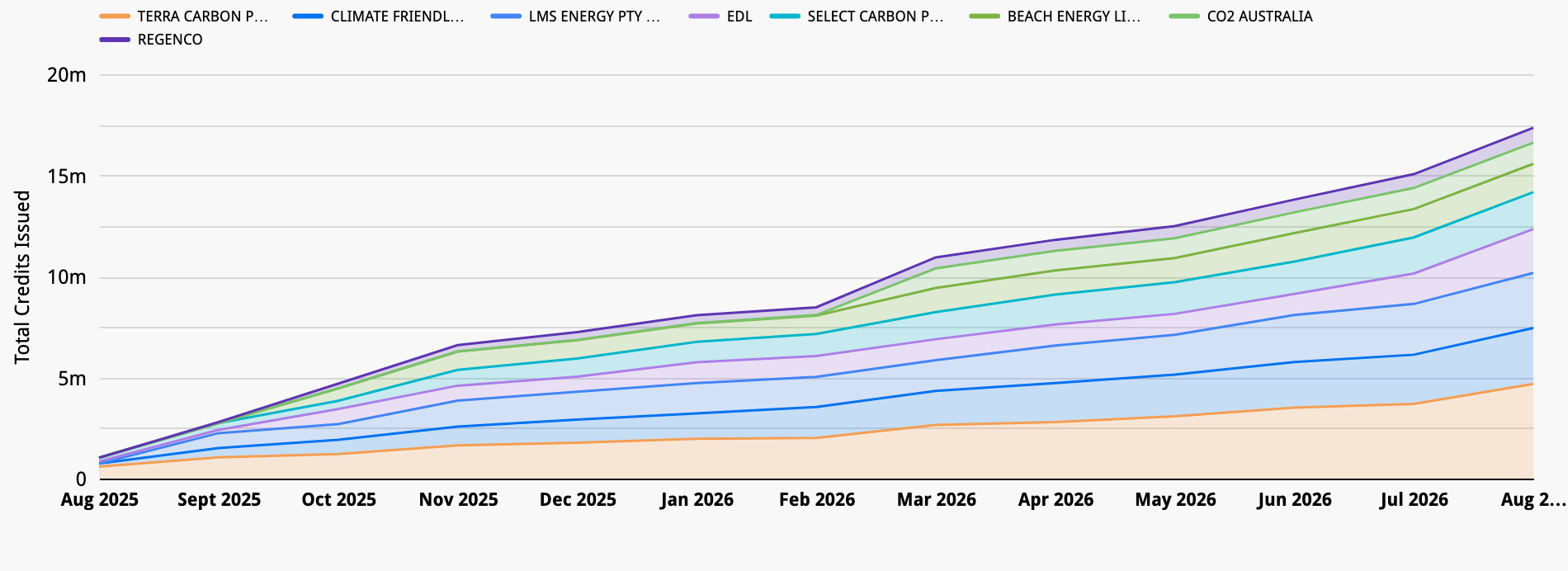
Project lead momentum for credit issuance over the last 12 months
The three most prolific proponents/agents were:
LMS Energy, with 24 landfill gas projects, gained a total of 215,087 credits, taking its total for the past 12 months to 2,512,116 ACCUs.
TerraCarbon secured credits for 21 vegetation projects, with a combined issuance of 993,247 credits. Its total for the past 12 months stands at 4,687,896 ACCUs.
EDL Energy secured 664,362 credits across eight bio-energy projects, five of them industrial fugitives, and the remainder landfill gas. The latest ACCU’s took EDL’s total issuance over the past 12 months to 2,170,812 credits.
Some of the credited projects
Moranbah North Waste Coal Mine Gas Power Station
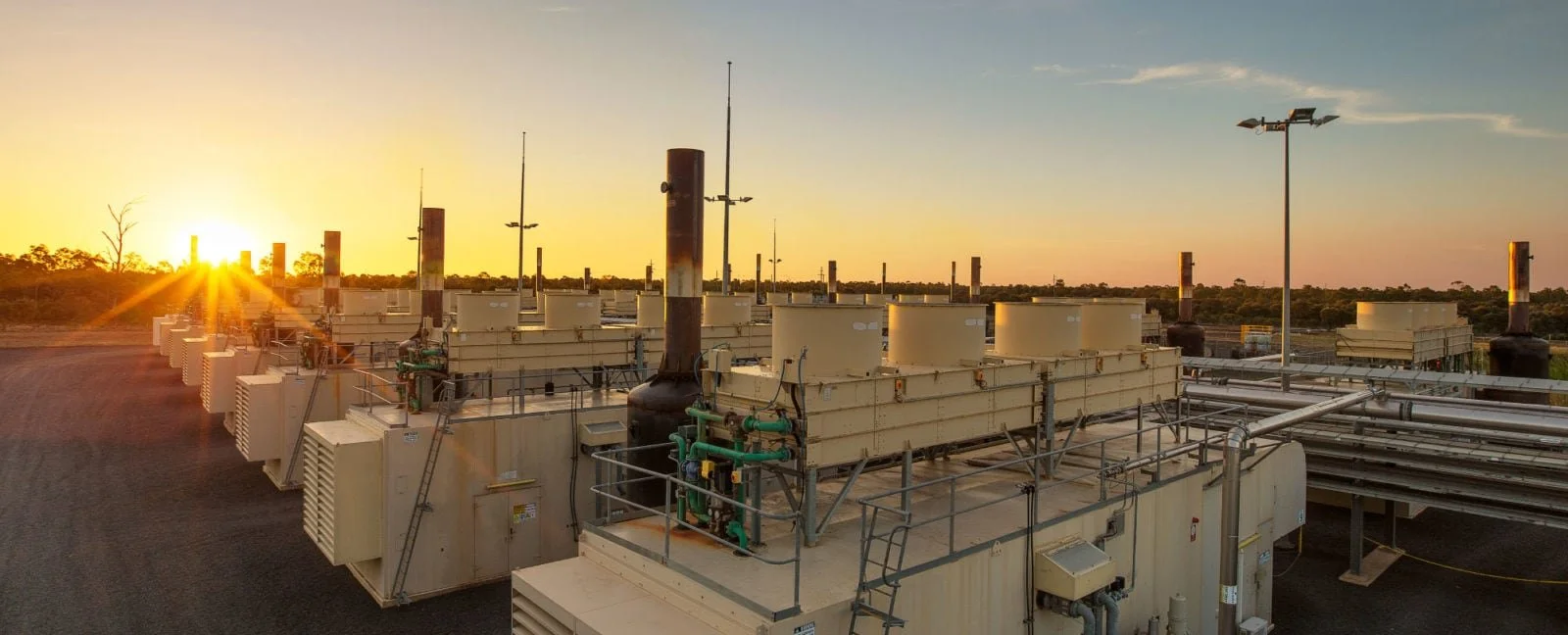
Power station pictured
ERF169184 View on Project Explorer
Located within the mining lease of Anglo American’s Moranbah North coal mine, in the Bowen Basin of central Queensland, this project was first registered in December 2021.
Owned and operated by EDL Projects (Australia) Pty Ltd - a subsidiary of bio-energy specialist EDL - the project captures methane gas from the coal mine, and uses it to generate electricity. The capacity, of approximately 63MW, is enough to power more than 60,000 homes, while preventing methane, a highly potent greenhouse gas, from entering the atmosphere.
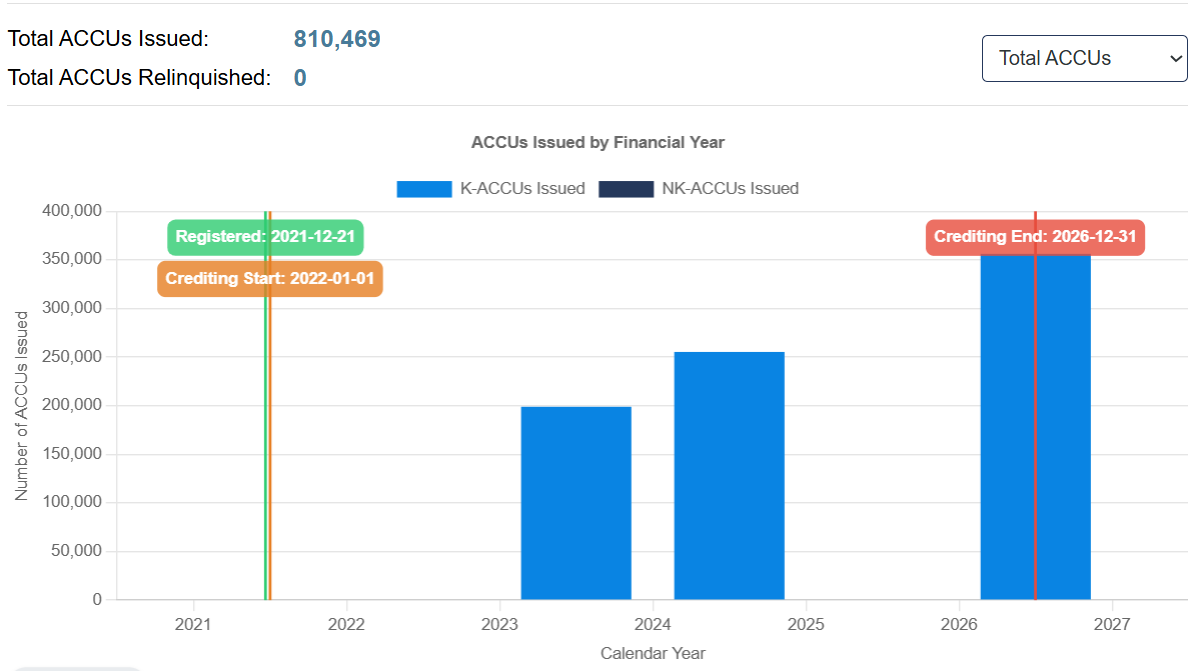
Together with two previous awards, August’s issue of 356,222 credits, makes it the most successful industrial fugitives (coal mine waste gas) ACCU project, with a total of 810,469 ACCUs. Indeed, EDL also operates all but one of the other 10 projects under this method to earn credits.
The company, through its various subsidiaries, has 22 active ACCU projects, of which 17 have been credited at least once. Including inactive projects, EDL has earned a total issuance of 11,046,947 ACCUs.
Bulgoo Station Native Forest Protection Project
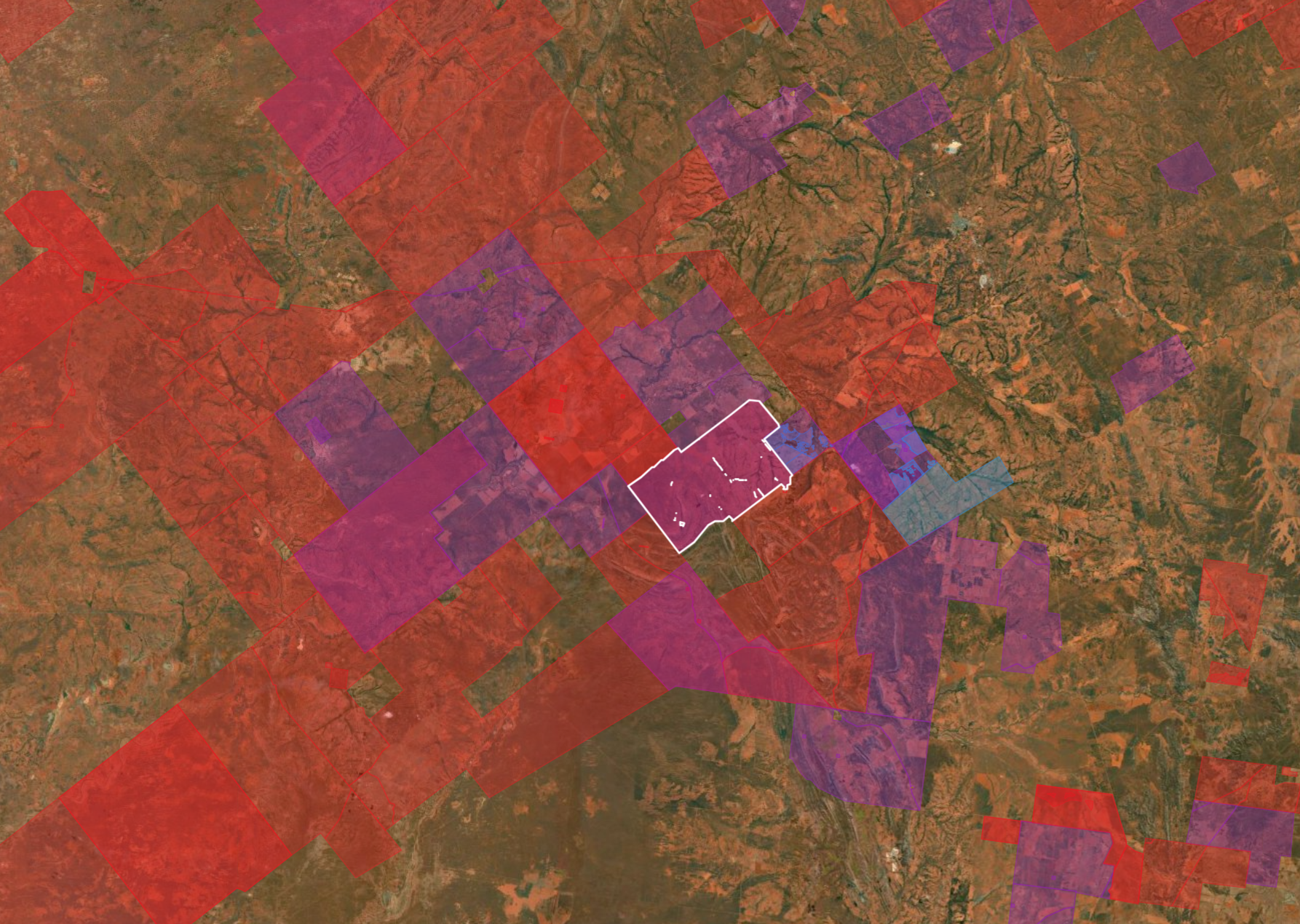
Carbon project hotspot

Credits by year
EOP100655 View on Project Explorer
The second highest award in August, of 232,188 credits, went to this avoided deforestation project in the Cobar region of western New South Wales. It is located at Bulgoo Station, in an area known for its large-scale sheep and goat pastoral stations, and more recently, carbon farming projects.
Registered in 2014 by graziers George and Beverly Yench, this project covers an area of some 20,700 hectares of land, which was at risk of being cleared for extra livestock capacity.
Avoided deforestation earn carbon credits by protecting native forests from being permanently cleared and converted to agricultural uses.
This project has now earned a total of 1,125,544 credits, across 14 financial years, the latest two coming after the supposed end of its crediting period on June 30, 2025. It signed an abatement contract in April 2015 for 684,902 units, and has sold 598,433 credits to the Commonwealth so far.
Managed in partnership with TerraCarbon (a subsidiary of GreenCollar), the project proponent was updated to Bulgoo Pastoral Pty Ltd, as the trustee for Bulgoo Pastoral Unit Trust, in July 2022.
Caddigat Restoration Project
ERF159246 View on Project Explorer
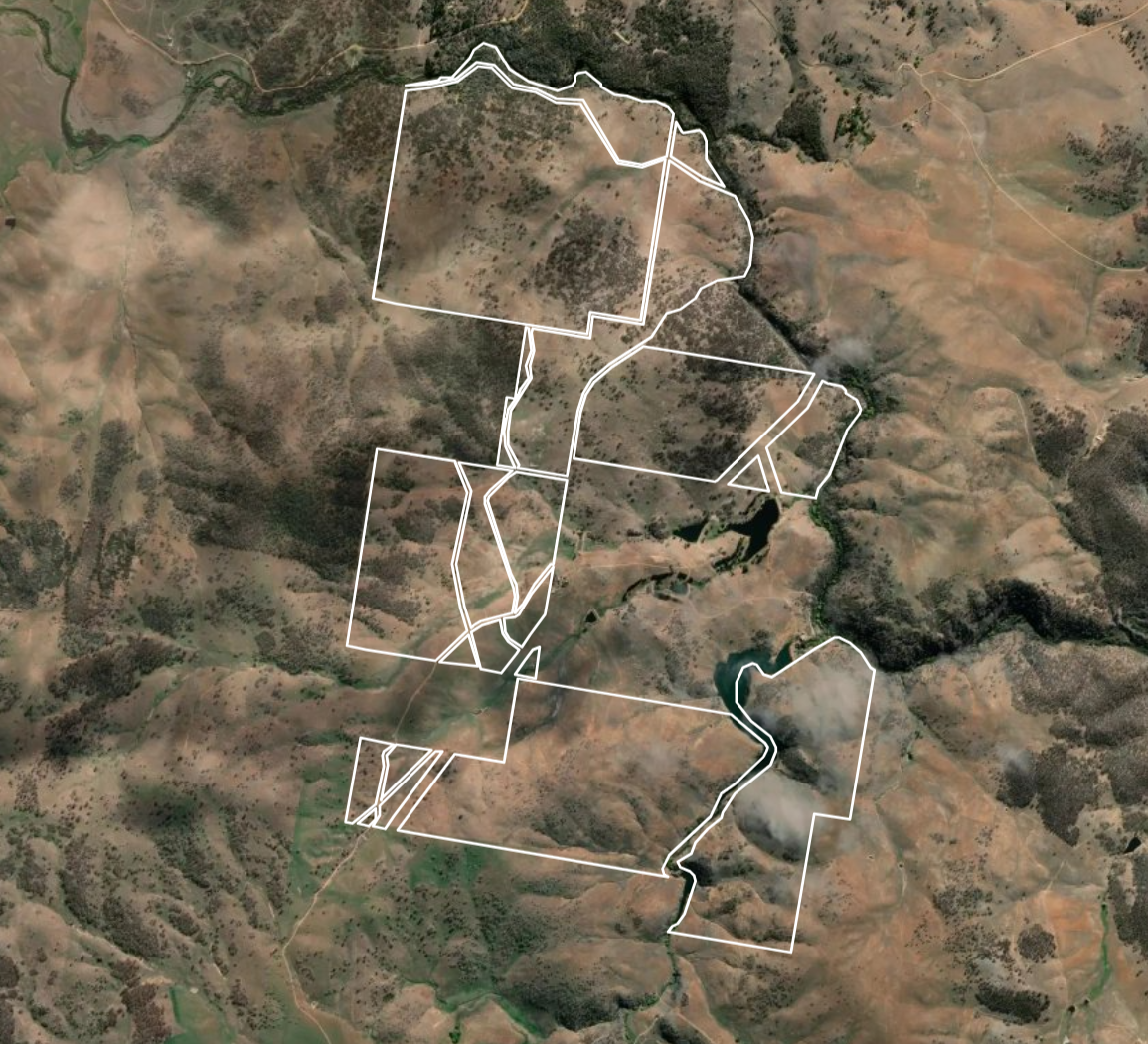
This environmental planting project covers an approximately 735 hectares in the Snowy Monaro region of New South Wales. It was registered in August 2024, as a partnership between Greening Australia and Conscious Investment Management, and awarded its first 267 credits, just two years later.
The property was specifically bought for the purpose of planting approximately 140,000 native trees and shrubs, in order to benefit woodland bird species, and support the recovery of the critically endangered Monaro Tableland cool temperate grassy woodland.
In a culturally significant step, the property was recently given the Wolgalu name Nyadinang Najung, following a memorandum of understanding with local First Nations groups. This move acknowledges the land's rich heritage, which includes centuries-old candlebark gums and a historic scar tree.
The project proponent - Canopy Nature Based Solutions Pty Ltd - is a wholly-owned subsidiary of Greening Australia.
To view ACCU statistics and trends head to Analytics Dashboard and create a free account to access additional pages.
Revoked projects
Six projects were voluntarily revoked in August, all of them under Section 30 of the CFI (Carbon Farming Initiative) Rule 2015. This section is used for projects which have not earned credits.
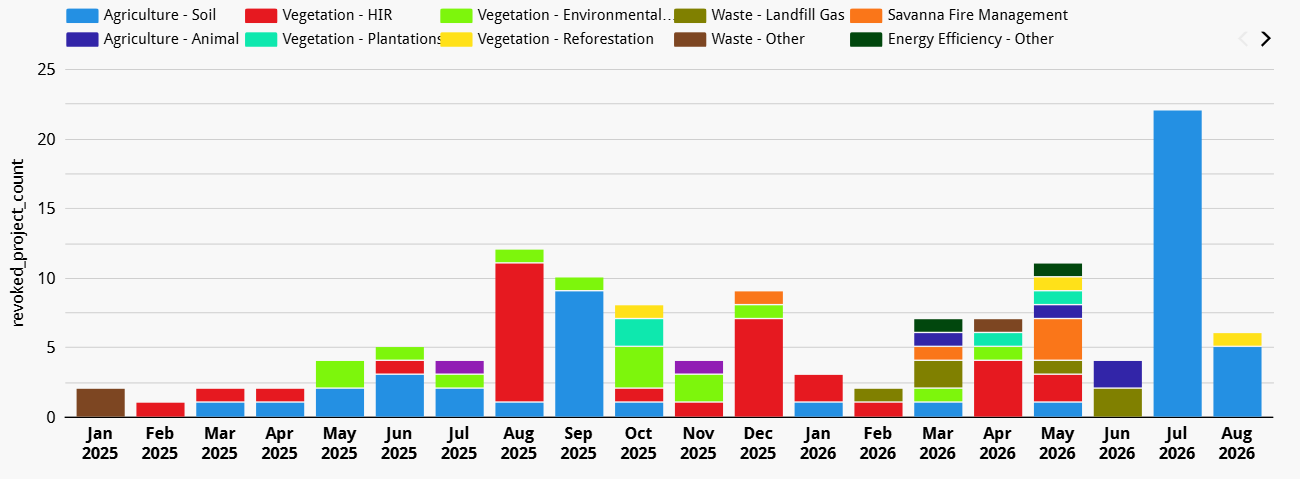
Five of the revoked projects used the soil organic carbon method, all of them with proponent AgriProve:
Mauger Carbon Project (ERF158792, Queensland);
Foxton Carbon Project (ERF159304, Tasmania);
Spence Carbon Project (ERF159591, Tasmania);
Poynton Carbon Project (ERF159780, Tasmania);
Russell Carbon Project (ERF159860, Victoria).
The remaining revocation - Noorama NFMR Project (ERF191875, Queensland) - was registered under the NFMR (Native forest from managed regrowth) method 2013, with TerraCarbon as its proponent.
To view ACCU statistics and trends head to Analytics Dashboard and create a free account to access additional pages.
Join our community to get the latest carbon market intelligence delivered monthly
See the latest projects for yourself in Project Explorer here (for best experience, view on desktop).
Want to know more?
Check our time lapse video from 2012 to today showing the growth of Australia's ACCU scheme.
References
Clean Energy Regulator (CER):
Carbon Eyes ACCU project register and project level analytics
Carbon Eyes market commentary on ACCU project activity and issuance trends
Check out last months register update: Soil carbon dominates ACCU registrations in July
Carbon Eyes | ACCU Market Intelligence
Strategic data and integrity signals for the Australian carbon market.
1. Carbon Data Platform
The Foundation of Market Transparency | Access the Platform
A comprehensive view of the ACCU landscape. Access structured CER data, project status and issuance trends. Use our core mapping and analytics to establish your market baseline.
2. Integrity & Market Intelligence
Independent Ratings & Supply Forecasts | Upgrade Your Intelligence
Mitigate risk with our paid intelligence layer. Accessed directly within the Platform, these add-ons provide independent ACCU project ratings and forward looking supply forecasts to guide procurement and investment.
3. Land & Asset Decisioning
Identify the Best Opportunities for Carbon Projects
Carbon Potential Report | View Carbon Potential Report (by address)
Instant, address-based viability assessments for lenders and investors.
Carbon Land Search | Identify & Assess High-Potential Assets
Our premium search engine for institutional funds. Identify and de-risk high-potential carbon assets before acquisition.