
Beyond farm vs carbon trade-off: New chapter for Australian land use
How carbon is changing land use
Carbon projects are increasingly complementing farming rather than replacing it.
For years, debates around carbon sequestration projects in Australia have been framed as a zero sum game, the idea that any carbon gain must mean a loss for farming. However, the data shows that global land use patterns are evolving, making this idea less relevant today.
The global context
A recent article from BBC Future - The rewilding milestone Earth has already passed - suggests that the world may already have passed peak farmland. In other words, global agricultural land use might already have reached its maximum. Natural ecosystems are rebounding in some regions, with abandoned farmland returning to forest and/or grassland, which also contributes to carbon sequestration.
Rising agricultural efficiency, reduced food waste in some regions, and changing diets mean that the total amount of land required for food production is no longer increasing at the rate once feared. Technological innovations, including precision agriculture and improved crop yields, are also reducing land pressure. This global milestone changes the conversation in Australia, meaning it’s not just about running out of farmland, but also about making the most of the land we have in a changing climate and economy.
What the data shows in Australia
The chart below tracks the growth of environmental planting (EP) and reforestation projects, under the Australian Carbon Credit Unit (ACCU) scheme. The trend is clear: land-based carbon projects are growing, especially over the past five years, but they still occupy only a small fraction of Australia’s 350 plus million hectares of farmland.
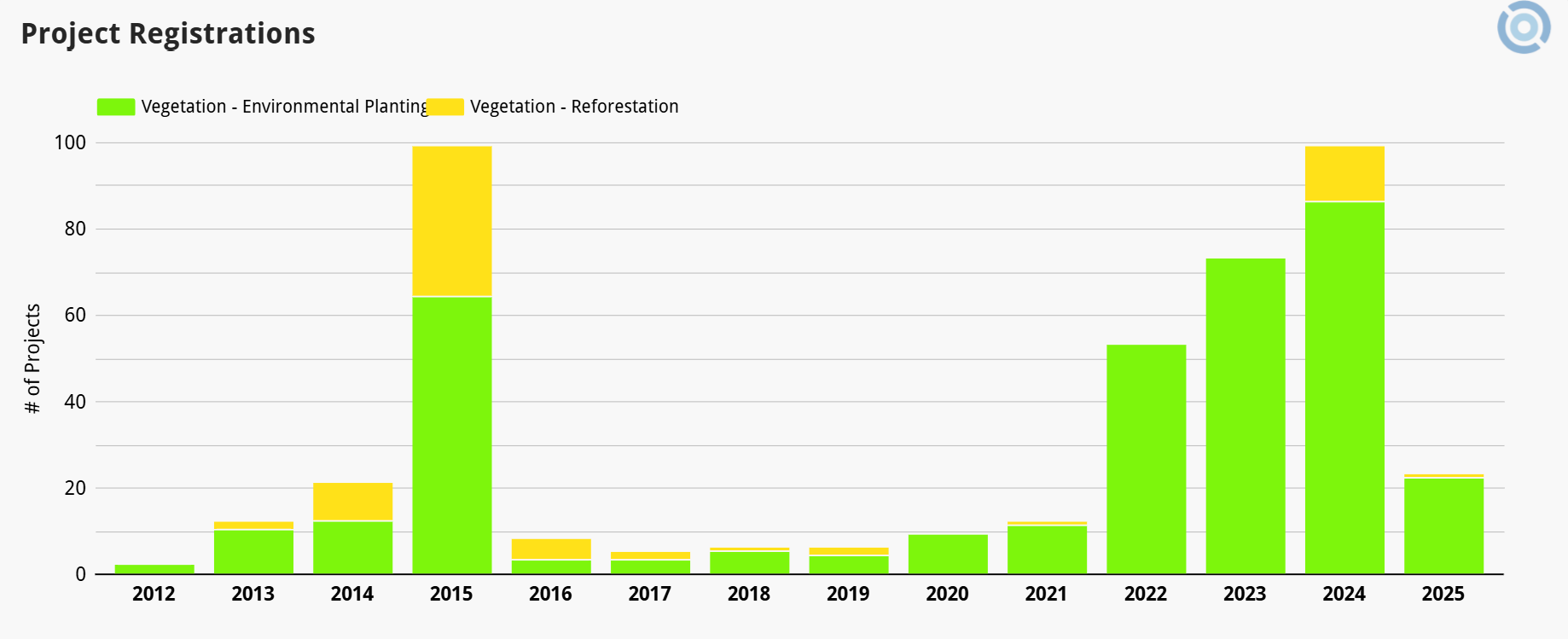
Project Registrations for Environmental Plantings and Reforestation methods

Environmental planting (green) and reforestation (yellow) projects together now cover just under one million hectares. By comparison, cattle grazing alone spans more than 200 million hectares nationwide. This perspective is crucial: carbon projects only make up a tiny proportion of total land use. They are not “crowding out” agriculture, and where they do occur, they often enhance biodiversity, water retention, and soil health.
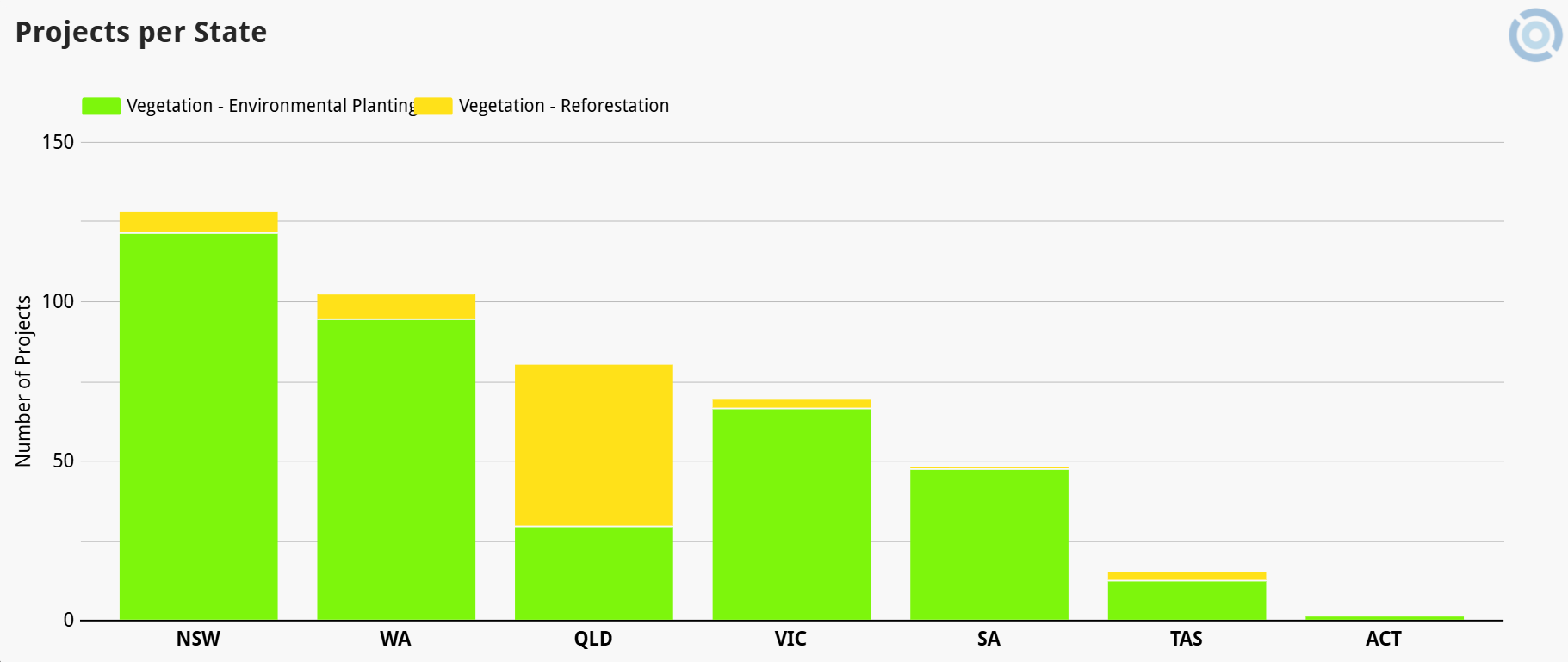
ACCU projects by State for Environmental Plantings and Reforestation methods
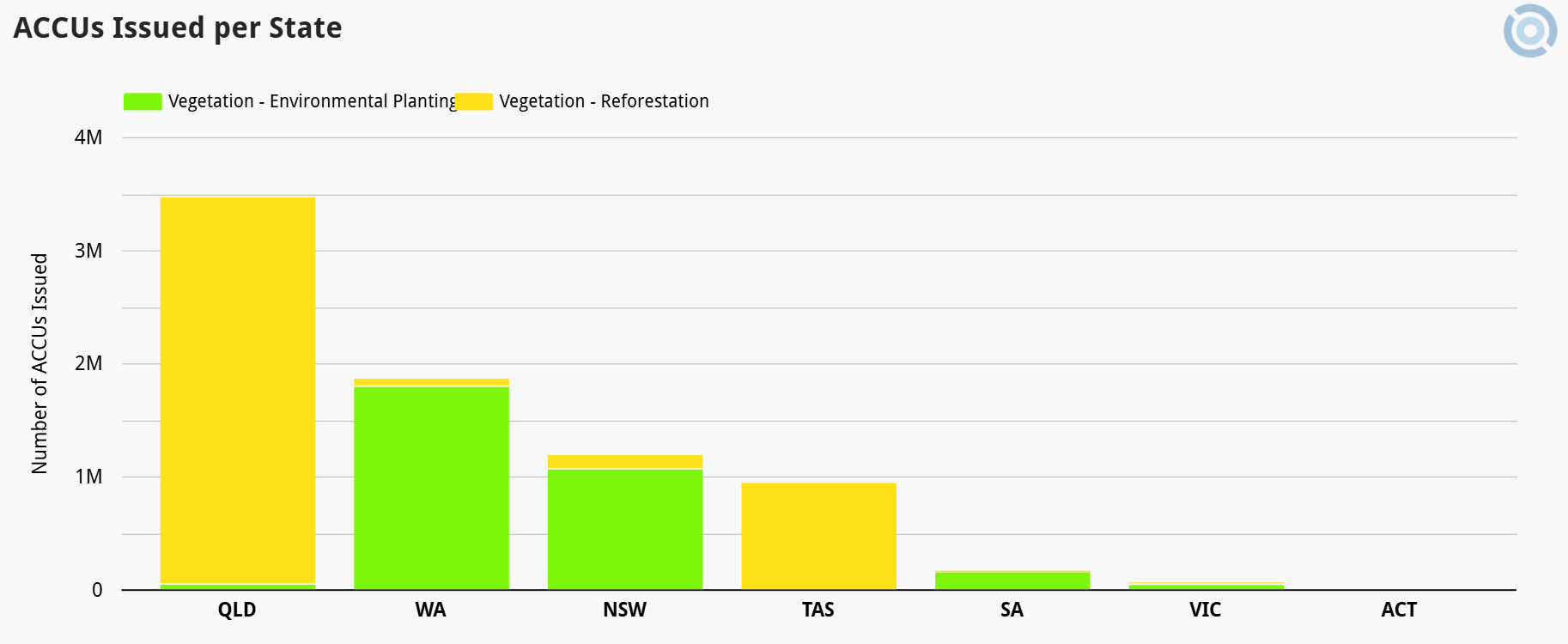
ACCUs issued by State for Environmental Plantings and Reforestation projects
Integration over competition
The old dichotomy, “farming versus carbon” is breaking down. Across Australia, landowners are increasingly choosing hybrid land uses:
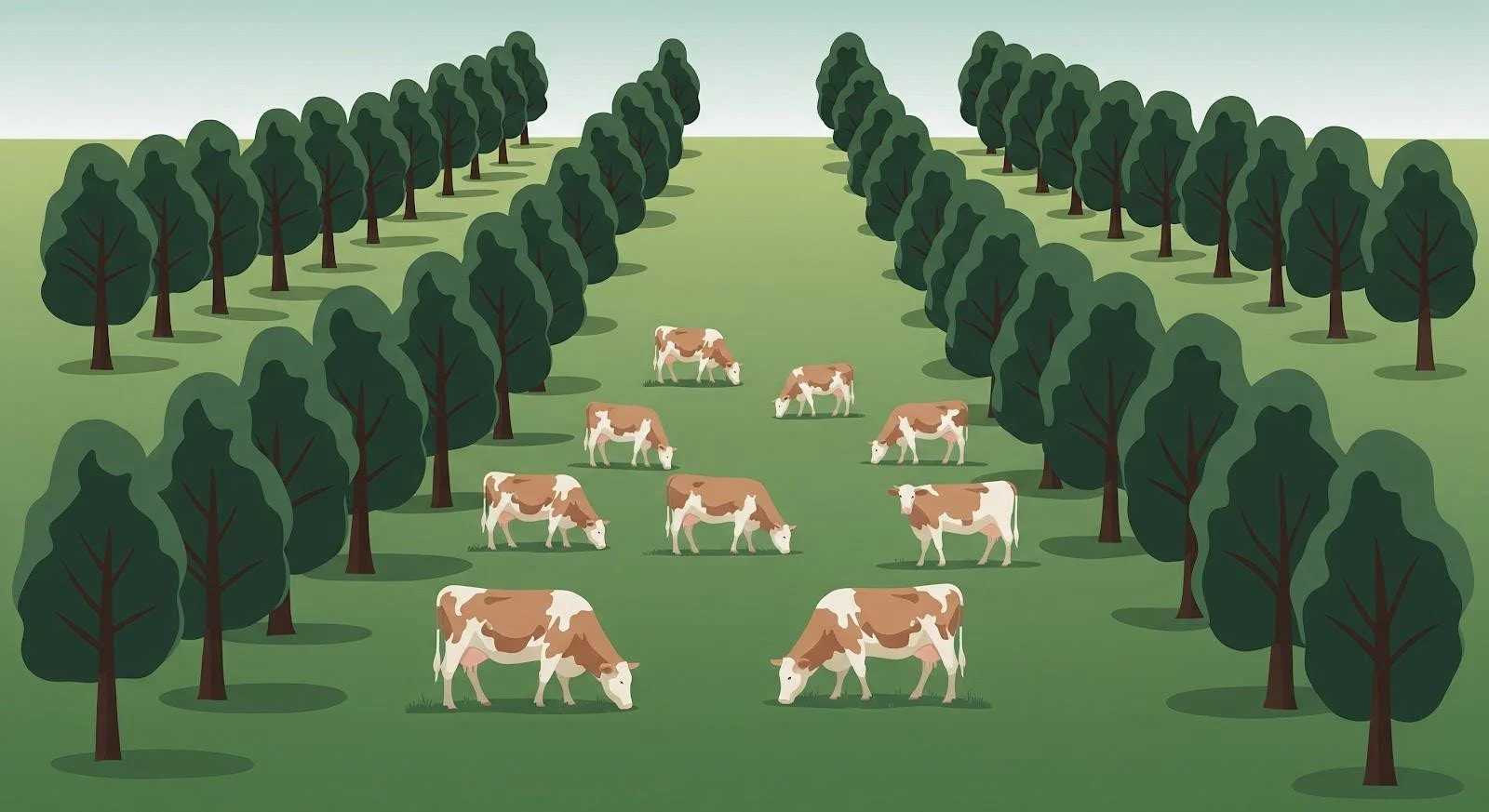
Environmental planting alongside cattle grazing. Where lines of trees provide shade and shelter, whilst sequestering carbon.
Soil carbon projects alongside cropping or herd management. Where practices like cover cropping, rotational grazing and improved fertiliser management, increase productivity and carbon outcomes at the same time.
Integrated farm and land management (IFLM). This new ACCU method in development is designed to encourage whole-of-farm carbon and biodiversity gains, while keeping agricultural outputs at the core.
These approaches show that carbon revenue and agricultural revenue can reinforce each other. Far from being an either/or situation, many of the most promising projects are both.
A changing narrative
The perception that carbon sequestration projects compete with food production, risks holding back opportunities for farmers. As the data highlights, the uptake of land-based projects is still modest relative to the scale of national farmland.
All ACCU projects together cover around 94 million hectares, but environmental planting and reforestation projects, the ones often visible on the landscape, occupy less than one million hectares, that’s under a fifth of one per cent of total farm land. Uptake is growing slowly, with monthly increases measurable, but is still small compared with the 350 plus million hectares of agricultural land nationwide.

ACCU Method Types: ALL

ACCU Method Types: only Environmental Plantings and Reforestation
With new methodologies like IFLM, the lines between farming and carbon sequestration will continue to blur. The IFML method looks to extend NFMR method principles (allowing native forest to recover without constant clearing) as well as replacing HIR method for suppressed land (which is trickier due to being harder to verify/prove additionality). The real challenge and opportunity for the next decade is creating land-use systems which generate both food and climate benefits.
References
Department of Agriculture, Fisheries and Forestry: ABARES Snapshot of Australian Agriculture
BBC Future article: The rewilding milestone Earth has already passed (Published 10th September 2025)
Want to know more?
Check out ACCU methods unpacked: What’s driving real value? looking at the performance, market dynamics and future outlook for three key carbon credit methods
Carbon Eyes | ACCU Market Intelligence
Strategic data and integrity signals for the Australian carbon market.
1. Carbon Data Platform
The Foundation of Market Transparency | Access the Platform
A comprehensive view of the ACCU landscape. Access structured CER data, project status and issuance trends. Use our core mapping and analytics to establish your market baseline.
2. Integrity & Market Intelligence
Independent Ratings & Supply Forecasts | Upgrade Your Intelligence
Mitigate risk with our paid intelligence layer. Accessed directly within the Platform, these add-ons provide independent ACCU project ratings and forward looking supply forecasts to guide procurement and investment.
3. Land & Asset Decisioning
Identify the Best Opportunities for Carbon Projects
Carbon Potential Report | View Carbon Potential Report (by address)
Instant, address-based viability assessments for lenders and investors.
Carbon Land Search | Identify & Assess High-Potential Assets
Our premium search engine for institutional funds. Identify and de-risk high-potential carbon assets before acquisition.