
Managing soil carbon projects on working farms
Soil carbon in practice
How farmers are building healthier soil and new revenue streams. Insights on running soil carbon projects that deliver real ACCU results.
For landowners, it’s more than just improving the health of their land, it’s also a measurable, tradable asset. So, how do you build and manage soil organic carbon (SOC) on working farms, especially in regions with lower rainfall? A growing body of research, including farm trials in Victoria and New South Wales, is helping to answer that. Later on, there are three evidence-based webinars worth checking out. But first, let’s look at how different soil levels affect carbon storage.

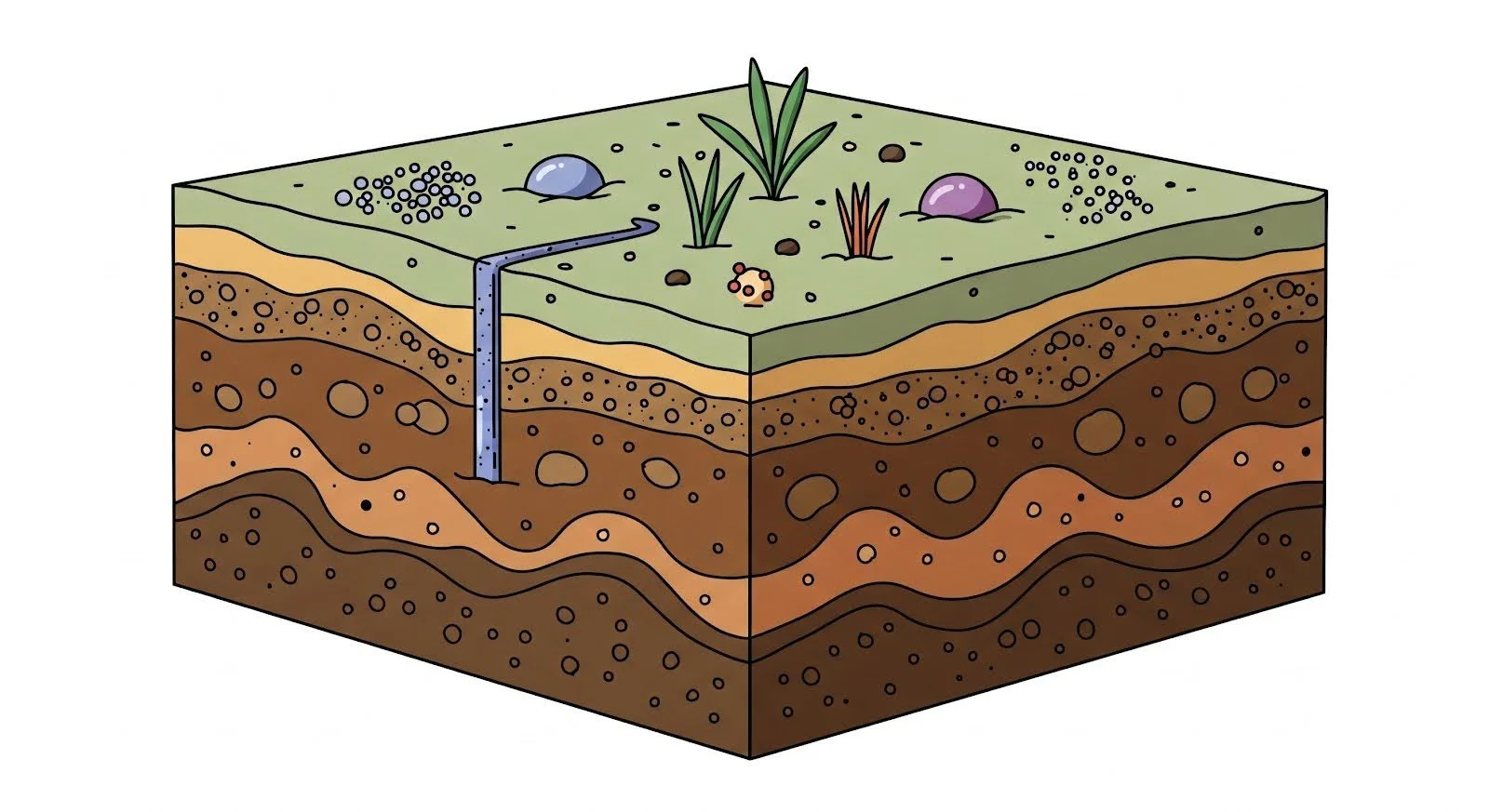
Soil carbon layers
Topsoil (0–30 cm)
This layer is rich in organic matter, due to the accumulation of decomposed plant and animal materials. The topsoil is the most active zone for microbial life and root activity, making it a best place for carbon input and turnover. Management practices such as cover cropping, water retention and minimal tillage, maintain and enhance SOC levels.
Subsoil (30–100 cm)
The next layer down contains less organic matter, but has a greater capacity for long-term carbon storage. The subsoil is often more stable, with turnover times significantly longer than in the topsoil. Deep-rooted plants can transport carbon into this zone, and practices that encourage this can improve subsoil carbon sequestration.
Carbon stability
Carbon in the subsoil tends to be more stable due to lower microbial activity and being disturbed less. This stability means that carbon sequestered here can remain stored for extended periods, contributing to long-term mitigation of climate change.
Soil carbon in dry zones
In arid and semi-arid regions, water availability is a limiting factor for plant growth and microbial activity. In this webinar from Mallee Sustainable Farming and the Soil CRC (Cooperative Research Centre), Dr Karl Andersson of NSW’s Department of Primary Industries, digs into the realities of managing soil carbon in low-rainfall environments.
The key point to takeaway here, is that carbon can be built even in dry zones, however it requires consistent and constant effort, with practices such as cover crops, water retention and minimal disturbance of the land. Using practices that improve water retention in the soil and that encourage deeper rooting, mean farmers can improve carbon sequestration in both topsoil and subsoil layers.
Why integrity matters in soil carbon projects
Soil carbon works, but it has to be done right, and credibility can vary widely across projects. Professor Andrew Macintosh, an associate dean at ANU (Australian National University), is one of the country’s leading experts on carbon credit integrity. His research has raised serious concerns about some credits, which have been issued without verifiable soil carbon gains.
In short, just because a project is registered doesn’t guarantee that each credit represents a tonne of carbon dioxide being removed or avoided. For soil carbon projects to stand up to scrutiny, the method, the baseline and the measurement are all crucial.
Soil carbon projects suit working farms, especially where there’s an interest in longer-term land improvement. They’re most effective when landholders are actively involved and committed to ongoing change, ideally with expert support to choose practices that genuinely build carbon and can be tracked over time.
Tailored strategies for riverine plains
Watch the webinar
In this second webinar, Dr Abe Gibson, from Southern Cross University, joins Dr Andersson, to focus on the Riverina region of south western NSW. The combination of flat plains and three major rivers has made Riverina one of the most productive and diverse agricultural areas in Australia.
Variable soils and mixed farming systems mean a one-size-fits-all approach doesn’t work. The webinar explores how landholders in the region are building SOC by targeting both the active topsoil and deeper subsoil layers, without reducing productivity
Pasture cropping and rotational grazing are helping to keep living roots in the soil longer, increasing carbon in the topsoil, where microbial life is most active. Meanwhile, deep-rooted species are encouraged to push carbon into the subsoil, where it stays more stable over time.
The timing of key actions such as sowing cover crops just before a rain event or grazing at the right stage of pasture regrowth, can make a big difference in helping carbon build in the soil, without compromising yields.
These aren’t just trial plots , they’re real-world strategies designed to fit into working farms.
Soil carbon sequestration in practice
Explore the resource for yourself
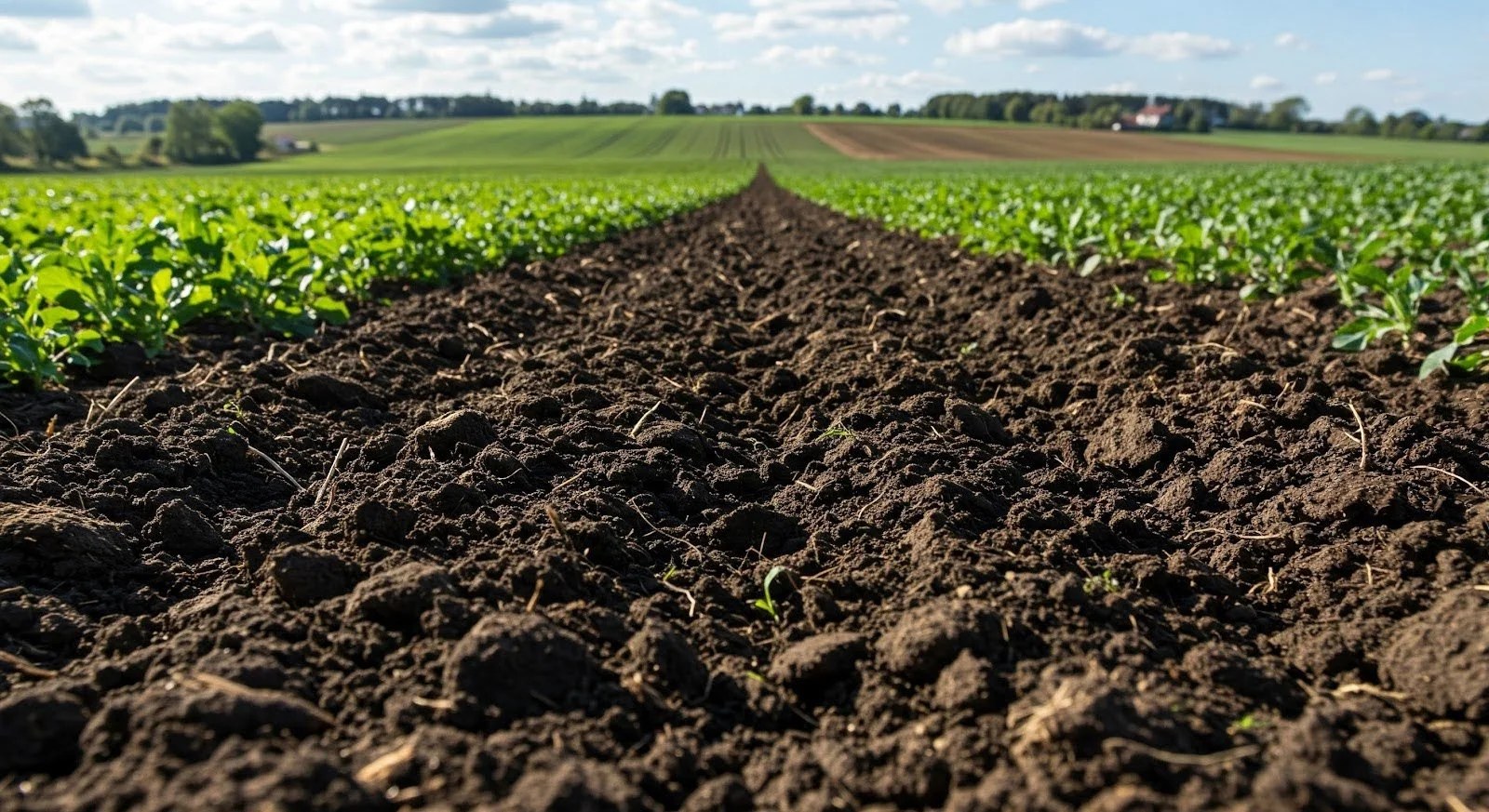
NSW Climate and Energy Action is a resource which showcases how real farms, across both grazing and cropping systems, are trialling practices to build carbon in the soil. What stands out is how management decisions influence carbon at different soil depths.
For example, strategies like stubble retention and low-disturbance cropping help maintain organic matter in the topsoil, where microbial activity is highest and carbon cycles fastest. By contrast, introducing deeper-rooted plants or maintaining perennial pastures can enhance subsoil carbon, which tends to be more stable and longer-lasting.
What does this all mean?
It’s important to remember these aren’t lab results or best-case scenarios. They are results from working farms, undergoing real conditions, showing how soil carbon can be built through consistent, practical management.
Success doesn’t mean starting from scratch. It comes from knowing your soil, understanding where carbon is stored, from topsoil to subsoil, and making changes that work with your circumstances.
When the right practices are applied in the right context, SOC projects can build long-term resilience, improve productivity, and deliver genuine carbon outcomes. The benefits can then be confidently verified, and stand up to rigorous scrutiny.
Interested to learn more about soil carbon projects, check out From paddocks to payments: Soil carbon in practice
References:
Soil CRC Webinar: Exploring Soil Carbon Management in Southwest NSW and the Mallee VIC
Hosted by Mallee Sustainable Farming and Soil CRC, featuring Dr. Karl Andersson (NSW Department of Primary Industries)
https://www.soilscienceaustralia.org.au/resources/non-knowledgebase/soil-crc-webinar-exploring-soil-carbon-management-in-southwest-nsw-and-the-mallee-vic-video/Soil CRC Webinar: Building Soil Carbon Through Land Management Strategies in the Riverine Plains, NSW
Presented by Dr. Abe Gibson (Southern Cross University) and Dr. Karl Andersson (NSW DPI)
https://www.soilscienceaustralia.org.au/resources/non-knowledgebase/soil-crc-webinar-building-soil-carbon-through-land-management-strategies-in-the-riverine-plains-nsw-video/Soil Carbon Sequestration | NSW Climate and Energy Action
A government resource showcasing carbon sequestration practices in mixed farming systems
https://www.energy.nsw.gov.au/business-and-industry/programs-grants-and-schemes/primary-industries-productivity-and-abatement/learn-from-existing-projects/soil-carbonSoil Carbon Integrity Issues: Submission to the Independent Review of Australian Carbon Credit Units. Macintosh, A. (2022).
Raises concerns about overstated and soil carbon credits that are not clearly verified.
https://www.dcceew.gov.au/sites/default/files/documents/soil-carbon-integrity-macintosh-submission.pdf
Want to know more?
Check out Dig it or plant it? Choosing the right carbon offset path, a closer look at pros and cons of tree planting versus soil carbon projects.
Unlock the Carbon Potential of your land?
Not sure where to start? Get a clear, data-backed measure of your land's carbon potential. From free snapshot reports to deep-dive assessments, we help you determine the best path forward.
Free Carbon Snapshot: Enter your address to see if a carbon project is viable for your land.
Project Explorer: View existing carbon projects and regional activity near you.
Browse the Learning Hub : Explore the full collection of articles at no cost.