
Carbon market insights: the month in review
Carbon Eyes In the Loop - key updates you may have missed
Recent collection of our best posts about the carbon market. Reach out to the team for more detailed market analysis and further insights.

The month saw a diverse mix of developments across the Australian carbon market, from first ACCU issuances for soil carbon projects through to large scale Environmental Planting and Plantation Forestry registrations. This edition also explores the growing intersection between ACCU projects and the Nature Repair Market, as well as the debate surrounding Tasmania's Rushy Lagoon property and the relationship between carbon, forestry and agricultural land use. As always, our focus remains on the project data and market signals shaping Australia's carbon market. For more comprehensive market insights and analysis, please get in touch at info@carboneyes.io.
Loam Carbon receives its first soil ACCU credits [4/5/2026]
Loam Carbon's Nicholson Soil Carbon Project in the cropping areas of central NSW has been issued over 4,000 ACCUs. Loam Carbon projects typically involve the use of LoamBio, a fungal seed treatment that reportedly boosts soil productivity and carbon stocks. It is produced by Loam Bio which has raised over $150m in capital.
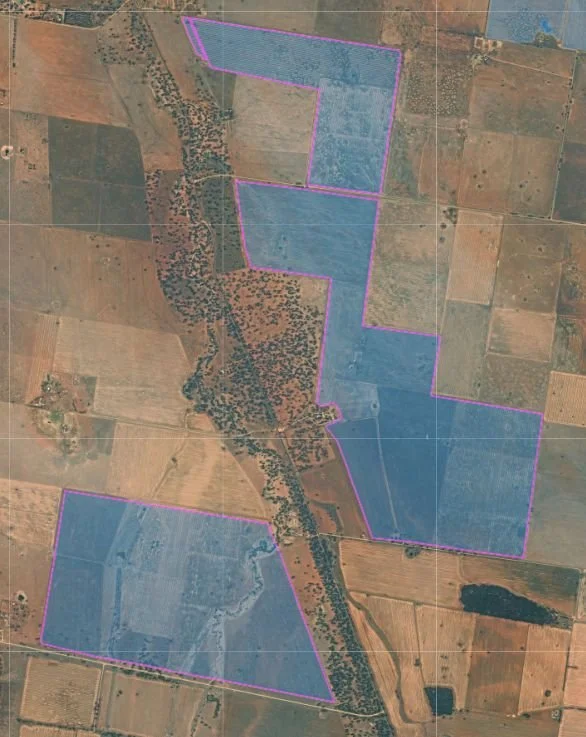
Nicholson Carbon Project located at Garema, south of Forbes in central NSW, was registered in December 2023.
This region is heavily used for broadacre cropping and mixed grazing agricultural operations, the environment is predominantly defined by red-brown earths (Chromosols) and heavy clay loams.
This is the first of their 29 registered ACCU projects to receive credits. Less than 5% of the almost 1000 registered Australian ACCU soil projects have been issued ACCUs. At this stage the potential of the method is still largely unfulfilled but there is good project registration and investment momentum.
In addition to the fungal seed treatment, Loam Bio list several other farm management changes, including modified crop rotations, reduced tillage, and improved residue management.
Nicholson Carbon Project
Loam Bio partnered with the Nicholson family to integrate their proprietary technology into the existing 4,000 ha farming operation. In May 2026, theproject made history by successfully generating this issuance of 4,867 ACCUs. This milestone marked it as one of the first broadacre cropping operations in NSW to generate carbon credits using this innovative microbial approach, providing a profitable "second crop" for the farmers while simultaneously improving overall soil resilience and productivity.
https://app.carboneyes.io/accu/project-information/ERF184498
https://app.carboneyes.io/project-explorer?project_id=ERF184498&layer=1
See article: The Nicholson Project’s carbon credit issuance NSW farming family cracks Australia’s carbon market with world-first fungal technology: https://www.loambio.com/resources/the-nicholson-projects-carbon-credit-issuance/
Another soil project delivers first credits [7/5/2026]
An AgriProve Soil ACCU project located in the New England region of NSW has been issued 5012 ACCUs. This is the 2nd soil project in a week to deliver ACCUs (The Nicholson Carbon Project above).
The McClean Carbon Project is on a 400 ha property that is running 1000 Merino sheep and 200 cattle. The management changes to support the project have included paddock subdivision (from 15 to more than 60), strategic water infrastructure, and the replacement of synthetic fertilisers with composted organic matter. The property has undergone major operational shifts, for over a decade and this biological farming approach has visibly improved the farm's resilience to extreme weather conditions, culminating in the issuance of ACCUs in May 2026.
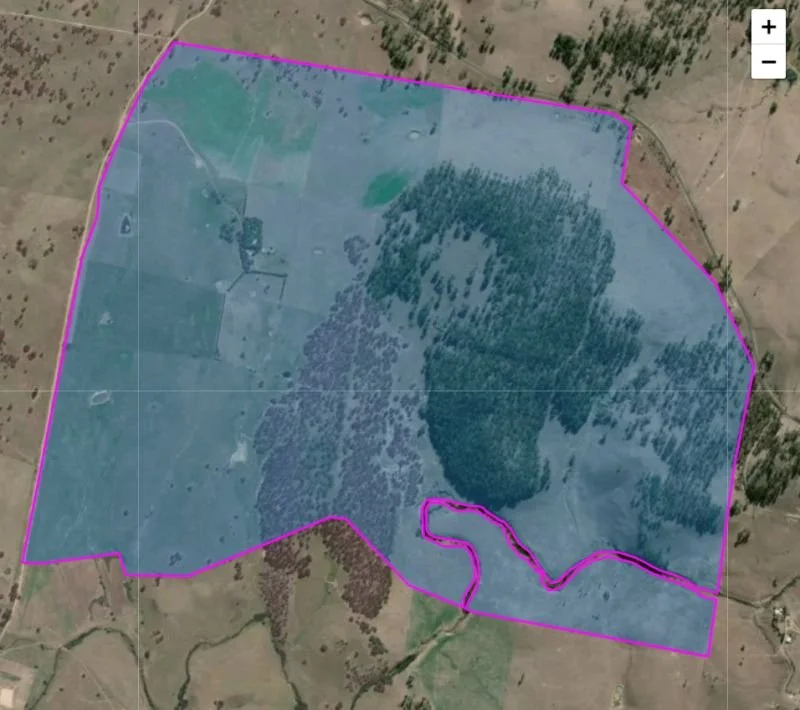
This project pictured here in North Mihi near Uralla, is approximately 25km south-west of Armidale in the Northern Tablelands region of NSW and it was registered nearly 6 years ago in November 2020.
AgriProve has 3 other soil carbon projects within a 50km radius of the McClean Carbon Project. 47 of the 929 active Soil projects in Australia have delivered ACCUs.
To view this and other nearby projects
Land-use debates: carbon vs agriculture [13/5/2026]
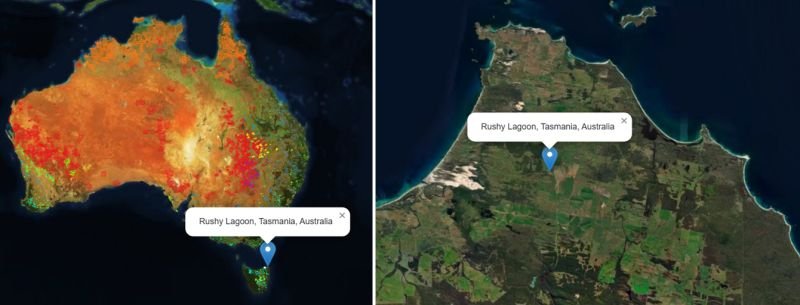
Gresham House, the largest forestry asset manager in the UK, is applying to purchase one of Tasmania's largest farm: Rushy Lagoon (22,000 ha).
The property has historically been a productive operation for dairy, beef, and cropping.
The assumed land-use change to pine plantation under Gresham has been linked to carbon sequestration opportunities, sparking a farming vs carbon debate. The reality is more nuanced: in Australia the area covered by commercial plantations shrunk by 12.5% between 2016 and 2023. The move back towards plantations may be a cyclical trend buoyed by the additional revenue opportunities carbon schemes create.
Pitching this as Prime grazing or carbon credits as the linked article has done is too simplistic. Prime grazing or mixed use with timber production would be more accurate. That framing better reflects the economics of commercial plantations in Australia, where carbon may be a revenue enhancer for commercial plantations, but is not the primary driver. The decision to allow the transaction is currently with the Foreign Investment Review Board.
Referenced articles:
AFR: Prime Grazing or Carbon Credits: Tasmania’s largest farm is up for sale and prime farmland could be converted into a tree plantation: https://www.theaustralian.com.au/commentary/editorials/prime-grazing-or-carbon-credits/news-story/77112b528dea63b0b8a79d88fe0907e2
ABC: Decision on sale of Tasmania's largest farm Rushy Lagoon expected soon: https://www.abc.net.au/news/2026-03-07/rushy-lagoon-sale-uk-forestry-investment/106329836
16 New ACCU projects in April [19/5/2026]
With 6 new Environmental Planting projects, 5 Plantation Forestry projects and 4 Soil Carbon projects what really stands out is the scale of some of the new projects:
7000 ha EP project spread across 4 states by Greening Australia - National Restoration Program Project
5900 ha EP project in WA with Planfarm Terrawise - Elserae Agriculture Carbon Plus Project
4500 ha Plantation establishment project in WA by Mitsui & Co. Ltd.- Outback Carbon - Walgoolan North Carbon Project.
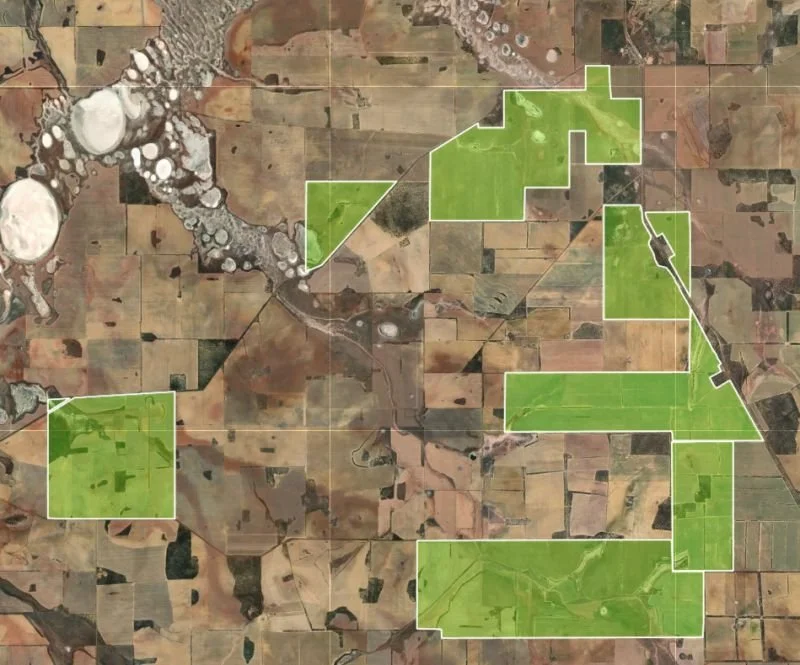
Pictured here a satellite view of the Elserae Agriculture Carbon Plus project shows the increasing integration of carbon projects and traditional broadacre agriculture.
The surrounding Mid West region is highly regarded for its broadacre farming, with a focus on the continuous cropping of wheat, canola, barley, and lupins. The local climate is semi-arid, experiencing low-to-medium rainfall, and the regional soil profiles predominantly feature the deep yellow sands and sandy earths that are characteristic of the Western Australian Wheatbelt.
Project 1: Greening Australia and Canopy Nature Based Solutions: National Restoration Program 2026
A large-scale national EP project located across 10 different sites in WA, SA, VIC, and NSW, and is across a massive total area of 7,024.44 ha.
Canopy, the project proponent, is a for-purpose subsidiary of Greening Australia. The organisation has over 40 years of experience in large-scale native reforestation to design projects focus heavily on delivering both carbon sequestration as well as high-quality biodiversity impacts, creating landscape connectivity, and reversing nature loss across Australian ecosystems.
https://app.carboneyes.io/accu/project-information/ERF207683
https://app.carboneyes.io/project-explorer?project_id=ERF207683&layer=1
Greening Australia: https://www.greeningaustralia.org.au
Project 2: Elserae Agriculture Carbon Plus Project
Another large EP found near the rural towns of Maya and Latham, approximately 290km northeast of Perth in the Wheatbelt region of WA covers a large area of 5893.22 ha.
This project highlights the increasing integration of environmental accounting into traditional broadacre agriculture. The proponent, operates a modern 6,000-hectare cropping enterprise. To develop their carbon strategy, they have partnered with Planfarm TerraWise, an independent WA agricultural advisory firm that specialises in helping local grain growers understand, implement, and manage on-farm carbon solutions without compromising their primary agricultural operations.
https://app.carboneyes.io/accu/project-information/ERF208299
https://app.carboneyes.io/project-explorer?project_id=ERF208299&layer=1
Planfarm TerraWise: https://terrawise.au
Project 3: Walgoolan North Carbon Project
This one is a plantation forestry project located at Walgoolan in WA’s Eastern Wheatbelt, approximately 316km east of Perth, and is a significant project area of 4486.75 ha.
https://app.carboneyes.io/accu/project-information/ERF207702
https://app.carboneyes.io/project-explorer?project_id=ERF207702&layer=1
Outback Carbon: https://www.outbackcarbon.com.au
Mitsui & Co. Australia: https://www.mitsui.com/au/en (parent company linked to Outback Carbon operations in Australia)
Environmental Planting Projects: Yield Hunting [25/05/2026]
The data for EP ACCU projects in the last few months is showing a trend: project developers are being more discerning about the yields they are chasing.
Looking at the latest data for NSW we see 3 Environmental Planting projects registered:
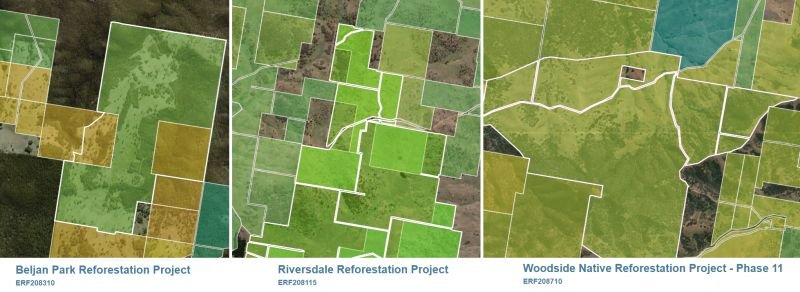
Beljan Park Reforestation Project (688 ha),
Riversdale Reforestation Project (915 ha) &
Woodside Native Reforestation Project - Phase 11 (947 ha) - all registered in April 2026.
Project 1: Beljan Park Reforestation Project
This first one is located at Nullo Mountain, approximately 30km northeast of Rylstone in NSW, and is across a project area of 687.79 ha. This project aims to establish permanent plantings of a mix of native tree and shrub species that are local to the area. By closely reflecting the natural structure and composition of the local native vegetation community, the project will restore local biodiversity while sequestering carbon.
https://app.carboneyes.io/accu/project-information/ERF208310
https://app.carboneyes.io/project-explorer?project_id=ERF208310&layer=1
Coda Carbon: https://codacarbon.com.au/
Project 2: Riversdale Reforestation Project
This second one is found approximately 35km northwest of Cooma in the Snowy Mountains region of NSW and covers a 914.58 ha area. The region is well-known for its rich history in sheep and cattle grazing operations, and soils are typically derived from basalt and granite, so present as clay and sandy loams.
https://app.carboneyes.io/accu/project-information/ERF208115
https://app.carboneyes.io/project-explorer?project_id=ERF208115&layer=1
Permagen: https://permagen.com.au/
Project 3: Woodside Native Reforestation Project - Phase 11
This third one is situated approximately 20km northwest of the Snowy Monaro region of NSW the project area for this one is 946.87 ha. This project is part of a broader carbon offsetting portfolio developed by Woodside Energy Carbon who has been actively acquiring agricultural and grazing properties across NSW and WA to mitigate its corporate emissions. Their restoration strategy typically involves planting five to ten local species, often propagated from seeds collected onsite or nearby, to ensure biodiversity and ecosystem health alongside permanent carbon sequestration.
https://app.carboneyes.io/accu/project-information/ERF208710
https://app.carboneyes.io/project-explorer?project_id=ERF208710&layer=1
Woodside Energy: https://www.woodside.com/
Potentially Higher Yields
We see a yield average of close to 30 tCO₂-e/ha/year for these projects. While three projects is a small sample size, the data suggests developers are becoming increasingly disciplined in the opportunities they go after, with an increasing focus on projects that have the potential to deliver better carbon yields per hectare than many of the earlier generations of Environmental Planting projects, where there are many examples of lower FullCAM yields.
WA developers appear more willing to accept lower yielding projects where scale is available, for example Carbon Neutral recently announced 28,000 ha wheatbelt project. In many cases, simpler terrain and larger contiguous project areas help support the economics (Carbon Neutral announcement at CMI Carbon Farming Conference: https://lnkd.in/gf3qRCZz)
ACCUs and the Nature Repair Market: understanding the link [29/05/2026]
There has been a lot of publicity around the 2nd Nature Repair Market (NRM) project being registered: this one linked to the 24 Degree Forest Environmental Plantings project inland from Byron Bay NSW: Rainforest rehabilitation on slopes and riparian zones - Doon Doon. The ACCU project is 72 ha and the NRM project covers 20 ha of this area.
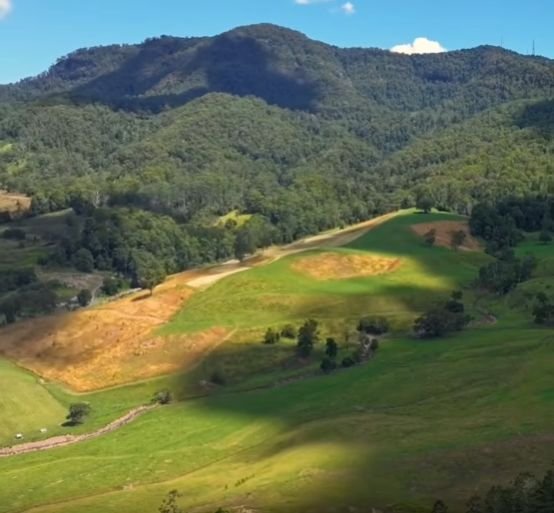
NRM projects do not have to be linked to ACCU projects but both projects registered to date have been linked. Like the ACCU scheme, there are various methods under the NRM. A project involves setting biodiversity targets with specific activities to achieve those targets. Once threshold values have been reached a biodiversity certificate can be issued.
Unlike ACCUs these certificates are non-fungible. Until there is a mechanism or framework to facilitate this, or a stand-alone market develops, it is likely that these certificates will be seen as enhancements to ACCUs, rather than being of stand-alone value. The first NRM project was linked to the expansive Silva Capital/Covalent Land EP project in NSW named Cooplacurripa Environmental Planting Project (Phase 1)
Cooplacurripa Environmental Planting Project (Phase 1)
The Cooplacurripa region is situated on Biripi/Birpai Country and is known as a high-rainfall valley area featuring rich alluvial and clay loam soils. Historically, it operated as one of the largest cattle stations on the eastern seaboard, dedicated to extensive grazing and beef production. The property is bordered by contiguous natural habitats, including NSW National Parks and Forest Reserves, making it a critical regional link for conservation efforts.
This was Australia's first registered project under the legislated Nature Repair Market (Project ID: NR001014) and creates a model that formally links a biodiversity certificate market with carbon markets. The proponent is Fund Silva Capital, which is backed by major investors including Rio Tinto, BHP and Qantas, acquired the 23,000 ha station in late 2024 for $54 million. Over the next 5 years, the broader initiative aims to plant nearly 3 million native trees across the property to reconnect ecosystems that have been fragmented since the 1880s, providing vital refugia for native species while operating alongside productive agricultural outcomes.
https://app.carboneyes.io/accu/project-information/ERF201057
https://app.carboneyes.io/project-explorer?project_id=ERF201057&layer=1
24 Degree Forest - Rainforest rehabilitation on slopes and riparian zones - Doon Doon:
This area is known for cattle farming, grazing, and general agricultural land uses. Nestled within the Mount Warning (Wollumbin) Caldera, the region has a high-rainfall, sub-tropical climate. In fact, the local rain gauge recorded an astonishing 4,607mm of rain during the 2022 floods, setting a NSW state record for annual rainfall. The soils in this caldera region are highly fertile, largely consisting of basalt-derived soils and alluvial clays which are ideal for sustaining sub-tropical rainforests.
This project also serves as an educational model for local landholders. Shortly after its registration, the project proponent hosted a free carbon training workshop and a community planting day. These events were designed to teach Northern Rivers farmers how rainforest carbon projects can help restore native bush ecosystems while providing an alternative revenue stream alongside their ongoing agricultural operations.
As always, we will continue tracking the underlying project data, register movements and policy developments shaping the Australian carbon market.
For more comprehensive market insights and analysis, please get in touch at info@carboneyes.io.
Have you seen the time lapse video from 2012 to today charts the growth of Australia's ACCU scheme. A visualisation of the growth of Australia’s carbon project landscape.
Carbon Eyes | ACCU Market Intelligence
Strategic data and integrity signals for the Australian carbon market.
1. Carbon Data Platform
The Foundation of Market Transparency | Access the Platform
A comprehensive view of the ACCU landscape. Access structured CER data, project status and issuance trends. Use our core mapping and analytics to establish your market baseline.
2. Integrity & Market Intelligence
Independent Ratings & Supply Forecasts | Upgrade Your Intelligence
Mitigate risk with our paid intelligence layer. Accessed directly within the Platform, these add-ons provide independent ACCU project ratings and forward looking supply forecasts to guide procurement and investment.
3. Land & Asset Decisioning
Identify the Best Opportunities for Carbon Projects
Carbon Potential Report | View Carbon Potential Report (by address)
Instant, address-based viability assessments for lenders and investors.
Carbon Land Search | Identify & Assess High-Potential Assets
Our premium search engine for institutional funds. Identify and de-risk high-potential carbon assets before acquisition.