
What we saw in carbon markets this month
Carbon Eyes In the Loop - here’s what you missed
A round-up of our best posts about the carbon market, filtered and in one place. Reach out to the team for more detailed market analysis and further insights.

The month saw a range of developments across the Australian carbon market, from record ACCU issuance, to the announcement of a new method, for conserving native forests, INFM. Also in this edition, the human-induced regeneration method expired in late 2023: we ask how different project developers have responded to the end of HIR. Soil carbon was also in the news, as only the fourth project earned a second round of ACCUs. We take a deep dive into latest register update from the Clear Energy Regulator, in June’s Carbon Eyes Curiosity. May saw the largest number of new projects in eight months, as well as 114 projects earning ACCUs, across a variety of methods. Amongst them was a massive award of carbon credits for a project involving an aggregated 300,000 strong beef cattle herd. As always, our focus remains on the project data and market signals shaping Australia's carbon market. For more comprehensive market insights and analysis, please get in touch at info@carboneyes.io.
Shifting ACCU Methods: where to after HIR? [02/06/2026]
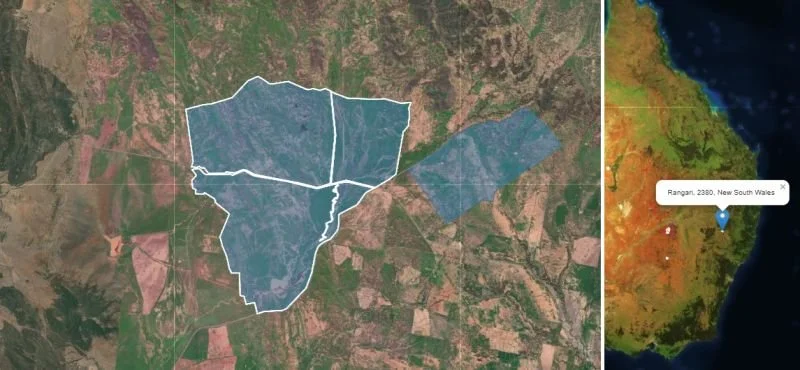
Australian project developers which previously focused on human-induced regeneration (𝗛𝗜𝗥) projects have had to pivot since the method ended in September 2023. HIR aims to regenerate permanent forests of native trees and shrubs by removing factors such as livestock grazing and weeds that suppress growth, rather than active planting.
Despite being dogged by doubts about its effectiveness, a series of independent reviews carried out by Cris Brack, an Honorary Associate Professor at Australian National University, found these criticisms to be largely unfounded.
The first review report, published in December 2023, provided confidence in the integrity of the HIR method, in increasing forest cover, and sequestrating carbon. This was backed up by subsequent six-monthly reviews, carried out by Professor Brack, who has more than thirty years expertise in forest management.
As of July 5 2026, there are still 431 active HIR projects, of which 301 have earned a total of approximately 60 million ACCUs. Existing projects are eligible to earn ACCUs until the expiry of their crediting periods. As no new HIR projects could be registered with the Clean Energy Regulator, after September 2023, developers who previously focused on the method, have moved in two main directions:
Diversified methods:
Climate Friendly has moved towards soil, environmental planting (EP) and plantations.
Terra Carbon (a subsidiary of GreenCollar), has spread across EP, plantations, waste, and native forest from managed regrowth (NFMR), before this method stopped accepting new projects after March 31, 2024.
Select Carbon, owned by Shell Energy Australia, has focused on soil and EP projects.
Prepare and wait for the integrated farm and land management (IFLM) method:
Australian Integrated Carbon has mostly been holding out for IFLM, the draft proposals for which were released in December 2025.
Regenco has been acquiring established HIR projects, while waiting for IFLM
Whichever method or methods project developers choose to focus on moving forward, the retirement of HIR is proving to be a big (carbon) hole to fill.
What do these soil projects have in common? [15/06/2026]
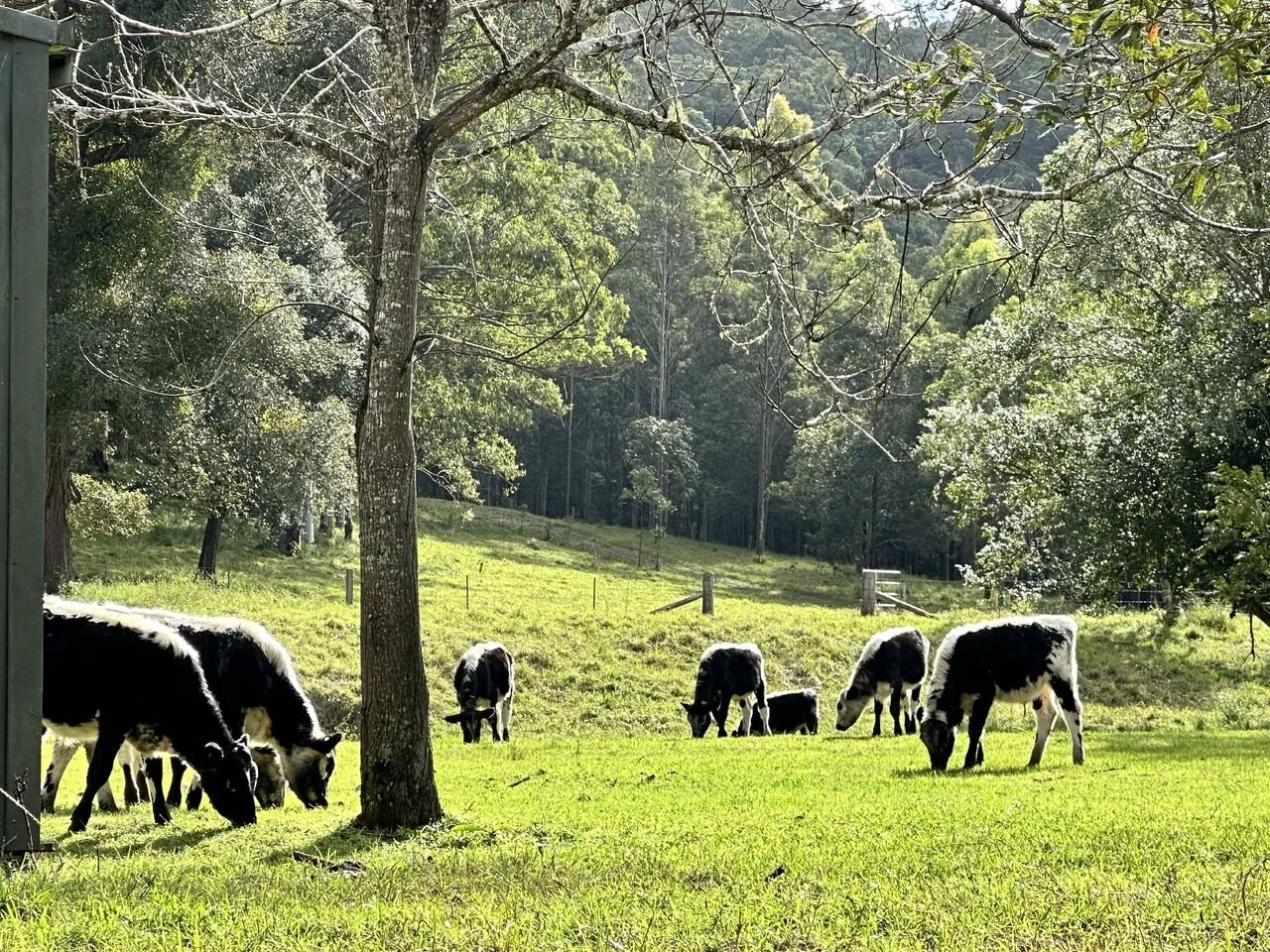
Of the 940 active soil carbon projects in Australia, 52 have been issued credits, totalling 438,966 ACCUs (as of July 6, 2026). But of these projects, only four have been credited over multiple years.
Grounds Keeping Carbon Project (3,067 ACCUs issued)
ERF104781: View Project Information | View on Project Explorer
This initiative, in the West Gippsland region of Victoria, was the first soil carbon project in Australia to earn credits eligible under the Paris Agreement. Registered in 2016, and covering an area of 124 hectares, it generated ACCUs in the financial years 2018/19 (416), 2018/19 (1,498) and 2024/25 (1,163).
The project landholders, the Olsen family, invented a specialised implement called the SoilKee Renovator. This machine combines cultivation, mulching, aeration, and mixed-species seeding in a single pass to build topsoil and maximise photosynthesis. Through these regenerative practices, the farm increased its dry biomass yields from seven to 20 tonnes per hectare and eliminated its reliance on synthetic fertilisers.
The project proponent is Agriprove, and the agent, Corporate Carbon.
Cheyenne Soil Carbon Project (28,859 ACCUs issued)
ERF104527: View Project Information | View on Project Explorer
This was just the second soil carbon project in NSW to be awarded ACCUs, receiving an initial issuance of 12,486 ACCUs in May 2024, and 16,373 ACCUs in the financial year 2024/25. The Cheyenne property, which is managed by Nick Blomfield under the Cheyenne Pastoral Partnership, has been an operating beef cattle farm for more than a century.
The 758 hectare project - which is managed in partnership with carbon service provider CarbonLink - primarily focuses on regenerative agriculture, specifically altering the stocking rate, duration, and intensity of grazing.
Between 2016 and 2021, paddock numbers were increased from 88 to more than 140, while average paddock sizes were reduced from 8.6 hectares to 5.5 hectares, in order to facilitate high-density rotational grazing. Additionally, synthetic fertilizers were replaced with chicken manure to improve soil aeration, water-holding capacity, and promote healthy root growth.
Duncan Carbon Project 2 (6,254 ACCUs Issued)
ERF180115: View Project Information| View on Project Explorer
This project is situated on the Irisvilla property in the Gladstone Region of Queensland, and managed by fourth-generation graziers Lance and Kylie Stephenson. With the support of AgriProve, they successfully transitioned from a traditional set-stocking approach across four paddocks, to an intensive 38-paddock rotational cell grazing system.
This major operational shift, combined with infrastructure upgrades such as new fencing and water points, has enabled them to more than double their stocking rate, from 20 to 45 DSE (dry sheep equivalents) which can be supported per hectare of land.
Registered in January 2023, Duncan Carbon Project 2, received its first 481 ACCUs, in the financial year 2024/25. In the following financial year, it was credited with 5,773 ACCUs.
Killen Carbon Project (2,996 ACCUs)
ERF173466: View Project Information | View on Project Explorer
This initiative, in the Southern Tablelands of New South Wales, was registered in April 2022, and covers an area of 142 hectares. It was established by local landholders John Lawson and Philippa Yelland alongside their cattle grazing operation.
To address nutrient deficiencies, they creatively used industrial by-products such as drinking water lime residuals, crusher dust, and AgriAsh as soil amendments, repurposing waste that would otherwise go into landfill. These activities have reportedly doubled both pasture productivity and the property's livestock carrying capacity.
Run in partnership with AgriProve, Killen became only the fourth soil carbon project to receive ACCUs in multiple years, when it was awarded 1,285 credits in May 2026. It received its first 1,711 credits in the financial year 2024/25.
Whatever approach landholders and project proponents take, any soil carbon project which earns ACCUs has demonstrated long-term commitment, adaptability and determination. They may also provide inspiration for the 888 active projects yet to earn carbon credits.
Australian carbon credits issuance reaches all-time high [22/06/2026]
With one reporting month still to come in the 2026 financial year, ACCU issuances have already passed 2025's record of 20.6 million credits.
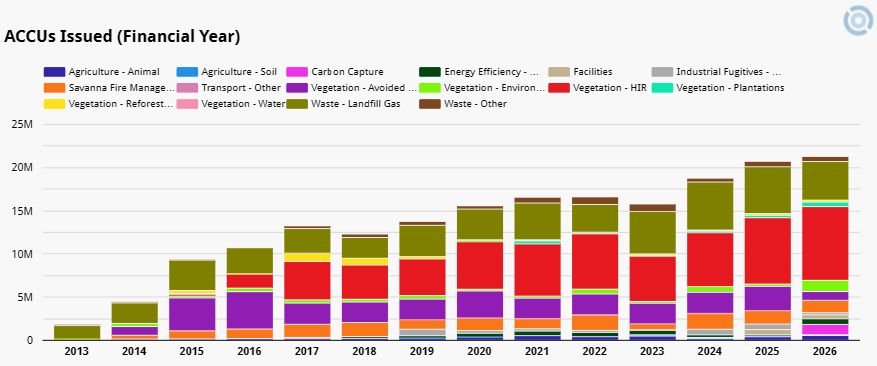
The last 11 months have seen 21.2m credits issued with the top four methods being:
HIR (40%);
Landfill gas (21%);
Savanna fire (6.8%);
Environmental planting (6.2%).
The method with the biggest drop in percentage terms is avoided deforestation, which is down more than 60% from last year. Many of these projects had backdated 15-year crediting periods which are now coming to an end.
To interact with the data go to Credit Analysis tab on Analytics Dashboard.
Carbon Eyes Curiosity [22/06/2026]
The Clean Energy Regulator’s latest data release included 34 new ACCU carbon projects across Australia. During the same period - April 30 to May 31 2026 - 11 project registrations were revoked, all but one, voluntarily. Meanwhile, 114 projects received ACCUs.
Read more in June’s Carbon Eyes Curiosity.
New projects
The bulk of May’s registrations were for carbon initiatives in Victoria (12) and New South Wales (9). Plantation forestry retained its good registration momentum, with 17 new projects, followed by soil (8), environmental planting (6) and landfill gas (3). Among the most notable initiatives were:
An environmental planting and biodiversity project at the White Hills vineyard in Tasmania’s Tamar Valley. Project proponent Treasury Wine Estates Vintnersbought the estate in 2013. The White Hills Vineyard Revegetation Projectarea (118 hectares, of which 83 hectares are planted with vines) closely matches the total property size at acquisition. This suggests that natives species will be holistically planted within the whole estate.
An initiative in the Mid North Coast of NSW, which aims to sequester carbon by transitioning an existing hardwood timber plantation into a permanent forest. The project is situated at Yarrawin, a working farm of 275 hectares, in the Nambucca Valley. Interestingly, as well as cattle farming, and the carbon project, the property operates off-grid camping to visitors.
A project in the Mallee region of Victoria, which aims to restore native vegetation to land which was mechanically cleared more than a century ago. The 1168 hectare Merrinee 1, Stage 2 Planting Project sits on the 2,742 hectare Merrinee property. It was converted to agricultural land about 1920, as part of a settlement scheme for soldiers returning from the First World War. Land Life Company Australia, the project proponent, is actively engaging with the Millewa-Mallee First Peoples, the Traditional Owners of the land.
An industrial emissions reduction initiative in Central Queensland, which sits within an area of major paleontological importance. The Dragline 27 (DRE27) AC Upgrade at SWC Mineproject, operates at the South Walker Creek Mine, which produces high quality coal for steelmaking. The May 2026 update focuses on upgrading the electric motors to more efficient alternating current (AC) drives. In 2008, the traditional owners, the Barada Barna people, discovered an extraordinary deposit of tropical ice-age megafauna fossils at the creek bed.
A micro-scale plantation forestry project, which is being used by a private retirement trust to invest directly in carbon farming. The Hawthorne Farm Plantation Forestry Project (Low Risk Pathway)covers just 3.43 hectares, in the Fraser Coast region of Queensland. It establishes a new forest, strictly for the commercial harvesting of wood products. The proponent, CN Hawthorne, is acting as a trustee for the CN Hawthorne Self-Managed Superannuation Fund.
For more information on these and other new ACCU project registrations, see June’s Carbon Eyes Curiosity.
Credits issued
A total of 114 projects were issued ACCUs during the update period. They varied in size from a whopping 270,529 credits for a vast beef cattle initiative across three states (Northern Territory, Queensland and Western Australia), to a tiny planting and biodiversity project in Victoria.
In terms of methodology, there were 61 vegetation projects, 32 involving waste, 10 savannah fire management, seven agriculture, three energy efficiency, and one industrial fugitives. Among the most interesting projects were:
CPC Beef Herd Project, involves reducing methane emissions across a combined herd of approximately 300,000 animals. The main strategy is to cut the average age of the herd, increase the ratio of weight to age, and reduce the proportion of unproductive animals. The project received its first credits in 2019, and has now accumulated, 725,110 ACCUs. (See below for more details about this initiative.)
At the opposite end of the scale, at just 8.44 hectares, Little Creek Carbon Plus Biodiversity (1127), is an environmental planting and biodoversity intitiative in the Central Goldfields region of Victoria. It was registered in November 2022 and received its first credits - 13 ACCUs - in May 2026.
For more information on ACCU’s credited in May, see June’s Carbon Eyes Curiosity.
New ACCU method announced [26/06/2026]
The INFM (improved forest management in multiple-use public native forests) method was announced at the end of June.
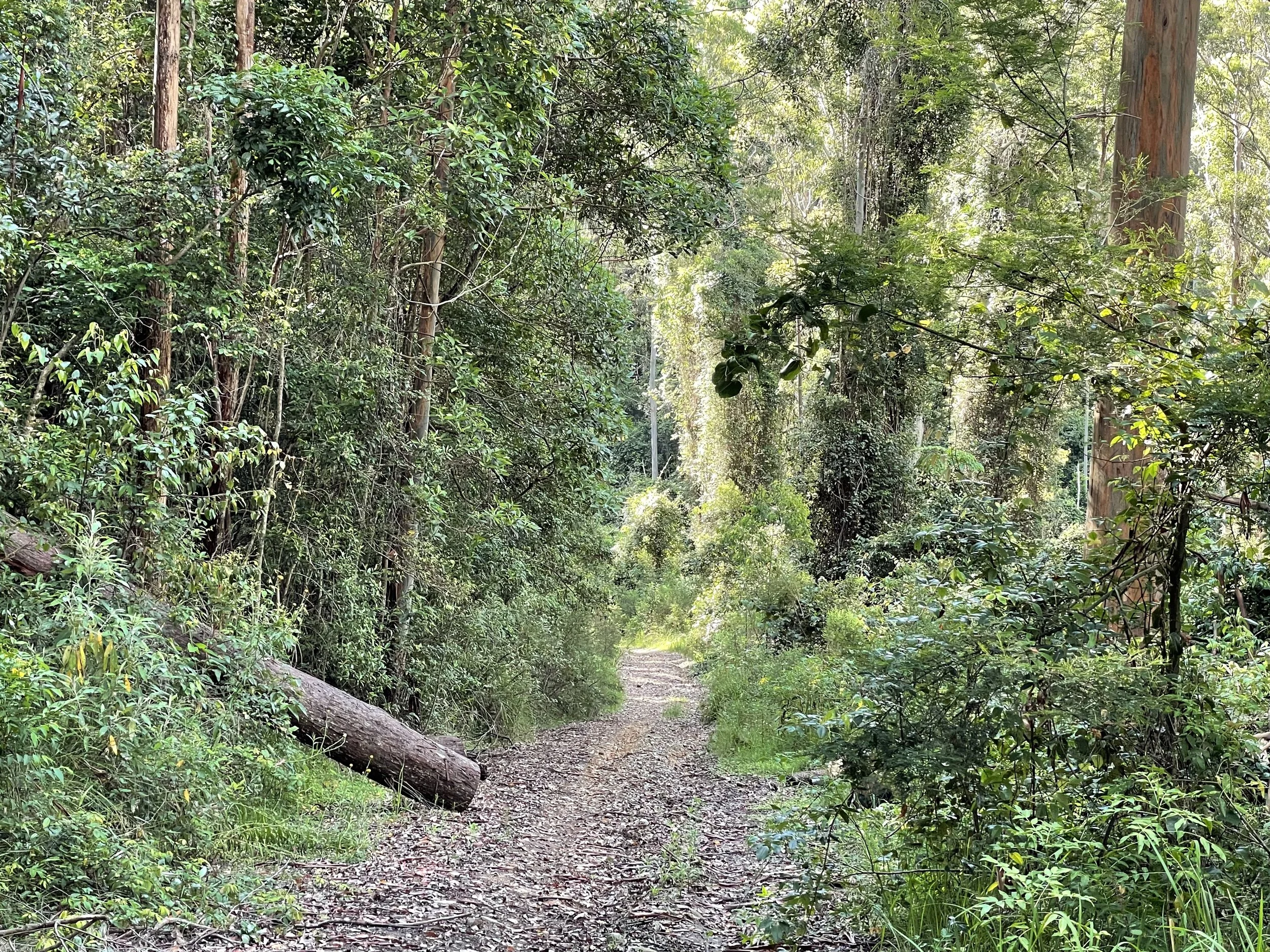
A key area of discussion will be how the method accounts for leakage, particularly whether reduced native forest harvesting in one location leads to increased emissions elsewhere through timber substitution. The draft method includes a requirement for an independent qualified assessor to estimate likely net emissions or removals outside the project area caused by reduced log production.
These include substitutions from:
Australian plantations;
Native forests in other Australian states;
Plantations or native forests outside Australia;
Non-wood substitute products produced in Australia;
Non-wood substitute products produced outside Australia
The resulting leakage deduction is capped at 40% of the project’s net abatement, after other deductions. Questions have been raised about whether a fixed cap adequately reflects real world market responses, with some arguing that substitution impacts could be higher based on international experience.
Monique Dawson MAICD, who is Chief Executive at the Healthy Forests Foundation, decribed the cap on LinkedIn, as “very odd”:
“Capping leakage at 40% is strangely artificial. Internationally, leakage is up to 75%, and this is entirely consistent with what the data is showing in Australia. Why cap it? Particularly as the method requires leakage to be calculated by project.”
Others note that the cap appears to represent a compromise between the previous draft approach, which applied a flat 5% leakage rate, and broader concerns about accurately measuring indirect emissions. But the higher cap does not go far enough to appease critics, such as Dawson, from the Healthy Forests Foundation:
“We strongly criticised the 5% in our submission as unbelievably low and unsupported by evidence. But any arbitrary upper margin has the same flaw: research on imports shows even 40% is likely far lower than reality. Any artificial cap is dangerous. It will be interesting to see what project data shows to support leakage, if any project ever gets registered.” .
The treatment of leakage and additionality will likely remain central to confidence in the method as it moves from design into implementation. The availability of project level data over time will provide further insight into whether the assumptions used reflect actual market behaviour.
As always, we will continue tracking the underlying project data, register movements and policy developments shaping the Australian carbon market.
For more comprehensive market insights and analysis, please get in touch at info@carboneyes.io.
Join our community to get the latest carbon market intelligence delivered monthly
Want to know more?
Check out our blog article Who is paying for carbon projects in Australia, discussing fund–backed ACCU activity and what it means for investors.
References
Carbon Eyes ACCU project register and project level analytics
Carbon Eyes market commentary on ACCU project activity and issuance trends
CER (Clean Energy Regulator)
DCCEEW (Department of Climate Change, Energy, Environment and Water)
Carbon Eyes | ACCU Market Intelligence
Strategic data and integrity signals for the Australian carbon market.
1. Carbon Data Platform
The Foundation of Market Transparency | Access the Platform
A comprehensive view of the ACCU landscape. Access structured CER data, project status and issuance trends. Use our core mapping and analytics to establish your market baseline.
2. Integrity & Market Intelligence
Independent Ratings & Supply Forecasts | Upgrade Your Intelligence
Mitigate risk with our paid intelligence layer. Accessed directly within the Platform, these add-ons provide independent ACCU project ratings and forward looking supply forecasts to guide procurement and investment.
3. Land & Asset Decisioning
Identify the Best Opportunities for Carbon Projects
Carbon Potential Report | View Carbon Potential Report (by address)
Instant, address-based viability assessments for lenders and investors.
Carbon Land Search | Identify & Assess High-Potential Assets
Our premium search engine for institutional funds. Identify and de-risk high-potential carbon assets before acquisition.