
Carbon Eyes In the Loop - here’s what you missed
A round-up of our best posts about the carbon market, filtered and in one place. Reach out to the team for more detailed market analysis and further insights.

The Australian carbon market saw a wide range of developments in October, including suggested changes to the Safeguard Mechanism by two leading climate policy economists. In a joint paper, they provided various options to raise the effective price of ACCUs, in order to encourage more on-site abatement by large emitters.
Figures from the Clean Energy Regulator showed that the combined holdings of ACCUs and SMCs reached a record 85.9 million units at the end of the third quarter of 2026. At current retirement levels, this represents a seven-year stockpile.
The CER’s latest update of the ACCU register, saw avoided deforestation projects dominating credit issuance, with more than 60% of the total 3.15 million ACCUs issued in September. During the same period, 14 new projects were registered - six of them plantation forestry - while four registrations were voluntarily revoked.
Also in October, the first project was registered under the controversial INFM method. Meanwhile, the Nature Repair Market saw gathering momentum, with two new projects linked to existing ACCU projects. This momentum should continue with a second NRM method released at the end of October.
And to round off this edition, we look at the blue carbon method, which despite its massive potential, has just three registered projects, since it began in 2022.
As always, our focus remains on the project data and market signals shaping Australia's carbon market. For more comprehensive market insights and analysis, please get in touch at info@carboneyes.io. See all the latest projects here. We'd love to hear what you think of the new mobile version of our platform.
Economists suggest Safeguard Mechanism changes [05/10/2026]
Two of Australia’s most influential climate policy economists - Steve Hatfield-Dodds and Frank Jotzo - have argued that the current pricing of Australian Carbon Credit Units acts as an insufficient incentive for large emitters to carry out on-site abatement. In their latest paper, they suggest possible changes to the Safeguard Mechanism - Australia's primary emissions reduction policy - to encourage more direct industrial decarbonisation.
The mechanism requires industrial facilities to reduce net emissions over time (a 4.9% baseline reduction) and to offset, if they miss their targets. They offset using ACCUs or SMCs (Safeguard Mechanism Credits, which are generated for beating baseline reduction targets).
In their paper, Hatfield-Dodds and Jotzo suggest a range of options to the Safeguard review currently underway to boost to the relative price of carbon offsets:
“The SGM review has the opportunity to consider options that continue to use ACCUs to reduce average abatement costs to industry, while providing greater incentives for on-site abatement, and moving to a future where the incremental ACCU supply cost does not set the system-wide marginal abatement incentive.”
Without this they argue the price of carbon offsets is likely to be lower than the “efficient incentive” required to drive the economy-wide abatement required for Australia’s net zero transition:
“Policy makers can be confident that current SGM settings will drive real abatement, including some extent of on-site emissions reductions, but that sharper incentives […] will be required to drive greater on-site abatement towards deep decarbonisation over coming decades.

Hatfield-Dodds and Jotzo suggest five options for addressing this problem:
Royalty and reinvestment options
ACCU royalty/surrender fee: Increase the effective cost of using ACCUs under the Safeguard Mechanism, either through a fee when credits are surrendered, or by the Government retaining a share of newly-generated ACCUs as a royalty.
Royalty with nature fund: Apply the same royalty, but use all the revenue to subsidise carbon projects with additional nature benefits, increasing ACCU supply while funding nature repair.
Royalty with industrial abatement and nature: Use part of the royalty revenue to help Safeguard facilities pay for on-site decarbonisation, with the remainder funding nature repair.
Other options
ACCU discount/exchange rate: Require facilities to surrender more than one ACCU for every tonne of emissions above their baseline, effectively reducing how much compliance value each credit provides.
System-wide ACCU cap: Put an overall limit on the proportion of Safeguard obligations that can be met with ACCUs, with the right to use those credits tradable between facilities.
Hatfield-Dodds and Jotzo estimate that all five options would lead to a marked increase in on-site abatement - anything from 17-71% - but with quite different impacts on industry costs and on the the wider ACCU market. Overall, they favour the royalty with industrial abatement and nature option:
“On the available evidence a royalty and reinvestment approach appears to have potential to achieve a material increase in on site abatement, at lower costs to industry than many other approaches, and warrants further examination.”
The paper’s modelling suggests this option could decrease industry compliance costs relative to current policies, while increasing on-site abatement by 48-56%, as well as providing benefits to nature repair.
Hatfield-Dodds and Jotzo also see merit in differentiating SMC from ACCU market prices. The market over recent weeks has seen SMC’s trading at a premium to generic ACCUs.
About the authors:
Steve Hatfield-Dodds is Honorary Professor of Public Policy, Crawford School of Public Policy, Australian National University. He was a member of the 2022 Chubb Review of the ACCU Scheme.
Frank Jotzo is Director of the Centre for Climate and Energy Economics, Crawford School of Public Policy, Australian National University. He was appointed by the Government to lead the Carbon Leakage Review, the recommendations of which fed directly into the current Safeguard Mechanism review.
To view their paper.
Australian carbon credit holdings continue to rise [15/10/2026]
In the Clean Energy Regulator’s latest quarterly carbon market data release, ACCU holdings stood at 75 million units. Together with 10.9 million SMCs (Safeguard Mechanism Credits), the combined total of holdings was 85.9 million units. The data release covers the third quarter of 2026, ending on September 30.
SMCs are credits awarded to safeguard facilities that achieve emissions reductions beyond their targets. Like ACCUs they represent one tonne of CO₂ or equivalent. They have recently been trading at higher prices than generic ACCUs, possibly due to Safeguard Review recommendations aimed at encouraging emissions reductions rather than offsetting.
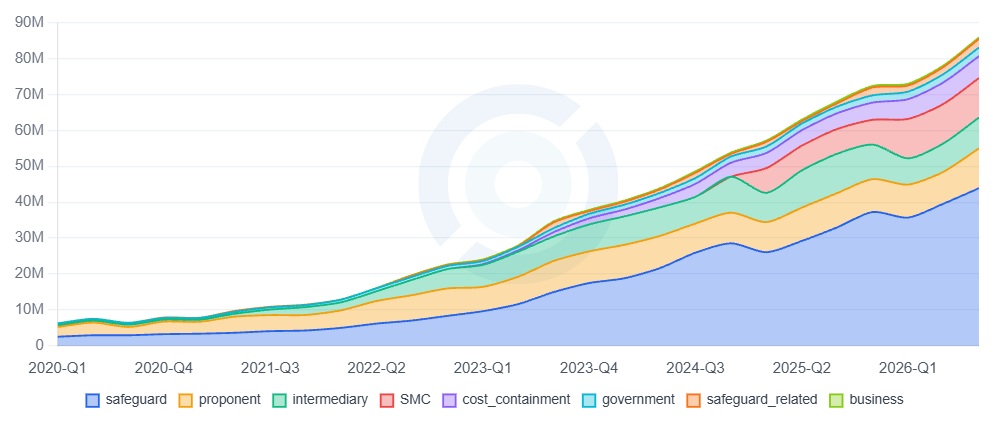
In the Clean Energy Regulator’s latest quarterly carbon market data release, ACCU holdings stood at 75 million units. Together with 10.9 million SMCs (Safeguard Mechanism Credits), the combined total of holdings was 85.9 million units. The data release covers the third quarter of 2026, ending on September 30.
At current ACCU retirement rates - surrenders and cancellations - this represents a seven-year stockpile. However, many analysts are forecasting a drop in ACCU supply, coupled with an increase in Safeguard demand. This would lead to a slowdown in this holdings growth, and possibly even a shrinkage.
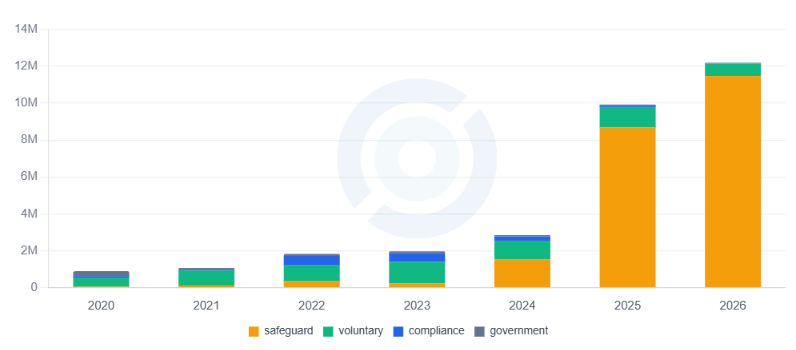
The market participants with the largest percentage growth in holdings were project proponents, with a 24.7% increase from the previous quarter. This was the largest quarterly percentage increase since the third quarter of 2022.
The jump in proponent holdings suggests there is a slowdown in ACCU transfers from proponents to Safeguard emitters. This is not necessarily reflected in trading volume data, as transfers can also occur between entities within market participant groups, for example proponent to proponent or emitter to emitter.
In comments on LinkedIn, Oscar Pearse, a broadacre grain and beef producer from Moree, NSW, asked whether vertically integrated entities report differently to those exchanging ACCUs via sales.
Carbon Eyes responded with this clarification:
“The CER pulls this data directly from the ANREU Register which is its system of record for who holds what. When credits are issued they are put directly into the register account of the nominated entity (typically the developer/proponent/land owner or agent).
“They can then be traded and some of these trades will get reported via trading desks/brokers, but others are direct engagements and are not reported. The regulator can see the movement between ANREU accounts, but has not reported on this in recent quarters. The regulator in most cases will not know when these entities are related.”
Avoided deforestation projects dominate credit issuance in September [22/10/2026]
The latest monthly register update by the Clean Energy Regulator saw approximately 3.15 million ACCUs shared across 98 projects. Approximately 62% of these credits were gained under the expired avoided deforestation method. During the same update period - September 2026 - only 14 new projects were registered. Meanwhile, four projects were voluntarily revoked, making for a net gain of 10 to the total of active projects. See the latest projects here.
New registrations
Of the 14 registrations in September, the most popular method was plantation forestry with six new projects, followed by soil carbon (three), environmental planting (two), and one apiece for energy efficiency, savanna fire management and blue carbon. So far this year, 77 soil projects have been registered, while new plantation forestry projects total 73. Environmental planting projects round off the top three with 36 registrations.
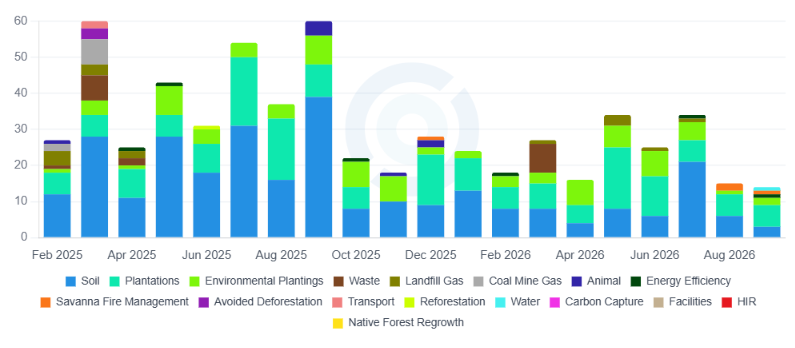
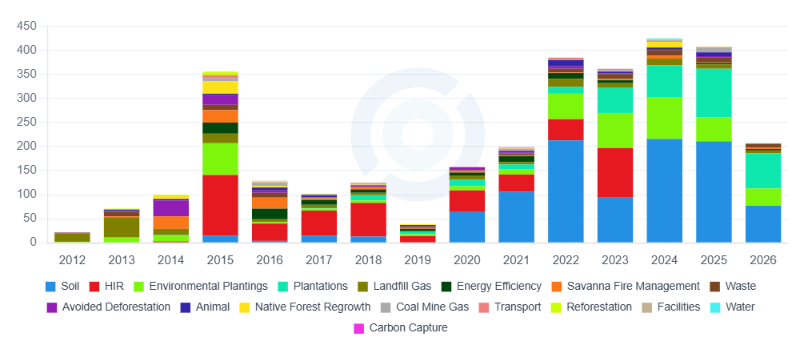
Soil has led registrations for five of the last six years, but if plantation forestry maintains its current momentum, it looks set to take the top spot for 2026.
In terms of location, New South Wales and Victoria both had four new projects, while Queensland and Tasmania had three each. By far the largest new project - Ignite Together Savanna Fire Management Project #1 - covers nearly 350,000 hectares in the Cape York Peninsula, of Queensland’s Far North.
Credits issued
A total of 98 projects earned ACCUs during September, gaining a combined issuance of just over 3.15 million credits. Of these projects, 87 had been credited at least once before, while for the remaining 11, it was their first ACCUs.
The highest individual award went to Fords Bridge Aggregation Native Forest Project, which earned 597,337 credits, while the smallest issuance was to AA2024R_RhyndastonP_S3, a plantation forestry project in Tasmania, which gained 549 ACCUs.
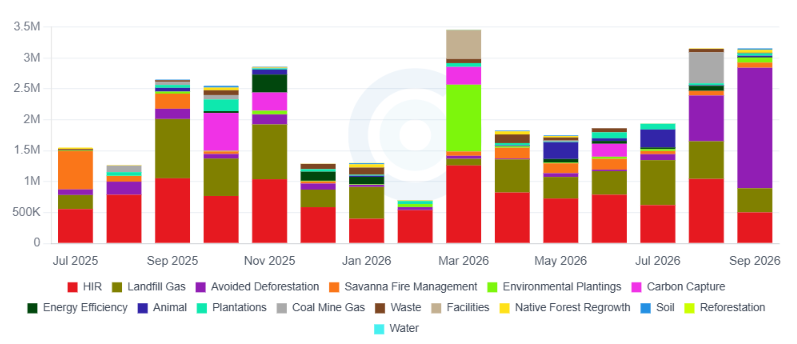
Fords Bridge is an avoided deforestation project located in New South Wales, like the six next highest earning projects in September:
Glenwood Native Forest Protection Project (238,628 ACCUs);
Meadow Glen Native Forest Protection Project (236,292);
Ashwood Native Forest Protection Project (195,196);
Nullawarra Station #2 Native Forest Protection Project (128,767);
All seven projects received their ACCUs after the end of their crediting periods.
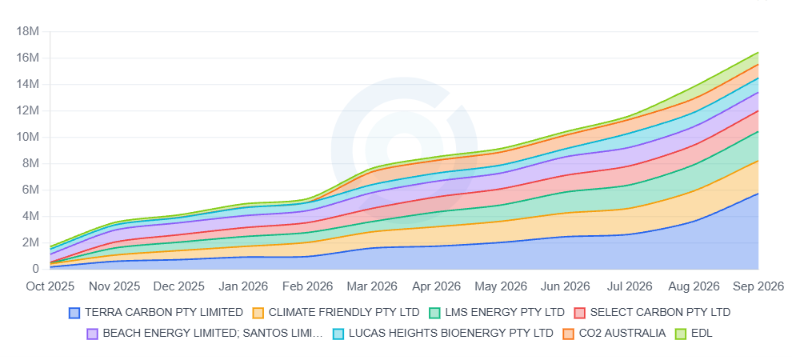
In terms of project lead momentum - either as proponents or agents - TerraCarbon was the clear winner, helping to secure 2,099,160 ACCUs. Second placed was LMS Energy, with 234,821 credits. While in third spot, was Climate Friendly, with 191,401 ACCUs. The chart (right) shows the top eight project leads over the 12 months from October 2025 to September 2026 inclusive.
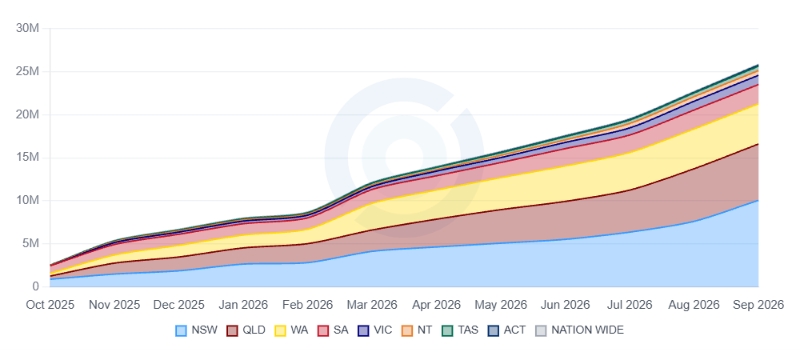
New South Wales was the clear winner in terms of issuance, with 2,444,146 credits earned in September. Second was Queensland with 424,873 credits, followed by Tasmania (73,825), ACT (53,834), Western Australia (52,083), Victoria (50,059), South Australia (38,680), and Northern Territory (16,217). The chart (left) shows issuance by location in the 12 months up to September 2026. Projects that span several states are counted once in each state.
Revoked projects
There were four voluntary revocations in September: two human-induced regeneration (HIR) projects, one soil carbon, and one landfill gas. Only one of the four - Milhouse Reforestation Project - had earned credits in the past. These were relinquished in July 2026, as part of the revocation process.
Registered in March 2017, the project was restructured in February 2018, with specific land areas along with 37,422 carbon credits transferred to the much larger Flanders Carbon Project. The last 5.4 hectares of land under the Milhouse project has now been transferred to Flanders.
To view ACCU statistics and trends head to an updated Analytics Dashboard and create a free account to access additional pages.
First INFM project provisionally registered [23/10/2026]
The North East RFA Improved Native Forest Management Project run by NSW Department of Climate Change, Energy, the Environment and Water will appear on the ACCU register next month.
The Improved Native Forest Management method has been tightly coupled to the planned Great Koala National Park, as its creation was conditional on the method creation and project registration.
The INFM method allows state government-approved entities to generate ACCUs by stopping timber harvesting in carbon protection areas (117,275 hectares in this case), in order to reduce the overall level of harvesting in the broader project area (531,677 hectares).
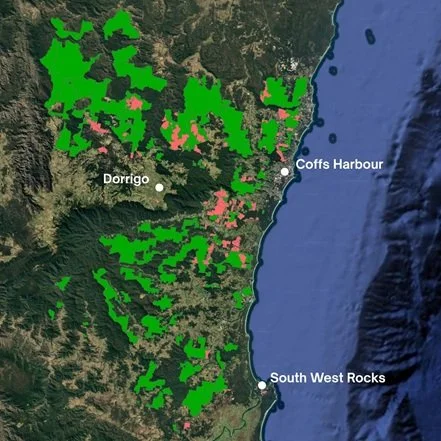
The project has been given conditional approval.
Consent is required from all persons holding an eligible interest on land within the project area, before the end of the its first reporting period.
This must be within the first five years and is a pre-requisite for ACCUs to be issued.
The method has received some criticism related to carbon accounting and leakage caps (40%), while this particular project has also come under additionality scrutiny, as other states have already stopped or limited native forest logging.
The Assistant Minister for Climate Change and Energy, Josh Wilson, has asked ERAC (the Emissions Reduction Assurance Committee) to consider variations to the INFM method, including:
Increasing the amount of forest that must be protected against established harvesting baselines, before projects can receive any carbon credits;
Clarifying the definitions of plantation forest and native forest within the method.
INFM came into force on October 1, 2026, after passing its final legislative hurdle on September 10, when a Senate motion to disallow the method was defeated. It will expire on September 30, 2036, after which no new projects can be registered.
Nature Repair Market: New method coming soon [27/10/2026]
In a structure similar to Australia's ACCU scheme, the Nature Repair Market is designed to support multiple methods. At present, there is only one active method - Replanting Native Forest and Woodland Ecosystems - which supports replanting local native vegetation on historically cleared land.
But a new method, Enhancing Native Vegetation (ENV), is being launched over coming weeks, and includes nature repair activities on land that has not been cleared:
Enhancing the condition of remnant vegetation;
Maintaining the condition of remnant vegetation;
Revegetating areas without remnant vegetation.

What ENV stand out from the initial method is that it has been described as offset-capable, meaning biodiversity certificates from applicable projects could potentially be used to meet developers’ Federal environmental offset obligations, under the EPBC (Environment Protection and Biodiversity Conservation) Act 1999
The Nature Repair Market allows landholders and developers to earn tradable biodiversity certificates for projects that restore or protect native ecosystems. Projects can overlap with ACCU carbon projects, allowing both carbon credits and biodiversity certificates to be generated from the same land.
So far four Nature Repair Market projects have been stacked with ACCU environmental planting projects, with the third and fourth registered in September:
Silva Capital Cooplacurripa Biodiversity Project 1 (NR001014) is linked to:
Cooplacurripa Environmental Planting Project (Phase 1)
ERF201057 | View on Project Explorer;Karinya Downs Wet Scerophyll Forest and Rainforest Restoration (NR001018) is linked to:
24 Degree Forest Rainforest rehabilitation on slopes and riparian zones Doon Doon
ERF207666 | View on Project Explorer;Nortongong Biodiversity Restoration Project (NR001016) is linked to:
Nortongong Biodiversity Restoration Project ERF202584 | View on Project Explorer;Silva Capital Cooplacurripa Biodiversity Project 2 (NR001019) is linked to:
Cooplacurripa Environmental Planting Project (Phase 2) ERF206427 | View on Project Explorer.
Similar linkage of Nature Repair ENV projects to existing carbon projects still has to be clarified, as legislation underpinning the ACCU scheme has an additionality requirement that excludes activities required by law. As biodiversity offset obligations are required by law, stacking rules need to be carefully defined.
For all ACCU projects linked to nature accreditation programmes, including the Nature Repair Market, head to Carbon Eyes Project Explorer and place a filter under More-> Nature Accreditation Only.
The market value of these certificates and the mechanics of stapling them to only certain ACCUs from a linked carbon project have yet to be established.
Blue carbon: 58 million ACCUs of potential flying under the radar [29/10/2026]
This method involves restoring natural tidal water flows to coastal land that was historically drained or cut off from the sea. It can be achieved by altering or dismantling structures that historically blocked or restricted seawater access.
Introducing tidal inundation enables native coastal wetland ecosystems such as mangroves, saltmarsh, seagrass, and supratidal forests to re-establish and store large amounts of carbon.
So far only three projects have been registered under the Tidal Restoration of Blue Carbon Ecosystems Methodology Determination 2022, the most recent in September 2026.
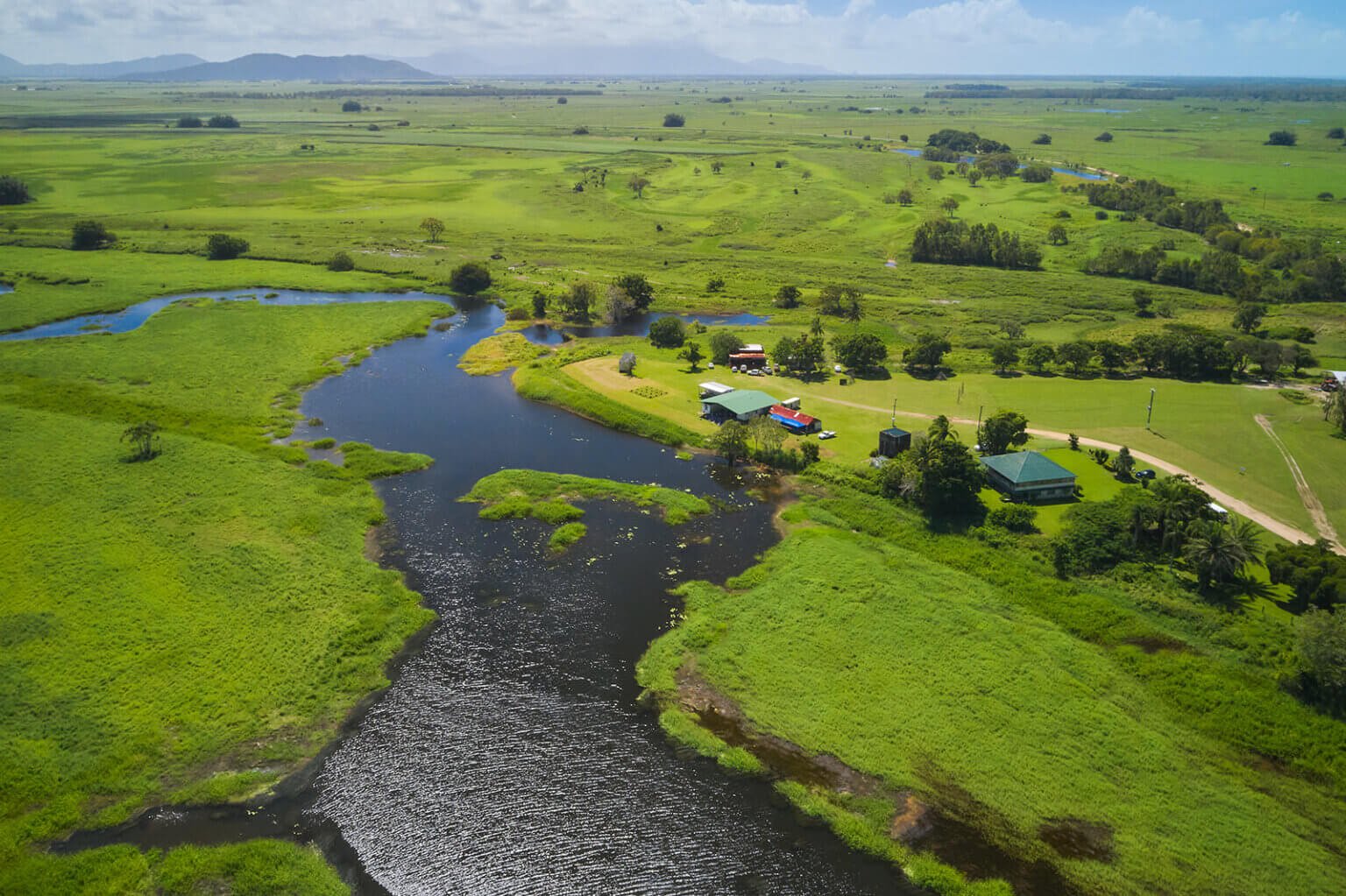
Aerial view of Mungalla Station. Image by Romy Photography for Mungalla Aboriginal Business Corporation.
Mungalla Wetlands Blue Carbon Restoration Project seeks to re-introduce coastal tidal flows to Mungalla Station in Queensland. The method involves removing at least one tidal restriction mechanism, in this case a historic bund wall which has led to the surrounding saline wetlands becoming a freshwater system choked by invasive weeds.
Removing this wall should not only sequester carbon, but also rehabilitate a vital habitat for fish and aquatic birdlife, as well as improve water quality flowing into the Great Barrier Reef. Another co-benefit would be new eco-tourism business opportunities for the Nywaigi Traditional Owners.
The project forms an important part of ongoing cultural and ecological restoration of Mungalla Station, which is owned by Nywaigi Aboriginal Land Corporation, and managed by its subsidiary, Mungalla Aboriginal Corporation for Business.
The previous two projects, Blue Heart Sunshine Coast Blue Carbon Pilot Project, also in Queensland, and Drew Property Pilot Blue Carbon Site, were both registered in 2024.
To view the all three projects head to:
Mungalla Wetlands Blue Carbon Restoration Project: ERF203451 | View on Project Explorer
Drew Property Pilot Blue Carbon Site: ERF188186 | View on Project Explorer
Blue Heart Sunshine Coast Blue Carbon Pilot Project: ERF188599 |View on Project Explorer
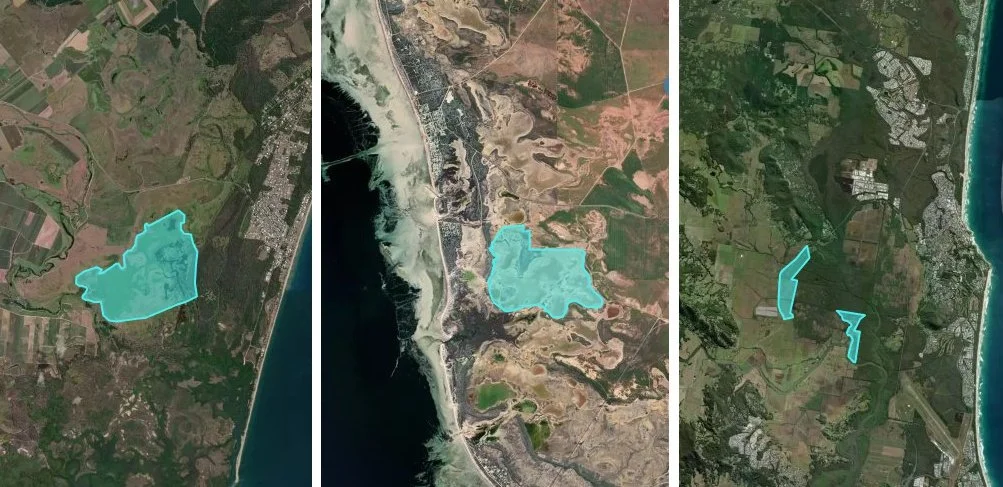
Join our community to get the latest carbon market intelligence delivered monthly
Carbon Eyes (Infovest Pty Ltd) is a Corporate Authorised Representative (No. 001320924) of True Oak Investments Pty Ltd (AFSL No. 238184). Information is general only and does not consider your objectives, financial situation or needs.
Carbon Eyes | Carbon Market Intelligence
The independent view of Australia's carbon market.
1. Discover projects
Find and shortlist ACCU projects using structured CER data, market information and enriched project and land data. Get notified of project changes.
2. Understand the risks
Assess individual projects using detailed data, risk metrics and independent rating breakdowns, to understand project quality, characteristics and potential risks.
3. Go deeper
Get a detailed independent assessment of an individual project for high value procurement, investment, lending and offtake decisions.